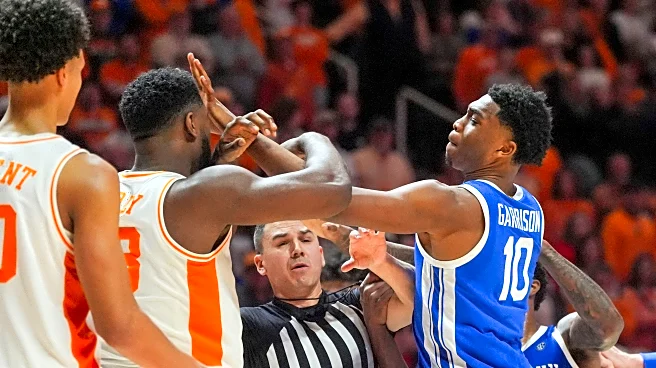

Heading to Lexington for a Wednesday matchup at Rupp Arena against the Kentucky Wildcats, the Texas Longhorns are currently on the early NCAA Tournament bubble, slotted as the last team in the field of
68 in Joe Lunardi’s Tuesday Bracketology for ESPN.
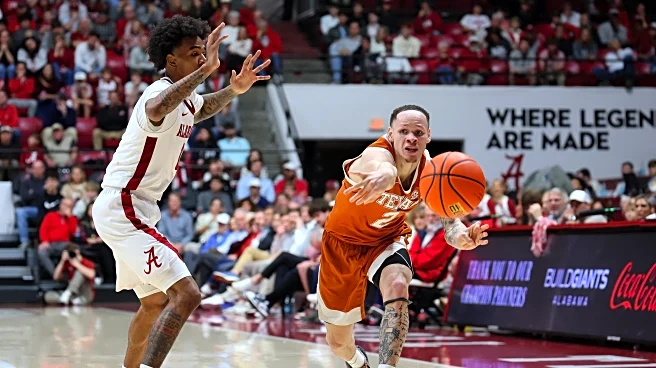
With the opportunity to even its conference record at 3-3 and earn the program’s second Quad I-A victory of the season, Texas another opportunity to reveal whether the team’s truly identity was revealed in home losses to Mississippi State and Texas A&M or top-15 wins over Alabama and Vanderbilt.
Unfortunately for first-year head coach Sean Miller, the multitudes contained within these Longhorns offer plenty of potential for bad home losses to the worst teams in the nation’s best basketball conference and just enough ability to upset some of its best teams when everything comes together.
By Miller’s own admission, the roster isn’t talented enough to have a wide margin of error, margins typically eaten up in losses by some combination of the inability to defend without fouling, late-clock defensive breakdowns, and a lack of consistent effort.
In Saturday’s 74-70 loss to the Aggies, the Horns gave up seven points by fouling three-point shooters in a poor start to the second half that left Miller questioning his team’s effort out of halftime and allowed eight points on backdoor cuts while trying to mount a late comeback as A&M went 15-of-25 shooting over the final 2o minutes.
The last area is of particular concern against the five-out offense run by Kentucky head coach Mark Pope that relies on similar cuts to create easy looks at the rim.
Also of concern is the lack of production from the Texas bench, which ranks 198th nationally at 22.6 points per game. Down to an eight-man rotation in conference play, Miller uses senior guard Chendall Weaver, junior guard Simeon Wilcher, and graduate forward Lassina Traore off the bench, to little positive effect against A&M — in 42 minutes, the three reserves combined for six points on 1-of-10 shooting with eight rebounds, four assists, one block, one steal, two turnovers, and five fouls, losing the bench scoring battle to the Aggies 20-6.
Texas doesn’t always need much scoring production from the bench, getting eight points in the win over Vanderbilt and 12 points in the win over Alabama, but the margins get smaller when those three players aren’t impacting winning.
For Weaver, who is averaging 6.4 points per game on 20-percent shooting from three, that area tends to be rebounding — although the Arlington product is undersized, he’s an elite rebounder from the guard position, ranking fourth on the team in offensive rebounding rate and defensive rebounding rate, fueling the victory over the Commodores with nine rebounds, including five off the offensive glass.
Weaver also got off to a strong start defensively in conference play, notching seven of his 13 steals on the season in the first five SEC games, a significant boost for a defense that ranks 306h nationally in forced turnover rate.
Any scoring from the 6’3, 180-pounder is a bonus that could impact the outcome of games — the difference between the two points Weaver scored against Texas A&M and the nine points he scored in losses to Tennessee and Mississippi State was greater than the margin of defeat.
The expectations for Wilcher, the St. John’s transfer, are higher in the demand for his scoring output and intelligent decision making as one of the team’s primary ball handlers, but the returns in SEC play have largely been ugly, raising concerns about whether he’s outclassed at this level.
In the last three conference games, Wilcher has scored seven points in 40 minutes on 1-of-14 shooting with the only made basket coming from three against Alabama. With seven assists, Wilcher has been better as a secondary playmaker, but his five combined turnovers in the losses to the Bulldogs and Volunteers were indicative of his offensive breakdowns.
From three, Wilcher is up to 35.9 percent this season after hitting under 30 percent last year for the Red Storm, but his 4-of-17 three-point shooting (23.5 percent) in SEC play is an alarming start when viewed against his shooting struggles last season.
Defensive breakdowns have also been too common for Wilcher, who has contributed to the team’s problems contesting jump shots without fouling.
If Wilcher’s issues contributing to winning in SEC play fit into the category of poor roster construction, the same appears true for Traore, who played St. Louis and Long Beach State before missing last season at Xavier due to a preseason knee injury.
After averaging a double-double over his two seasons at The Beach, Traore has only scored 13 points over 57 minutes in the five conference games, making just three field goals. Undersized and underdeveloped in the post, Traore was reliant on his mid-range touch and physical advantages earlier in his career. Neither has translated at Texas, where the lack of playmaking from the guard position has limited Traore’s ability to get easy baskets.
Traore remains an impactful rebounder on both ends and has gotten to the free-throw line at a high rate while shooting a career-low 62.2 percent, but as the only frontcourt player off the bench, the Horns needed more from Traore than they’re getting in an evaluation that the staff just didn’t get right as the Ivory Coast native transitioned from the Big West to the SEC.
Exacerbating the bench problems is the lack of production from the four position.
Miller and his staff started the season with sophomore Nic Codie as the starter, but that only lasted four games and Codie has only appeared in one conference play, seeing 17 minutes of action against Tennessee when Miller benched multiple starters in the second half out of frustration.
Codie’s demotion resulted in the promotion of junior forward Cam Heide, who is averaging 6.5 points in 21.6 minutes per game, numbers that don’t quite provide the necessary perspective to understand how little the Purdue transfer is contributing offensively.
In playing 51.1 percent of available minutes, Heide has minuscule usage rate of 10.5 — the most similar recent comparison at Texas is Brock Cunningham, whose contributions notoriously went beyond scoring.
The differences are that Heide is often a poor defender despite his incredible leaping ability, doesn’t impact the offensive glass, and has an assist rate that is a third of Cunningham’s during the Westlake product’s final season on the Forty Acres.
Another difference? Heide is shooting 48.1 percent from three as an elite catch-and-shoot player, but only attempts 3.2 per game or one three-point attempt every 6.8 minutes. In comparison, Vanderbilt sharpshooter Tyler Nickel, who is the same size as Heide, takes a three every four minutes. For A&M, Ruben Dominguez gets up a shot from beyond the arc every 3.3 minutes.
So the value of the one thing that Heide does well is diminished by the low frequency of his three-point attempts, a side effect of the two primary ball handlers, senior guard Jordan Pope and graduate guard Tramon Mark, using the dribble to primarily create for themselves instead of others.
The sixth SEC matchup for Texas comes against Kentucky program that may be nearing an inflection point in the tenure of second-year head coach Mark Pope. A Sweet 16 appearance in Pope’s debut season was a promising start, but after beginning this season as a top-10 team, the results have been disappointing, with the Wildcats playing at a slower tempo, experiencing recent struggles defensively, and losing two home games this season after dropping three game at Rupp Arena last year.
At issue are roster construction issues that are much more pronounced for Pope’s Wildcats than Miller’s Longhorns given the disparity in available resources and recruiting cachet — in trying to improve the team’s defensive length and rebounding, Pope settled for players without the offensive skill set to effectively run his system while simultaneously failing to put together a high-level defensive team.
As a result, this Kentucky team lacks the clear identity that made Pope’s teams so dangerous at BYU, sacrificing some offensive efficiency without securing the planned defensive gains. Compared to high school recruiting classes under former head coach John Calipari, the 2025 signing class by Pope lacked instant-impact contributors as the Wildcat alum opted to build through the transfer portal instead.
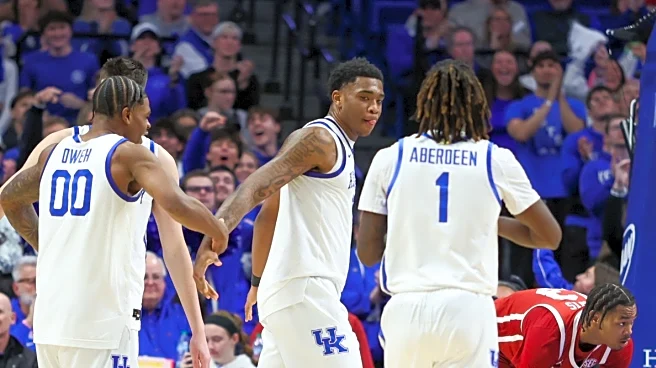
The addition of guard Denzel Aberdeen from Florida has resulted in a breakout season for the 6’1, 195-pounder, who has improved his scoring average and his shooting efficiency, while Alabama transfer forward Mouhamed Dioubate has made similar strides. Other transfer portal signees, like former Pitt guard Jaland Lowe, former Tulane guard Kam Williams, and former Arizona State forward Jayden Quaintance, have seen their production drop at Kentucky.
The leading scorer remains Oklahoma transfer Otega Oweh, the physically imposing 6’4, 220-pound guard who has steadily improved his outside shooting while remaining a threat to get into the paint.
Tip is at 6 p.m. Central on SEC Network with the Horns holding a 35-percent win probability, according to Bart Torvik.