
What is the story about?
Last week, I wrote about the top “my guys” for the Houston Texans in the 2026 NFL Draft. Today, we are flipping the script and focusing on players who I am less excited about than other media outlets or analysts. Specifically, these are players I do not see fitting in Houston schematically, culturally, or technically.
My focus will be on Day Two players; many first-round talent will either be not on the board when Houston selects or are consensus favorites. Many of the players below are in positions
of need for the Texans, which has been the emphasis of my pre-draft process.
For the most part, these are players that I would rather other teams roll the dice on rather than Houston. Let them go after their potential instead.
- Caleb Banks, DT – Florida
- He re-injured his broken foot the night before the NFL Combine and won’t be ready until June. Foot and ankle injuries that continue to plague an athlete are a major red flag. Inconsistent output and effort are not SWARM mentalities. There are too many other well-rounded (literally) defensive tackles to roll the dice on Banks.
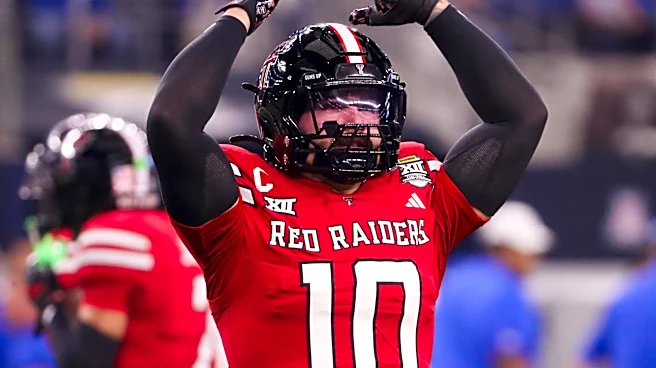
- Jacob Rodriguez, LB – Texas Tech
- Under-sized and limited athletically, his YouTube-based hype is overblown. Plus, he had four to five elite players on his defensive line. It’s more about the value than anything else. As a fringe-first round pick, Rodriguez doesn’t have the true coverage ability nor play speed to be worthy of where he’s projected. I think he’s a fully 50 picks below where he should be selected.
- Zachariah Branch, WR – Georgia
- My least favorite receivers are S&S guys: screens and slants. That’s all Branch ran. His average depth of target (ADOT) was 512th in the nation. Receivers are either schemed open or get open themselves. Georgia schemed open Branch. His 5’10, 180-pound frame also scares me.
- Sam Roush, TE – Stanford
- Roush has the size, strength, and run blocking chops to make it in the NFL. However, his 8th percentile arm length shows up in every way possible. Poor ability to catch passes outside his frame, gets beaten by longer defensive ends, and limited-to-no contested catch ability. He dropped multiple passes at the Senior Bowl which confirmed many of my worries. His ceiling is a safety blanket TE2.
- Chase Bisontis, OG – Texas A&M
- Lack of athleticism and 13th percentile arm length are clear limiters for Bisontis, who some think will go in the first round. Hands were erratic and struggled to sustain longer blocks.
- Houston Texans Draft Profile: Chase Bisontis
- Gracen Halton, DT – Oklahoma
- Despite the elite PFF grades, Halton is an under-sized defensive tackle who will be swallowed up at the next level. I actually enjoy his film splitting double teams, but the hype on his is out of control. A fourth round pick at the most should be his value, not a top 50 selection. Also lacks length to displace blockers in gap schemes. Under-sized big men is an oxymoron I simply can’t get over.
- Kamari Ramsey, S/nickel – USC
- Ramsey has yet to find a home in the secondary. He played as a nickel or safety most of his time at USC. He struggled to turn and run with receivers and was slow to trigger against the run. The composite profile lacks a distinct role in Houston.
- Michael Taaffe, S – Texas
- Taaffee was responsible for multiple errors on the back end for the Texas Longhorns which costed them a game or two in the SEC. While he has a great story after being a walk-on, the buck will stop there due to his lack of size, speed, and physicality.
- Jonah Coleman, RB – Washington
- The success rate for RBs as small as Coleman is extremely low. At 5’9”, he’s a powerful back but struggles with contact at the line of scrimmage. He also has zero long-speed and gets caught from behind repeatedly.
- Nicholas Singleton, RB – Penn State
- A pure battering ram, Singleton lacks the vision necessary to succeed in the NFL. He cannot cut in the hole and struggles to make defenders miss at the second level.
- Brian Parker II, “C”, Duke
- Parker is making the shift from right tackle to center. While Parker is a suitable athlete and has the skillset to make the transition, you can count on one hand the number of players who successfully make the change (Andre James, Connor Williams, Graham Barton). Hedge your bets against what has failed to work before.
- Caleb Lomu, OT – Utah
- Lomu’s worst performances came against his best competition. Lomu has two years of starting experience and an athletic profile, but struggled against power and is a complete project in the run game. He’ll need 2+ years of backup duties before being ready for prime time.
- Kyle Louis, LB – Pitt
- Louis converted from safety to linebacker and blossomed at Pitt, but is a projection at the next level due to a smaller frame. He’s limited to only being a weakside (WILL) linebacker due to size and strength concerns.
- Taylen Green, QB – Arkansas
- Green made too many mental errors at Arkansas. His physical gifts don’t out-rule his poor throwing mechanics. He is not a backup QB worth developing.
- Cashius Howell, DE – Texas A&M
- Howell will either be Von Miller or a third down pass rusher; there’s no in between. He wins with speed and flexibility, but can over run plays and create scramble opportunities for QBs. None of his sacks were against teams that ended the season in the top 25.
- Connor Lew, OC – Auburn
- Lew should have stayed another year even if he will be drafted as the top center in the class. The ACL injury will lengthen his learning curve.
- Houston Texans Draft Profile: Connor Lew
- Lee Hunter, DT – Texas Tech
- Hunter caused legitimate problems for Oregon in the College Football Playoffs, but a player surrounded by that much talent rarely faced double teams. He’ll be 24 when the season kicks off, struggled against gap schemes, and missed multiple games due to injury.
- There is a lot I like about Hunter, and he continues his upward trajectory I’ll be happy to be wrong about this one.
- Genesis Smith, S – Arizona
- Smith has all the pros and cons of Calen Bullock, but lacks the speed and has even worse tackling. His 20% missed tackle rate is not worth drafting.
- Zxavian Harris, DT – Ole Miss
- At 6’8”, 33o-pounds, Harris’ profile is more alluring than his production. He lacked any discernible technique. His length and size are true force multipliers, but he exhausts quickly due to those same traits. The best he can be is a rotational and situational asset, not a legitimate starter.
- Zane Durant, DT – Penn State
- Fifth defensive tackle was not on purpose, but Durant’s size and terrible run defense grade are borderline undraftable. He was completely trampled when facing gap schemes and contributed to Penn State’s inability to stop the run. He’s a gap shooter rather than gap controller, which is a dicey way to play in the NFL.