



Practically every franchise has cycled through peaks of contention and troughs of irrelevance, and the Yankees certainly have not been immune. The period covering the late 80s and early 90s represented a nadir for an organization close to celebrating its 100th birthday. Owner meddling, injuries to star players, and general poor roster building left a once-proud franchise stagnating in mediocrity with no clear path out of the mire.
This prevailing mood around the team had the unfortunate effect of
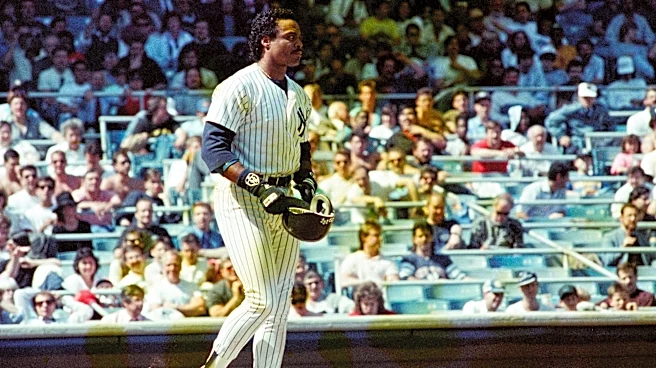
distorting the perception of many of the players who donned the pinstripes during those years. One of the familiar names from that era was Jesse Barfield, an All-Star, Gold Glove outfielder for the Blue Jays who Steinbrenner brought to the Bronx in a move that was equal parts vindictive and short-sighted. This was no fault of Barfield’s, who performed ably when he was on the field yet whose short legacy with the Yankees is often viewed through the lens of the failure of those squads.
Jesse Lee Barfield
Born: October 29, 1959 (Joliet, IL)
Yankees Tenure: 1989-92
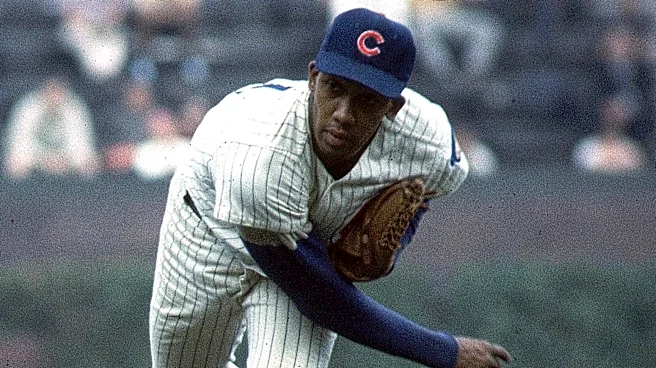
Jesse Lee Barfield was born in Joliet, IL, on October 29, 1959, to single mother Annie J. Barfield, his father having abandoned the family around the time of his birth. The George Werden Buck Boys Club was a haven in his childhood, the young Barfield falling in love with baseball watching his hero Ernie Banks and copying his batting stance. On a day trip to Comiskey Park with the Boys Club, the 13-year-old Barfield declared, “Man, one day I’m going to be playing right out there. You watch,” and so it was destined to be.
Barfield starred in the outfield for Joliet Central High School and caught the eye of Blue Jays scout Bobby Mattick, who convinced Toronto to draft Barfield in the ninth round of the 1977 June Amateur Draft. The Blue Jays offered a $2,500 signing bonus but Barfield declined as he had been awarded a scholarship to study architectural drawing in college after winning a statewide drafting competition, but the Blue Jays secured his signature when they tripled their offer, Barfield using the bonus to buy his mother a Ford Thunderbird.
Despite a slow start and growing pains in the low minors, Barfield kept his head down and slowly worked his way up the ladder before finally earning a call-up to the major league team in 1981. He debuted on September 3rd, and as fate would have it his first game was in right field in Comiskey Park, Barfield lining an RBI single in his second big league AB. He would play 25 games that season, showing enough to be named Opening Day starter in right in 1982 under manager Bobby Cox, and he never looked back.
Barfield established himself as one of the preeminent dual-threat outfielders in the majors by the mid 80s, his raw power and cannon arm leading to an All-Star appearance in 1986, AL Gold Gloves in 1986 and 1987, and AL Silver Slugger in 1986. He led the AL in home runs in 1986 with 40 and led all AL outfielders in outfield assists in five separate seasons. His peak came in the second-half of the 80s, Barfield posting back-to-back seasons of at least seven fWAR with a wRC+ over 140 in 1985 and 1986 as part of Toronto’s star-studded outfield alongside George Bell and Lloyd Moseby. Between 1985 and 1990, Barfield ranked seventh in MLB with 30.8 fWAR and eighth with 161 home runs.
By 1987, Barfield’s $1,525,000 salary made him the highest-paid position player in Blue Jays history at the time, and he was further rewarded with a three-year, $4.2 million deal at the end of the year. However, around this time the left wrist that Barfield had broken playing high school basketball was beginning to flare up, his production tailing off in his final year-and-a-half with the Blue Jays as the days out injured started to pile up. It was also around this time that George Steinbrenner was launching a full court press to expel Dave Winfield from the team, the Yankees owner attempting and failing to trade Winfield for Barfield in 1988.
Steinbrenner wouldn’t be denied his man for long, eventually acquiring Barfield from Toronto in exchange for pitching prospect Al Leiter on April 30, 1989. He missed time to a concussion at the start of his Yankees career but rebounded in the second half providing some much-needed cover in the lineup for Don Mattingly with Winfield out for the year after undergoing back surgery. Barfield recorded ten outfield assists in a 21-game span, finishing the year with a .234/.345/.415 triple slash line, 23 home runs, 67 RBIs, a 116 wRC+, and 4.1 fWAR in 150 games between Toronto and New York. This performance convinced the Yankees to extend him on a three-year contract worth $5.7 million.
1990 rolled around and despite Winfield’s return to health, Steinbrenner aimed a thinly-veiled dig at the future Hall of Famer, calling Barfield, “the best right fielder we’ve ever had.” Barfield continued to man Winfield’s normal position in right, Winfield relegated to DH and left field until he was traded to the Angels on May 11th. On April 26th of that season, Barfield hit his 199th and 200th home runs off Randy Johnson at Yankee Stadium. Despite all the turmoil surrounding the team — Steinbrenner would be suspended for hiring a criminal to dig up dirt on Winfield as his team set a franchise record for the most losses (95) in a season — Barfield led the team with 25 home runs and 78 RBIs, slashing .246/.359/.456 with a 128 wRC+ and 4.6 fWAR in 153 games.
Steinbrenner’s tenure was characterized by the combative interactions he had with his players and managers, but Barfield was one of the few players to stay in the owner’s good graces despite frequently finishing among the league leaders in strikeouts in an era when strikeouts were far less common or accepted as today. Barfield convinced Steinbrenner to move in the left field fences by ten feet to boost his and his teammates’ offensive numbers, though the promise went unfulfilled after Steinbrenner failed to add certain pitchers he was pursuing. Steinbrenner also sent Barfield a bottle of champagne in the clubhouse following the two-homer game against the Mariners.
“I think George should definitely be in the Hall of Fame, for changing the face of baseball. He always was very good for me and to me. He treated me with a lot of respect and I’ll never forget that.”
Despite a strong start to the 1991 season, Barfield’s body was beginning to betray him. A stress fracture in his left foot limited him to 84 games that season. The following year, Barfield dislocated a bone in his left wrist after slipping in a sauna and ended up requiring a radical procedure in August that left doctors unsure whether he would ever play baseball again. He appeared in just 114 games across his final two seasons with the Yankees, slashing .203/.286/.391 with 19 home runs, 55 RBIs, an 83 wRC+ and 1.0 fWAR. He signed with NPB’s Yomiuri Giants in 1993 where he became teammates with a certain rookie named Hideki Matsui, and after a failed attempt to return to MLB with the Astros where he was released before Opening Day in 1994, Barfield called curtains on a 12-year big league career.
Barfield made the playoffs just once in his career, losing to the Royals in the 1985 ALCS while still with the Blue Jays. He had the misfortune of joining the Yankees during one of the most fallow periods in the franchise’s history and as such was likely never appreciated as much as he deserved (not helped by the fact that he effectively replaced Winfield on the roster). The Yankees teams he played for never finished higher than fifth in the division, ending with a losing record in all four of his seasons in pinstripes. The swift accumulation of injuries at the end meant he just missed out on the next era of Yankees dominance. However, there is no doubt that he was one of the most fearsome players of his era with the bat and in the field.

See more of the “Yankees Birthday of the Day” series here.