


When the New York Knicks needed a new head coach after the 2020 season, they didn’t merely replace David Fizdale — fired after a 4-18 start gave way to interim Mike Miller. They wanted to open up all the windows and doors and air out all the stink of the prior era. Thus, the hiring of Thomas Wayne Thibodeau (his real middle name is Joseph, but I prefer Wayne).
When the Knicks decided they needed a new coach after the 2025 season, they didn’t merely seek to replace Thibodeau — the only coach the franchise
has ever fired after consecutive 50-win seasons. They wanted to change some of his cultural cornerstones, like playing the starters historic minutes while trying to win every single preseason, regular-season and postseason game with a seven-man rotation. Thus the hiring of Michael Burton Brown (that is his middle name, and it works).
When the Knicks were suddenly single after the 1995 season, they did what a lotta teams do when it’s time to replace a Type A personality: they bring in a new letter. Jim Fassel begat Tom Coughlin. The famously intense Pep Guardiola leaves Manchester City and begat Enzo Maresca, already enjoying the new coach headwind of being more relaxed than his predecessor. In 1995, Pat Riley left the Knicks via fax, the kind of divorce notice that doubles as a confession: your ex has already been stepping out on you.
But unlike Fizdale, and to a far lesser extent Thibs, Riley was already a success as the Knicks coach when he left. In the 18 seasons between the Knicks’ most recent second title and them hiring the Rat of Schenectady, they won 50-plus games twice and a single best-of-7 playoff series. In his four years at MSG, they won 51, 60, 57 and 55 games, along with three best-of-7 series, and made their first trip to the Finals since Watergate was just a salad.
A trim, fashionable figure in his dark Armani suits, Riley was cool and controlling, his ultra-marathon practices far longer and more grueling than the real games. He was a New Yorker come home to one of the world’s fashion capitals, where Nike was ripping kids off to infuse “cool” into their ads and many of the most controlling powers-that-be are based. Riley’s Knicks were tough, mean, and relentless.
They replaced him with the Big Lebowski.
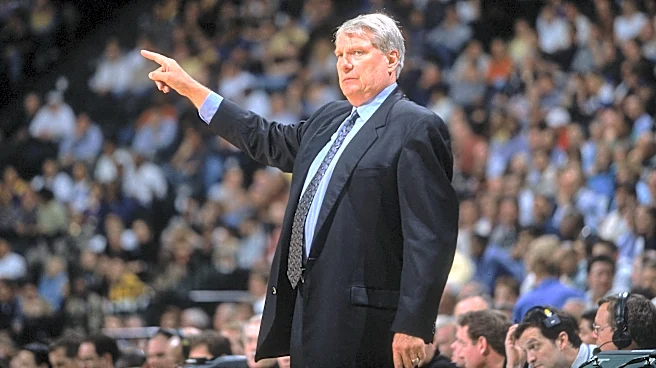
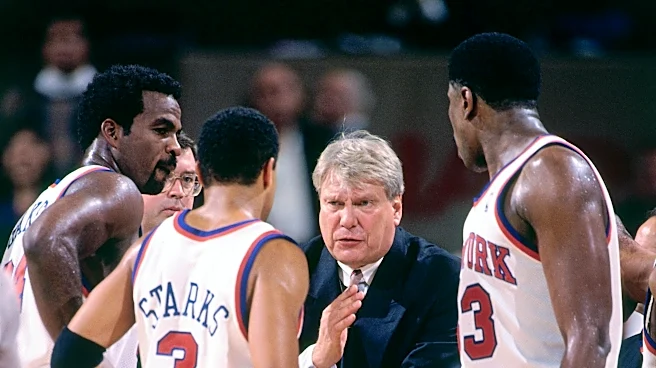
Imagine replacing Thibodeau with Mike D’Antoni. Or hiring the famously defensive, conservative approach of Jose Mourinho after his antithesis in Guardiola. The Knicks had just enjoyed a Silver Age renaissance under the quintessential head-to-toe icon of order. Hiring Don Nelson wasn’t going from Type A to Type B; it was going from Type A to an irregular fraction with stains on his tie.
I wish I remembered more of that time, young as I was and brief as it was. Nellie went 34-25 before being fired, after a win in Toronto led by 30 points from Hubert Davis. That was more than Patrick Ewing and John Starks combined. That was some of the reason why Nelson didn’t make it to game 60. He preferred to run his offense through a point forward, which elevated Anthony Mason’s role and his numbers. He preferred Davis to Starks. He thought Ewing was past his prime and wanted to make Orlando an offer for Shaquille O’Neal, with noises out of Orlando already implying Fu Schnickens was unhappy in central Florida.
But Nelson couldn’t win. Riley took his talents to South Beach, but the team he’d made in his image wasn’t going anywhere or changing any. That was both the glory and folly of the ‘90s Knicks: they insisted upon themselves as is, and it was very nearly enough, but also it very clearly wasn’t, and yet they seemed fated to stay fixed in place. The proud Ewing resented Mason’s larger influence. Mason went from 23 career starters before Nellie to starting all 82 games under him and leading the league in minutes, yet as Chris Herring wrote in Blood in the Garden even that wasn’t enough for Mase, who made a death threat to Nelson for not playing him more. Think Starks thought he should be backing up Hubert Davis?
For me, the firing of Nelson goes down as a sliding doors moment in Knicks history, similar to Davis being fouled by Scottie Pippen in the ‘94 playoffs and Allan Houston’s shot bouncing in against Miami in 1999. Nelson was always ahead of his time, not only about the Knicks but the game in general. He played smallball decades before it became commonplace. Watch any of his sides: Milwaukee in the early 1980s, Golden State later that decade, Dallas in the 2000s. All a bridge too far for a team whose offensive identity had been little more than “pass it to Ewing; if he’s doubled, get the ball out and get it back to him; hope he scores” for nearly a decade.
What if Nelson had stayed? The summer after he was canned was when the Knicks had oodles of cap space and not one, not two, but three first-round picks in one of the great draft rounds of all-time. How might his presence have impacted free agency? Maybe the Michael Jordan and Reggie Miller rumors were always that, just rumors — but would either of those two established stars and Knick rivals have left teams coached by Phil Jackson and Larry Bird for one led by an interim who went 13-10 in Jeff Van Gundy? Wouldn’t Nelson’s presence have made the team more appealing, especially to veterans? Would his keen eye for talent have yielded a better draft day than using picks 18, 19 and 21 all on power forwards: John Wallace, Dontae’ Jones and Walter McCarty?
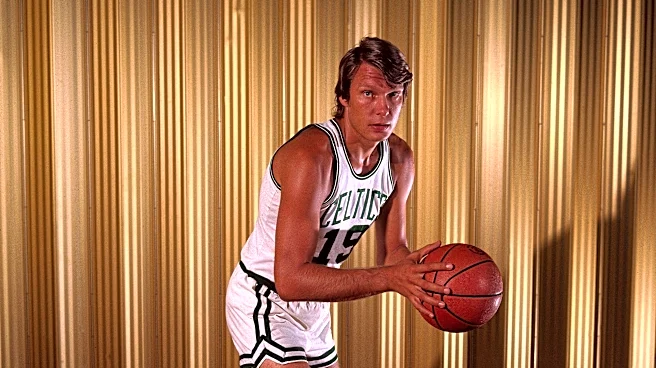
My strongest memories of Nelson growing up were that he was the player my father hated the most (Nellie spent most of his playing days with Boston), and one incident from his time as Knick coach that forever endeared him to me. On January 12, 1996, the Knicks traveled to play the Celtics. These were the sad-sack Celts, teams featuring Dino Radja, Eric Montross and Pervis Ellison. Coming into the game, Celtic guard Dana Barros had either set the record for most consecutive games making a 3-pointer or he was closing in on it.
Late in the fourth it was clear the Knicks were going to win the game. But Boston coach M.L. Carr didn’t want Barros to lose his streak. In a game where the other Celtic starters combined for eight 3-point attempts — same as the entire Knick team — Carr brought Barros back into the game after it was already decided just so Boston could try to get him another 3. You’ve probably seen nonsense like that before. What you don’t often see is a team down double-digits in the final seconds calling timeout to draw up a last-second shot for someone.
Some coaches wouldn’t care one way or the other. Some would wait until the press conference after the game to make their true feelings known. God bless Don Nelson for being one of the few with the chutzpah and sense of showmanship to respond to Carr’s shenanigans by bringing Mason in on the final possession specifically to lock up Barros and make sure he couldn’t even get a shot off. After the final horn Carr was so pissed he took the game ball and threw it at the back of Nellie’s head.
Don Nelson was ahead of his time. In many ways he tried to fix the ’90s Knicks at a time when no one else would admit the patient showed any signs of being ill. And despite having his number hanging in the Boston Garden rafters, he didn’t flinch when the people he made his bones with tried getting one over on him. He enjoyed good food, good weather and good weed. For all those reasons, he may only hold a small place in Knicks history, but it’s a good one. Rest in peace, Nellie.