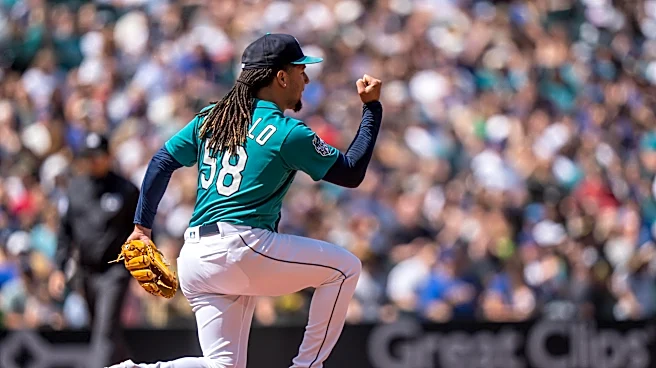


Luis Castillo is no longer a Mariner, but his impact on the rotation – and the club itself – will be felt for years.
Castillo came to the Mariners in 2022 as part of a splashy trade deadline deal with the Reds, joining a staff with established veterans Robbie Ray and Marco Gonzales, as well as two of the Mariners’ bright young pitching prospects, Logan Gilbert and George Kirby. (For a more comprehensive look back at Castillo’s tenure, make sure to read Zach’s ode to La Piedra from yesterday.) Ray and Gonzales would
move on and be replaced by other, younger faces from the Mariners’ prospect pipeline; Castillo remained, the lone veteran presence in the rotation, and one of the few veterans in a clubhouse that was getting younger and more homegrown each year.
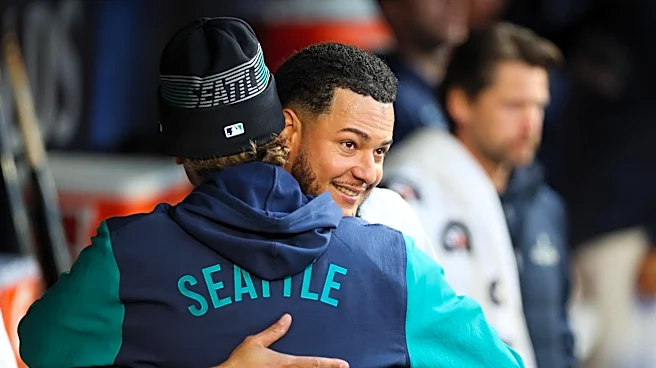
Castillo, 33, often said that he didn’t feel that much older than the other pitchers, but they unmistakably looked at him as a role model, the unofficial leader of the rotation. And Castillo’s light didn’t just touch the starters; coming in as a big-leaguer with significant service time, already a multi-year All-Star, made him an inspiration to younger players, who saw him as someone who’d already gotten where they wanted to go. With a warm, humorous demeanor and fluency in both Spanish and English, Castillo was easy for any player in the clubhouse to approach.
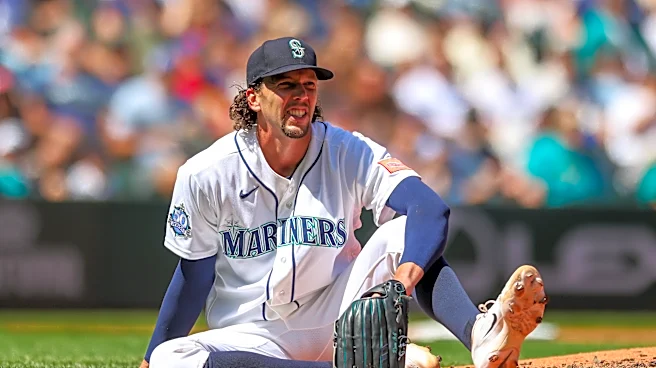
“He was the vet of the staff, and everybody could always lean on him if they needed to, and he was always willing to help,” said Bryce Miller, who was especially close with Castillo (the two shared both a bone-dry sense of humor and an interest in fishing, Castillo even promising to pick Miller up in Texas on his boat for a fishing trip – “now we’ll have to line that up in the off-season,” huffed Miller). “I leaned on him a lot.”
Andrés Muñoz, who was in the midst of his first full big-league season when Castillo arrived, acknowledged the significance of having another native Spanish-speaking pitcher to bounce ideas off of, but said Castillo’s influence ran much deeper than just a shared mother tongue.
“It wasn’t only that he was a Latin player, but he had almost ten years in the big leagues,” Muñoz said pregame on Sunday after news of the trade broke. “So that tells you a lot about how much he knows about baseball and all the things he’s doing to be consistent for so many years.
My first thought was ‘follow the leader.’ For me, he is a leader, and that is why [the trade] hurts a lot.”
Every player in the clubhouse – including Castillo himself – recognizes that this is the business side of baseball, one of the prices paid for the privilege of playing the game. That doesn’t lessen the sting for his fellow pitchers, even as they’ve grown from greenhorns to more experienced big-leaguers themselves, as they’re better acquainted than anyone with the exceptional steadfastness of Luis Castillo.
“He’s the best, man,” said George Kirby postgame, coming off a seven-inning shutout performance against the Twins that would make prime La Piedra proud. “The way he carries himself every day, he always has a smile on his face. That’s something I really admire, something I wish I could do a little more often.
I always looked forward to seeing Luis any day because he always made you feel better.”
Logan Gilbert concurred with Kirby, noting that Castillo was seemingly “always in a good mood” – something borne out in his final press conference, when he entered the Mariners interview room for the last time with his customary, musical “helloooooo everybodyyyy” that was the hallmark of the start of all of his media sessions.
“I was actually talking to my wife about this on the phone last night,” said Gilbert. “It’s so rare to have somebody where the outing never dictated his mood. The game, the season, where we’re at, what’s going on – if everyone else is panicking, he’s not. Like he just knows that everything’s going to be all right somehow. There’s a lot to be said for that. That’s really rare in this game.”
It’s not surprising to hear younger pitchers talk with envy about Castillo’s steadfastness and composure. That sense of ease is a separating quality at this level; frustratingly, it’s also something that becomes more difficult to attain the more it’s grasped after.
Not that Castillo didn’t try to impart those lessons on the younger pitchers. While leading by example, he also offered specific guidance, tailored to each pitcher’s personality. He encouraged Kirby to put down his Furious George persona after a bad outing and appreciate the moment; for the hyper-cerebral Gilbert, to not think so much; for Miller, master tinkerer and lover of the pitching lab, to not change things in response to a poor outing. He provided immediate direct assessments, both verbal and nonverbal, to Muñoz, who values peer feedback.
“He would tell you the truth right away,” said Muñoz. “He wasn’t going to go around the thing. As soon as he sees something that is wrong, he’s going to tell you, and that’s what I like the most about him. He didn’t go around anything. He would just go, hey, you’re missing this, you’re doing this wrong. He saw me throw in the bullpen a lot of times and I would just have to look at him – I’d be throwing a bullpen, and miss a pitch or miss something, and I’d just look at him and I’d know he was going to tell me something. Or just by the way that he’d look at me, I already knew what I had to do. That’s the kind of leader that other pitchers need.”
Gilbert had a specific anecdote summing up Castillo’s hands-on leadership.
“I think back to – I threw a bullpen in Minnesota two years ago, probably, one of my famous freakout bullpens where it didn’t go well. I’m panicking, trying to change everything, and threw too many pitches.”
In the midst of his spiral, Gilbert described Castillo watching the bullpen from the corner of the bullpen, amused, before taking the young pitcher aside afterwards.
“He told me, first of all, like why are you doing this?,” recounted Gilbert. “He said, ‘don’t change anything, don’t think too much, and don’t try so hard.‘ And I’m like, how did he just make it that simple that quickly? It seems like such a simple thing to say, but I’ll remember that the rest of my career. That’s stuff that I actually try to live by on the mound, in my practice. He just says it at the right time. He just has the perfect awareness, perfect feel for the situation.”
The old baseball cliché is that you can’t teach feel. But that didn’t stop Luis Castillo from trying, every day, over his Mariners tenure, from living as a model of consistency on the mound and in the clubhouse to showing what that looks like in interpersonal relationships, offering his time and his talent and his wisdom to anyone who might seek it.
“That is the thing I learned the most from him,” said Muñoz. “It doesn’t matter how your outing is going, you have to stay the same. He was the perfect example for everybody. And I want to follow in his footsteps.”
“He knows how to relate to everybody,” said Gilbert. “Pitchers, hitters, American guys, Latin guys. He just related to everybody.”
“I think that’s a really rare thing to see, especially on the pitching side of things. He did more for me and other people than fans will ever realize.”