

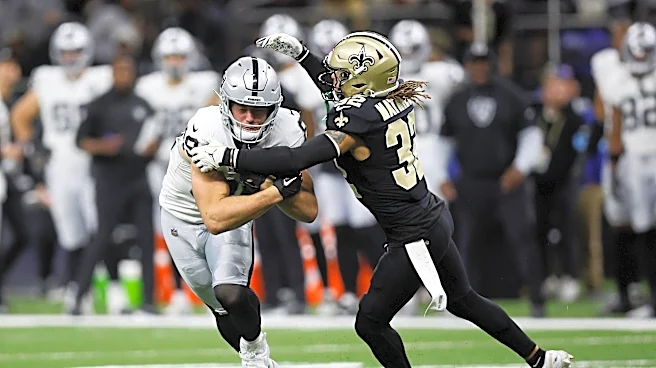
On Nov. 1, 1966, the National Football League awarded the city of New Orleans a professional football franchise. At exactly 11:11 a.m., then-NFL commissioner Pete Rozelle delivered the words that would forever change the city: “Professional football has voted a franchise to the state of Louisiana, the city of New Orleans.”
The team would later be named the Saints, a fitting choice given that the franchise was awarded on All Saints’ Day during a news conference at the Pontchartrain Hotel on St. Charles
Avenue.
That December, oil and real estate businessman John W. Mecom Jr. purchased the franchise for $8.5 million. At 26, Mecom became the youngest owner in NFL history.
On Sept. 17, 1967, the Saints played their first regular-season game at Tulane Stadium. Eight years later, in August 1975, the Superdome became their permanent home.
For the next three decades, the Superdome became an integral part of Saints football and the culture surrounding the team.
Then came Hurricane Katrina.
In August 2005, Katrina devastated New Orleans and the Gulf Coast, flooding most of the city and severely damaging the Superdome. The disaster displaced hundreds of thousands of residents and forced the Saints from their home for the entire 2005 season.
With the Superdome unavailable, the Saints played their home games in San Antonio and Baton Rouge. Uncertainty surrounding the future of both the franchise and the city only compounded the challenges facing a community just beginning the long road to recovery.
One year later, the Saints finally returned home.
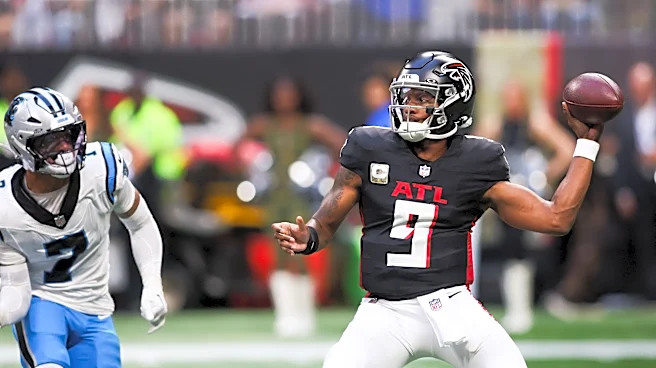
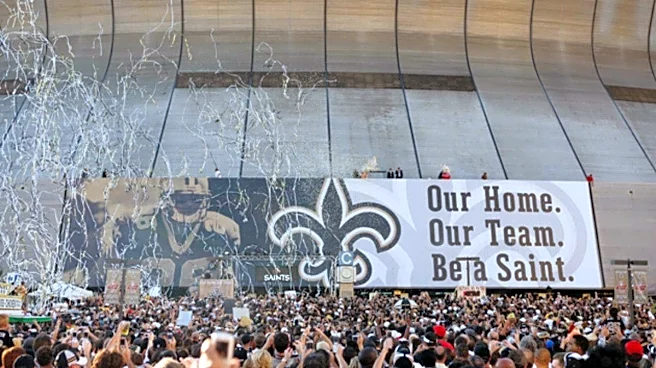
On Sept. 25, 2006, the Saints played their first game back in the Superdome, facing the Atlanta Falcons on Monday Night Football before a sold-out crowd of more than 70,000 fans.
Appropriately nicknamed “Domecoming,” the game became much more than a football game. It was a symbol of recovery and resilience.
Today marks 20 years since that unforgettable night inside the Superdome, when the Saints’ return reminded the world that New Orleans was still standing, still fighting and determined to come back stronger than ever.
The emotion inside the Superdome reached another level early in the first quarter when Steve Gleason blocked an Atlanta punt and Curtis Deloatch recovered in the end zone for the Saints’ first touchdown. The moment became one of the most iconic plays in franchise history.
That night, the Saints defeated the Falcons 23-3. They went on to finish the season 10-6 and advance to the NFC championship game for the first time in franchise history.
The Saints’ remarkable run ended with a loss to the Chicago Bears, but the 2006 season marked the beginning of a new era in New Orleans. More importantly, it reinforced a bond between a football team and its hometown that had been developing for nearly four decades.
As New Orleans rebuilt, so did the Saints.
Under new head coach Sean Payton and quarterback Drew Brees, a franchise that had spent much of its history searching for sustained success gave a community something to rally around each Sunday. The Saints became more than a source of entertainment. For many, they became a source of hope during one of the most difficult periods in the city’s history.
The journey that began with that emotional return to the Superdome in 2006 reached its defining moment three seasons later.
On Feb. 7, 2010, the Saints defeated the Indianapolis Colts 31-17 in Super Bowl XLIV, capturing the first championship in franchise history. For generations of Saints fans who had endured losing seasons, heartbreak and years when simply reaching the playoffs seemed impossible, the victory represented far more than a Lombardi Trophy.
New Orleans was finally a Super Bowl champion.
When the team returned home from Miami, thousands of fans filled the streets near the airport for an impromptu championship celebration that looked and felt like something only New Orleans could produce.
Over six decades, players, coaches and owners have changed. Tulane Stadium gave way to the Superdome. The paper bags of the “Aints” era were eventually replaced by division championships, playoff victories and a Super Bowl title.
But the connection between the Saints and New Orleans has remained.
It can be heard in the chants of “Who Dat?” and seen in the black and gold that fills the city on game days. It lives through generations of families who have passed down their Saints fandom and, in some cases, their season tickets from parents to children and grandchildren.
There have been unforgettable victories, devastating losses, seasons of hope and seasons fans would rather forget. Through it all, New Orleans has continued to embrace its football team.
Perhaps that is because the Saints and their city share something much deeper than geography.
Both understand resilience. Both understand celebration. Both know heartbreak. And both have always found a way to come back.
Twenty years after the Saints came home to the Superdome and 60 years after Pete Rozelle announced that professional football was coming to New Orleans, that bond remains as much a part of the franchise as the fleur-de-lis on its helmet.
The Saints are part of New Orleans, and New Orleans is part of them.