





One thing that we see every so often across sports ahead of a championship series is the “Guaranteed Ring”.
When a player plays for both finalists in a sport, they’re essentially secured a ring, as all players who suited up for a specific team in a season usually get one for their efforts, no matter how small or inconsequential.
It’s most common in MLB due to the sheer amount of roster turnover. Buddy Kennedy and Jose Ureña both played for the Blue Jays and Dodgers in 2025, but neither were in either organization
by the time the World Series rolled around
Every so often, though, you get it in the NBA. Two recent examples include Torrey Craig in 2021 and Anderson Varejão in 2016. As the prophecy foretold, it happened once again in a five-year increment.
Jeremy Sochan was born in Guymon, Oklahoma, on May 20, 2003, to two former Division II basketball players. His mother, Aneta, was of Polish descent, coming from a long line of professional athletes that even has roots in the resistance of Nazi occupation in World War II with Sochan’s great-grandfather, Zygmunt.
As a child, Sochan moved from Oklahoma to France to England, where he spent much of his childhood before returning to the United States to play high school basketball in La Porte, Indiana. After leading the Polish U16 team to the 2019 FIBA U16 European Championship Division B title, he earned a scholarship to play for Scott Drew at Baylor, where he turned himself into a top-flight NBA prospect.
After briefly playing overseas with OrangeAcademy in Germany, he joined the Bears in 2021-22, where he averaged 9.2 points and 6.4 rebounds, being named the Big 12 Sixth Man of the Year as part of a stacked Baylor team that earned a No. 1 seed in the NCAA Tournament a year after winning the national championship in 2021. While they were upset in the second round, Sochan had established himself as a promising prospect, enabling him to forgo his remaining eligibility to declare for the 2022 NBA Draft.
Sochan was the perfect encapsulation of teams preferring traits over college production. While guys like Jalen Brunson fall to the second round, guys like Sochan rise with their youth, size, and skill. He was an advanced passer for someone of his archetype, and despite his offensive game being very limited, teams saw a player who still had a lot of room to grow.
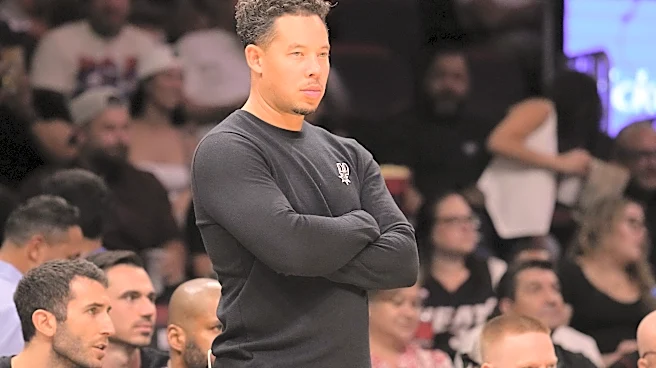
That’s what convinced the San Antonio Spurs to draft him ninth overall over notable players like Santa Clara’s Jalen Williams, Memphis’ Jalen Duren, and, of course, Ousmane Dieng. As the franchise’s first top-10 pick since Tim Duncan 22 years earlier, there might’ve been some unfair expectations put on him right away, but the team believed in him as the future piece of the next Spurs’ dynasty.
Things started out pretty well. In his first season, he averaged 11 points, 5.3 rebounds, and 2.5 assists as a consistent starter for a dreadful Spurs team. He flashed signs of brilliance, putting up 30-8-5 against a Suns team that went to the Finals in January, but things changed that offseason for both him and the franchise.
That dreadful season resulted in Victor Wembanyama falling into their hands. After wandering the desert since Kawhi Leonard’s departure and hoping that someone from the Sochan, Josh Primo, Keldon Johnson, and Devin Vassell quartet could break out, they were gifted the best prospect the league had seen since LeBron James.
That immediately meant everyone else was relegated to second fiddle, and while Sochan was likely never going to be a star with his offensive limitations, the fact that he was overshadowed just a year into his career might not have helped. Statistically, his next two seasons didn’t look bad at all, as he slowly improved as a shooter and seemed to form a great bond with Wemby on and off the court.
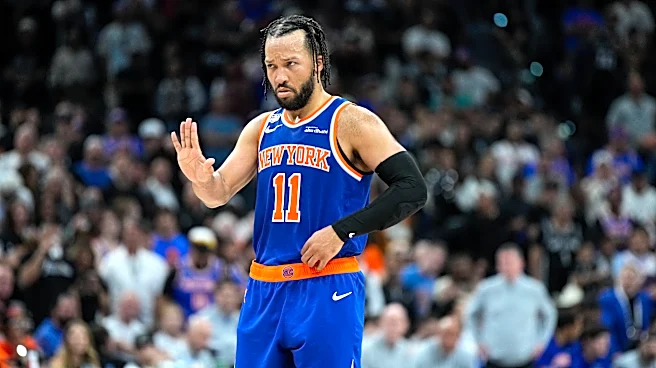
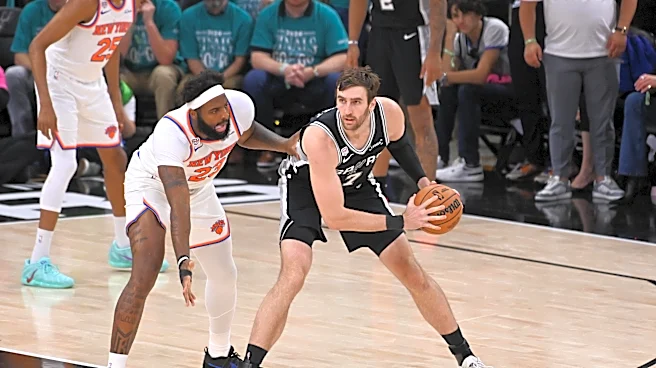
He even infuriated all Knicks fans everywhere with his 21-point performance on Christmas Day at Madison Square Garden, buoyed by going 3-for-3 from downtown.
But the cracks in the foundation showed. They seemed not to really know where to play Sochan, who was yanked around from being a wing to the team’s point guard to even being a small-ball center. His versatility made him able to weather many situations, but this was a guy who was barely able to buy a drink. That, coupled with his spacing concerns given his poor shooting, slowly degraded his play as things got worse.
The Spurs were suddenly blossoming into a powerhouse, benefitting from lottery luck in three consecutive seasons to build a young core. Guys like Johnson and Vassell settled into roles as valuable role players, but Sochan got lost in the shuffle. His minutes slowly dwindled towards the end of November and he was out of the everyday rotation by December.
In the final year of his rookie contract, it was time for a divorce. On February 11, the Spurs waived their former lottery pick just two months before free agency, but it was early enough to allow him to suit up in the NBA playoffs. Two days later, he put pen to paper with the New York Knicks.
Initially, it seemed like the Knicks would embrace him as an opportunity to play both a small-ball five role and a traditional backup power forward role, but he seemed like a square peg in a round hole with how Mike Brown tried to utilize him in the first few games. By the end of February, he was reduced to garbage time.
But even though he wasn’t playing and some believed he was a waste of a roster spot, he added something that doesn’t show up on the box score. Good vibes.
Sochan has always been a popular figure in every locker room he’s been in and has formed a nice bond with Josh Hart over their Premier League rivalry. He didn’t throw a hissy fit on the bench when he wasn’t playing. He didn’t alienate his teammates, unlike some buyout options, but he was ready when he was needed to be called upon.
The first three rounds? He wasn’t needed. Due to the many blowouts, he got some garbage time run, which even included scoring 10 points in less than four minutes in Game 5 against Atlanta, but he didn’t play any meaningful minutes through the end of the Eastern Conference Finals.
Then it just so happened that his former team was on the other side in the NBA Finals. Just two months removed from being in that locker room, Sochan became an asset. When the Knicks went over film, he would be their man on the inside.
Seems like he was pretty right about this, huh?
And the neat part about how this story ends up? His first meaningful minutes of the postseason came in this series. He played nine seconds in Game 3, three minutes in Game 4 due to shenanigans with the entire center rotation, and the final nine seconds of Game 5.
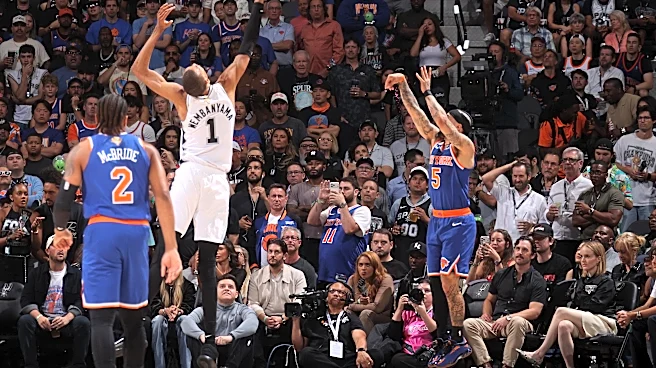
In Game 5, he was pestering his former teammate all game long. The exact one that dislodged his place in the Spurs’ organization. The man whose arrival started his path towards this current moment.
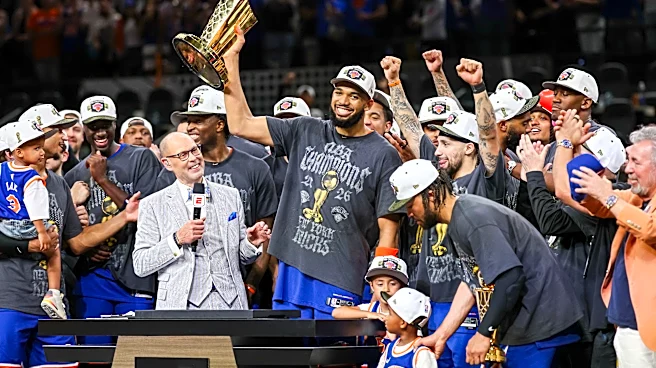
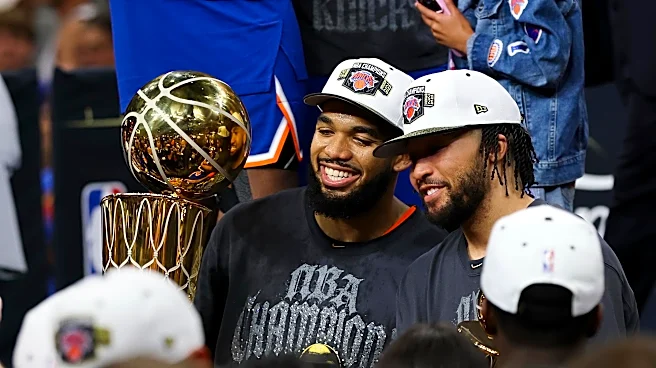
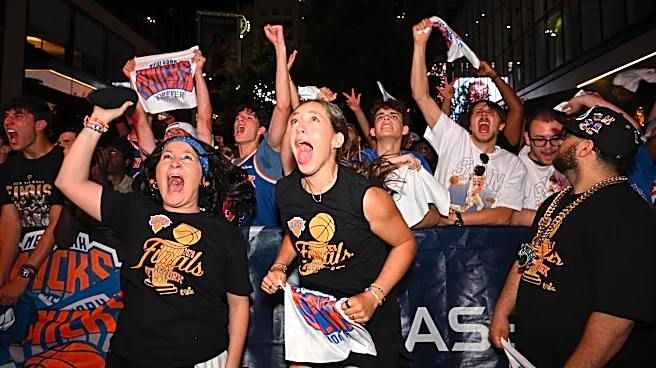
In the end, when the Knicks ended their 53-year title drought, guess who the man who contested the final shot was? It was Jeremy Sochan, who probably had maybe the most unnecessary contest of all time, considering the monumental risk of fouling with a four-point cushion, but we’d only remember that beyond this week if something bad had happened.
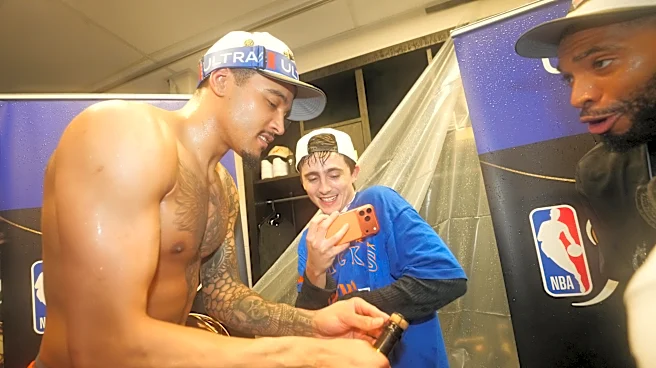
But it didn’t, and that’s how he became an NBA champion.
–
(P&T will be doing player-by-player article tributes over the next few weeks to commemorate the special team that ended our long, half-century nightmare)