





More often than not, managers today have somewhat fleeting relationships with clubs; they come, they go, often interchangeable, if not indistinguishable.
Go back 100 years or so, and it was a very different landscape for what were then termed ‘secretary managers’.
For the first time in 23 years, Sunderland had been on the lookout for a new manager – needing to replace Bob Kyle after the Irishman stood down in the March. The then 57-year-old had managed Sunderland for an astonishing 800+ games after arriving
from Distillery in 1905; he’d managed more than 200 games in Ireland, too, before arriving in the north east.
Kyle had been in charge when Sunderland won the league in 1913 (he’s still the only Irishman to have lifted the top-flight trophy in England), and finished runners-up in 1923. So, it was little wonder that the football club, led by Alderman Fred Taylor, took their time over appointing his successor.
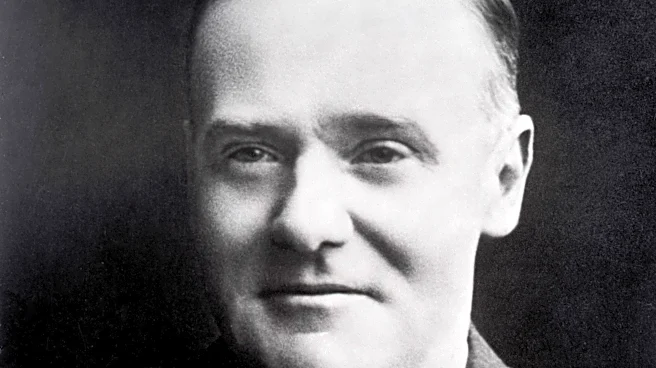
The appointment of St Mirren’s manager, John Cochrane, was made in April – around six weeks after Kyle had stepped down – but on this day 98 years ago he officially took up the post, having seen out the season in Scotland.
It hadn’t been a straightforward decision, though. The public wanted the return of a Roker hero – a barrage of letters from supporters urging the club to give the manager’s job to Charlie Buchan, who’d been invited by the board to apply for the vacancy, but had declined to declare his interest. Talks had taken place with Derby manager George Jobey and Wolves’ Major Frank Buckley, who’d both turned down the role, and so Alderman Taylor turned to Cochrane, who stood at just 5ft 2in but was ‘sturdily built’.
Cochrane had been offered the job after meeting the board at Roker Park, and had accepted via telephone following a conversation with his wife. He later wired a communication in writing confirming his decision.
He accepted the job not knowing which division Sunderland would be playing in, with the club flirting with relegation. Indeed, it was only on the final day of the season at Ayresome Park – with Cochrane in attendance watching his new charges – that safety was confirmed.

So, a bit of a rebuild job was called for, and the 37-year-old Scot was already an experienced manager, having been in charge of St Mirren for the past 12 years, and was described as being a ‘livewire’ with a proven eye for talent – evident given he’d discovered a number of players who’d gone on to become household names, including Sunderland’s Dave Halliday and Billy Clunas.
He was described by a ‘Scottish writer’ with the following words:
Yet I would say he is a right handy height for the job. If he’s wee, he’s guid. Johnny can be mild as a lamb, yet no six footer can put his foot down firmer than Johnny when he gets his temper up.
On affairs, football and the men in it, players and officials alike, Mr Cochrane has decided opinions, and isn’t afraid to express them.
Cochrane’s commitment to football had been illustrated by virtually single handedly turning St Mirren into a ‘proper’ football club – the transformation of their Love Street ground from ‘a mucky pitch with a two-penny-ha-penny stand’ into a palatial ground capable of holding up to 50,000 people was credited to Cochrane, who worked ‘night and day’ to give the players the surroundings he felt they needed.
So, today in 1928 was day one of what would turn out to be an 11-year spell in charge of Sunderland Association Football Club for Johnny Cochrane, who over the course of the next 11 years managed the team for a remarkable 500 games – meaning that, between Kyle and Cochrane, they’d overseen 34 seasons worth of football, and in excess of 1300 fixtures.
For context, 34 years ago, it was 1992 and Malcolm Crosby was in charge of the lads…
Of course, Cochrane’s time at Sunderland was a huge success – winning the league title in 1936, and the FA Cup in 1937, and bringing through and managing the likes of Raich Carter, Bobby Gurney, Johnny Mapson, Patsy Gallacher, Eddie Burbanks, Jimmy Connor and a whole host of other household names for every Sunderland supporter. His teams were renowned for their attacking flair – demonstrated by scoring 109 goals in the title-winning 42-game season in 1936 – and his laid-back management style was popular with players.
His resignation in March 1939 came as a huge surprise – the local press described it as a ‘bombshell to the football world’, and national press saying it had shocked football fans across the country, and that it was a ‘first-class’ sensation. There had been rumours of Cochrane considering his position the previous autumn, but that speculation had died down quickly. His March departure came as a bolt from the blue – although the true impact of that decision may not have been felt completely, given that, only months later, the football league was abandoned for seven seasons due to the Second World War.
That’s the end of the story though. Today, 98 years ago, was the beginning of what was a long, incredibly successful chapter in Sunderland AFC history – as the last man to win the league for Sunderland was appointed to take charge.