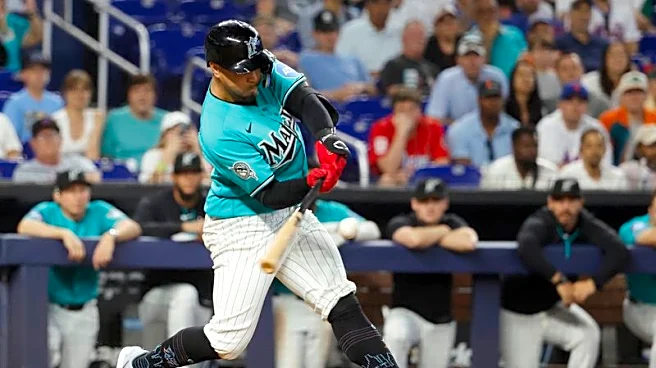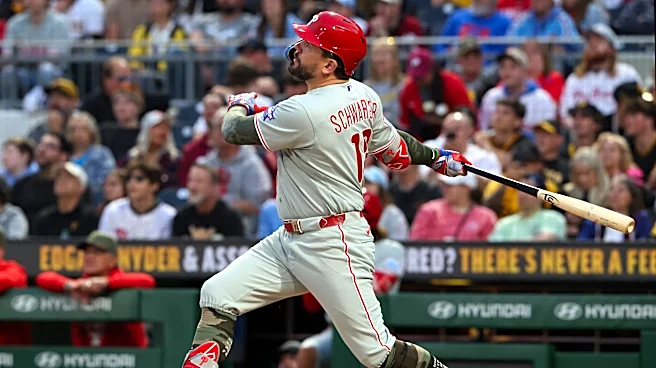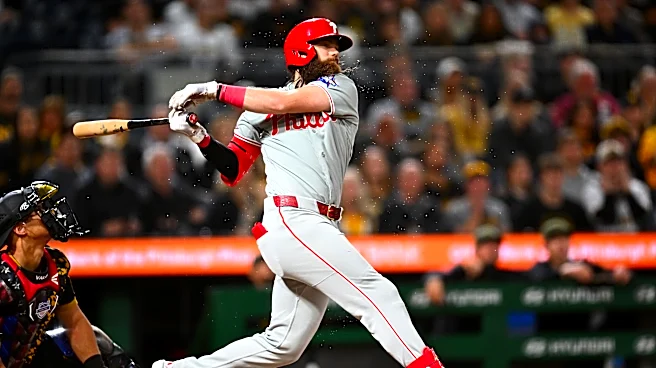

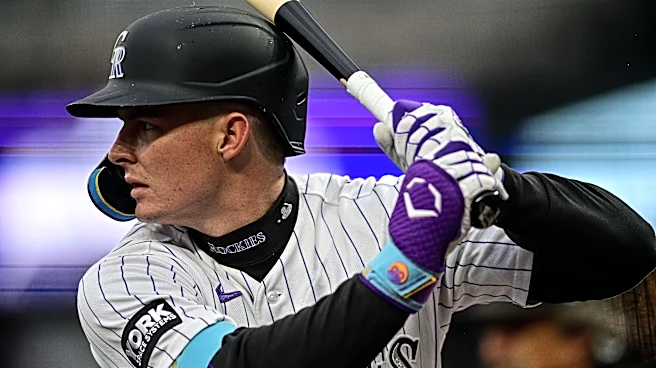
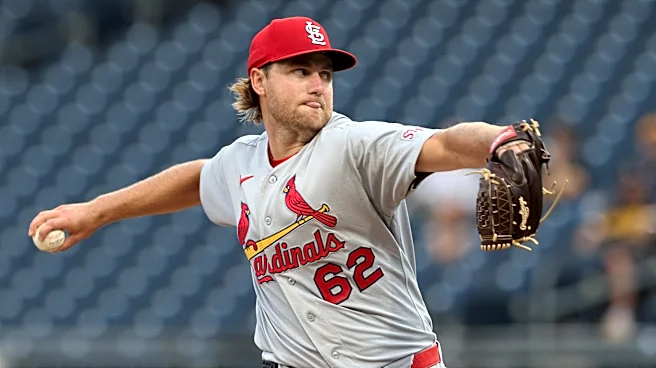
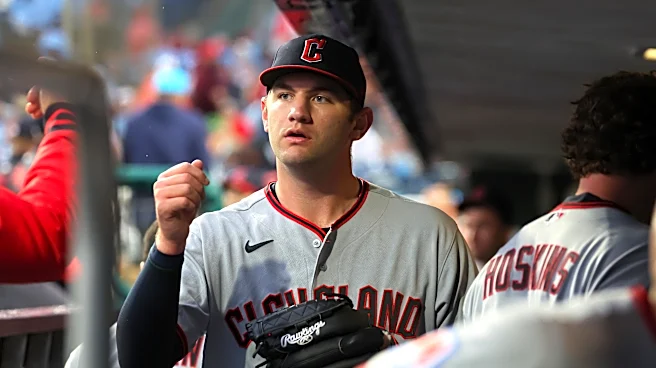
I have all sorts of questions for Brandon Marsh. Chief among them is how to grow a beard like that. But as this is a baseball site, and as my doomed attempts to grow impressive facial hair are likely of little interest to anyone other than myself, we’ll instead ask a different question: how has he been so good at the plate when his chase rate is up by double digits?
Specifically, it’s up by 11% (on the dot!), from 29.1% last year to 40.1% this season. That puts him in the sixth percentile for this season (that’s
set up so a higher percentile means being better at avoiding chasing). He was once a chase-averse hitter: he was in the 72nd percentile in 2023, and the 80th in 2024. That plummeted to the 42nd percentile last season, and now he’s among the most chase-happy hitters league wide. Only 12 batters chase more.
That said, you can chase a lot and still be a great hitter; Bryce Harper’s chase rate is only a few percentage points beneath Marsh’s. And right now, Marsh is hitting very well. Batting average isn’t the best statistic to measure a hitter by, but I’d be remiss if I didn’t mention that Marsh’s .325 is the fourth-best in baseball. His slugging percentage of .462 would be the highest of his career if it holds. His on-base percentage of .350 wouldn’t be; he had a .372 in 2023. And those numbers are more different than they appear: his 2023 OBP was built more on a high walk rate (12.5%) than on hitting, whereas his current OBP is the opposite, with his walk rate now a lowly 4%. So Marsh is playing not only like a better batter, but also like an entirely different one.
More chases and far fewer walks sounds like a recipe for disaster, but it’s clearly not working out that way for Marsh. So we have to ask: how’s he doing it? My first thought was that perhaps he was swinging more overall, accepting more chases in exchange for more hacks at balls in the zone that he can really do some damage on. And that’s not entirely wrong, but it’s not really what’s going on here. His overall swing rate has gone from 47.1% to 53.8%, but the lion’s share of that overall change was produced by his greater willingness to swing outside the zone. His zone swing rate is up by 2.3%, which is notable, but far less dramatic than the chase rate change.
But there is an equally dramatic change to go along with the chase rate spike. That would be the change to his chase contact rate. Last season he made contact on 51.6% of the pitches he chased. This season, it’s 62.2%. His in-zone contact rate is also up, but like the zone swing rate, it’s not by much. So what’s happening here is that Marsh has become both more willing to swing at pitches outside the zone, and better at making contact on them. That’s how you turbocharge your chase rate while also dropping your whiff rate and K% by a couple percentage points each; a pretty nifty little trick.
That explains how he can chase so much more without hurting his hitting. But that doesn’t necessarily explain how he’s hitting better than he did last year. He doesn’t appear to have some sort of ability to deal unusual damage on pitches outside the zone. My next thought was that perhaps his increased ability to make contact outside the zone was allowing him to foul off pitches to a greater extent, extending at-bats and eventually forcing pitchers to throw him something he could hit. But his plate appearances are, on average, shorter than they’ve ever been (3.45 pitches per PA). So that’s out.
I was hoping to uncover some sort of secret sauce (and I mean a real secret sauce, not the garden variety Russian dressing with a cute name you see at so many burger joints) explaining how Marsh is doing it. And it’s possible that such a sauce exists somewhere in the data, and that I’m just not seeing it. But at this point, I’m wondering if Marsh’s changed approach at the plate isn’t really the explanation for his improved hitting. Marsh has the fourth-highest BABIP in the league at .395. That’s up from .363 last year and .348 the year before that. The only full season in which he posted a higher one would be 2023. That 2023 season was the best of his career offensively, with an OPS of .830. This season, he’s got an .812. He hasn’t posted an OPS above .800 in any of his other campaigns. It would be too simplistic to say that Marsh is just benefitting from good BABIP luck, but I suspect it’s contributing a lot to his strong slash line this year.
It’s possible that his BABIP could remain this high over a full season; it did in 2023. But if it doesn’t, he could find himself in a struggle at the plate, with the impact of his greatly diminished walk rate making its presence felt. You can outrun regression to the mean in batted ball luck for a while, but not forever. Marsh is chasing more, but he’s also being chased.