





Welcome to our Phoenix Suns Season in Review series, where we revisit every player who suited up during the 2025–26 campaign through the lens of expectation, reality, and what it ultimately meant.
Player Snapshot
- Position: SF/PF
- Age: 23
- 2026-27 Contract Status: $2.8 million (team option)
- SunsRank (Preseason): 6
- SunsRank (Postseason): 11
*SunsRank is based on Bright Side writers’ ranking.
Season in One Sentence
Dunn’s development stalled out as he declined from a key rotation player to being out of the rotation.
By the Numbers
The Expectation
Going into this season, everyone (myself included) hoped that Dunn would build off of a promising rookie season and continue to grow into a solid rotation
player for the Suns’ future. Whether he started or came off the bench, we expected him to play high minutes and have a positive impact on games with his defense and rebounding. Offensively, the expectation was that he would continue to improve his three-point jumper and get comfortable in the new Jordan Ott offense.
The Reality
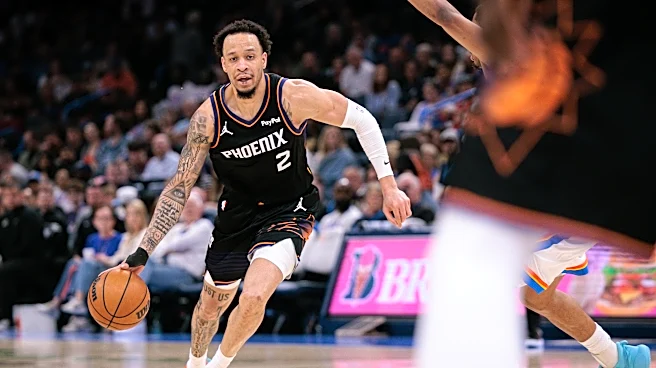
It was a frustrating season for Dunn as he showed the limitations and holes in his game during his sophomore campaign. He started the first six weeks of the season playing about 24 minutes a game in October and November, averaging over 8 points per game and shooting well from distance. As with many young players, the Dunn experience was highly volatile, and Ott opted to play more experienced players in his place, including Royce O’Neale, Jordan Goodwin, Haywood Highsmith, and Rasheer Fleming.
Dunn showed slight improvement in some areas this season; his three-point percentage ticked up from 31.0% to 33.1%, and he averaged more rebounds and assists than last season, too. However, the concerns remain about his shooting. He has yet to shoot over 50% from the free-throw line in his career, and while improving his three-point percentage from his rookie season, Dunn still looks hesitant and uncomfortable shooting wide-open threes. He only made 12 total threes above the break this year.

His strengths as a cutter and mover on offense do not outweigh his inconsistencies. So, until Dunn can become a reliable shooter, teams will opt to leave him open or foul him at the rim without any concerns because of his limitations.
Defensively, Dunn still gets whistled for fouls, making it hard for him to stay on the court against the league’s best players, and his energy and hustle did not match those of others around him. What we were hoping to get from Dunn this season was what Jordan Goodwin actually provided, and now the Suns have to decide if Dunn is worth building around moving forward.
What It Means
Dunn’s overall lack of development has him on the outs of the rotation heading into next season. He will not fetch much in return as a trade piece in any deal the Suns could pull off this summer, and his offensive limitations do not align well with the current roster, which relies heavily on spacing and three-point shooting.
Dunn is one of the most intriguing pieces on the Suns’ roster, as one of the few first-round draft picks of the decade. If Dunn can elevate his shooting and defensive impact, then the Suns could look to sign him to a team-friendly extension next season. If he continues to bounce in and out of the rotation, the Suns could move on after this season or next, when he has a team option for the fourth and final year of his contract.
Dunn has a lot of pressure to take a big leap in his third season. Right now, he is fifth in the pecking order of the Suns’ young players who need development. Jalen Green, Khaman Maluach, Rasheer Fleming, and Oso Ighodaro are all ahead of Dunn in priority because of their untapped potential. Last offseason, Ryan Dunn was a core piece to the Suns’ future; this offseason, he has become almost an afterthought.
Defining Moment
Dunn’s defining moment came early in the season against the San Antonio Spurs in November when he scored 17 points and grabbed five rebounds in a dominant win. He showcased everything he could be for the franchise if he could consistently knock down open threes, attack the rim, and play aggressive defense against one of the best teams in the NBA. Unfortunately, that confident version of Dunn rarely showed up in games the rest of the season.
Grade: C
Ryan Dunn deserves a C because even though his minutes in the rotation were inconsistent, he never detracted from the Suns’ identity and was always ready when his number was called on. It was not the big season we were hoping for, but he still contributed 19 minutes of hard-nosed, Suns brand of basketball every game this year.