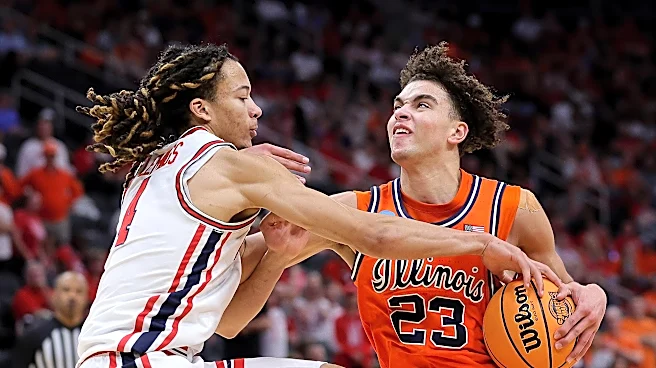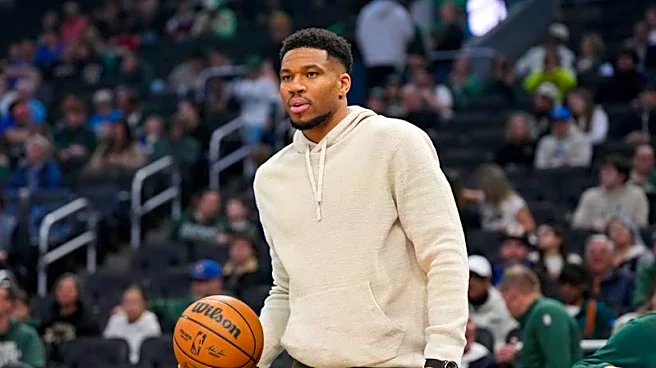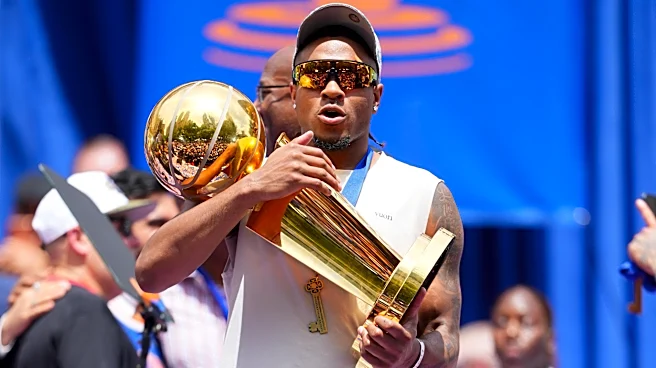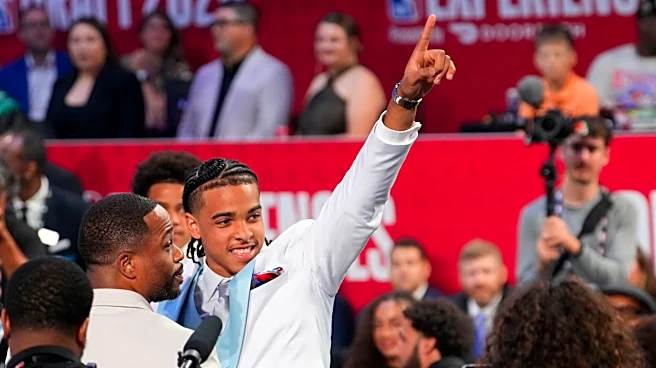




You’re telling me Leon Rose didn’t pick at No. 24 and instead decided to trade back multiple times to accumulate future second-round picks?
No… it can’t be. He’d never do something like this…
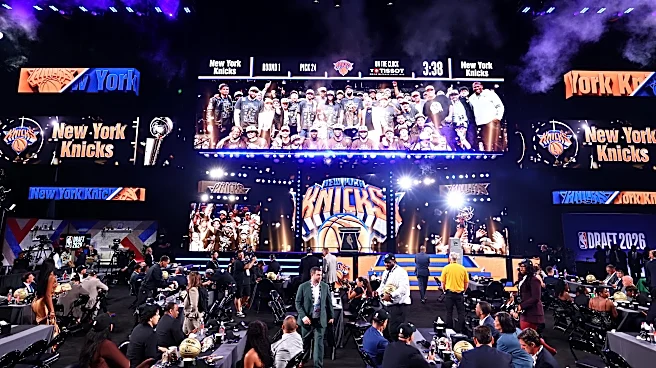
The Knicks entered Tuesday night with the 24th pick. They then traded back three different times (technically). They came out the other side with the No. 47 pick and four additional future second-round picks that will be known at a later time.
As of right now, the Knicks will enter Wednesday night with No. 31, No. 47, and No. 55. They are currently on the clock and appear likely to trade it… again. Never a dull moment with this front office.
You might’ve asked yourself once or twice tonight. Why the hell did the Knicks do this? Why not just pick one of these exciting college players? Why does Leon Rose do this every single year?
To answer those questions,
- That’s the subject of this article. Keep reading.
- See above.
- We’ll never know. Somewhere in his sick, twisted, mega agent mind, compels him to use the draft as his own personal bingo card. Maybe he’ll tell us on the Roommates Pod later today. I’ll try to elaborate my reasoning at the end.
Let’s get into the nitty-gritty. Why did the Knicks do this? Point blank, it’s about Brock Aller’s speciality: the cap.
The Knicks are operating as if the second apron is a hard cap that they will not exceed. Unlike the last two years, where they were physically hard capped, they have an open runway to exceed it. At some point, the brain trust deduced it wasn’t worth it. I personally disagree, given what this will mean for retaining this championship roster, but I’m just a lowly part-time, non-credentialed writer, while they’re making six figures (or more) in an NBA front office.
We’ve speculated for the past few days whether this was a feeling or their confirmed direction. We now know that they are dead serious. Barring a tremendous change of heart, the Knicks will not exceed the second apron in 2026-27.
Now that we’ve established that, here’s where the draft comes into play:
The No. 24 pick in the draft holds a slot value of $3,325,000. The 2026-27 veteran minimum is estimated at $2,457,000. That’s a difference of $782,000. For some reason, they decided to swap picks with the Lakers out of the kindness of their heart, saving them $130,000. When the Knicks selected likely EuroStash Sergio De Larrea with the 25th pick, you figured they’d just let him keep playing in Spain and pocket the money.
Now that he’s off to Dallas, they can do that anyway. They save the full $782,000 by not using a first-round pick.
This now gives them $16.9 million in second-apron space, with five roster spots to fill (or $21.4 million with six, depending on Jose Alvarado’s player option). This is a misleading figure, as we know the set amount that the Knicks are required by law (or at least CJ McCollum’s CBA) to fill those spots with.
So I have created a new(?) term. Effective apron space.
How does it work? Take however many open roster spots you have and multiply it by the vet min, which is $2.457m. Subtract your current apron space by this new number and you get effective second apron space.
If we assume Alvarado opts in, the Knicks have $4.63 million in effective apron space. That means they can add that money to a vet min and stay beneath the second apron, a number which comes out to $7,087,000. That’s above the Taxpayer Mid-Level Exception, which is nice.
If they had selected Cameron Carr and signed him to the full rookie scale, that space goes down by $782,000. It might not seem like much, but when you have two players hitting free agency who will demand sizable salaries, every penny counts.
Now, you might be asking, how do second-round picks fall into this equation?
Well, my dear friend, I have good news. The second-round exception is the cheat code for gaining more space. This is a Brock Aller niche.
A new feature in the CBA to make the second round more important, teams are now able to effectively go beneath the league minimum for roster spots if they sign their second-round picks to standard contracts.
The current estimate allows teams to sign any second-round draft pick to a three-year, $6 million contract with a critical Year 1 salary of a measly $1,361,000. That’s $1,096,000 beneath the vet min.
So, even though Shams Charania is saying that the Knicks are trying to trade out of No. 31, let’s say they keep the pick and select Isaiah Evans, someone who they were interested in at No. 24 and fell through the cracks. They’d now be able to sign him for nearly $2 million less.
It would also add an extra million to the team’s effective apron space. One second-round exception brings it up to $5.726 million, which would allow you to spend up to $8,183,000 on a player’s first-year salary, whether it’s Landry Shamet or an external TPMLE player.
If you sign two, which is in the realm of possibility? The space is up to $6.822 million, which would raise the number to $9,279,000.
Let’s do some diner napkin math. Let’s say Shamet’s market value allows you to sign him for, let’s say, four years and $32 million. Considering what he did in the playoffs, this feels fair, especially if he wants to stay in New York.
That would give him a Year 1 salary of about $7 million, which would eat into your effective apron space considerably. Without a second-round exception, you have no room to sign anyone else above the vet min.
With one, you could give an extra player up to two years and $7.46 million total under the mid-level exception.
With two? That number spikes to two years and $9.71 million. That’s an enticing amount for veterans looking to chase a ring.
So in summary, why did the Knicks do this? They did this because they want to stay beneath the second apron, do as much as they can in terms of retaining their talent, and put themselves in the best position to add externally.
They believe veterans will be more ready to help the team in their championship defense than rookies, a very short-sighted goal, but one we can all get behind because we are firmly in a contention window. No ifs, ands, or buts.
If you came here solely for the cap stuff, feel free to click off. If not, humor me below as I talk about Leon’s mindset come draft time, which I could put in a different article but I won’t. I’ll even bridge this with the highlights of the guy we had for 30 minutes!
–
Alright, where were we?
One thing is abundantly clear about Leon Rose in his six years as the President of Basketball Operations of our beloved New York Knicks.
It’s that he doesn’t give a flying f— about building through the draft.
In 2021, he punted the No. 19 pick for a future conditional Hornets pick that never conveyed. He kicked the can down the road and eventually used it with Kevin Knox to get Cam Reddish. He then traded him and the 2023 first to get Josh Hart. Think smarter, not harder.
In 2022, he got a second chance at a lottery pick after a disappointing season. With some spectacular players on the board, he traded it to OKC for three firsts, two of which were conditional, and one of them never conveyed (the Wizards pick, which is now the #31 pick and a 2027 2nd).
Two picks later, he traded back into the draft for Jalen Duren and swung him to Detroit alongside Kemba Walker in a salary dump. The full three-team move saw the Knicks give up their lottery pick, effectively, for a top-4 protected 2024 Bucks pick and two conditional picks. The salary dump started a process that got them Jalen Brunson.
In 2024, he had two consecutive first-round picks to use after the Mavericks successfully robbed us of a lottery pick with shameless tanking the year prior. He then traded one of those picks for a lot of seconds (more on that later) and used the other on a project in Pacôme Dadiet, who would agree to take $800,000 less. They used that extra money to fit Karl-Anthony Towns under the second apron.
Essentially, none of the picks he’s had over the years has he kept. Since 2020, only four players have been announced as Knicks and have stayed Knicks:
- Obi Toppin (No. 8, 2020)
- Jericho Sims (No. 58, 2021)
- Trevor Keels (No. 43, 2022)
- Pacôme Dadiet (No. 25, 2024)
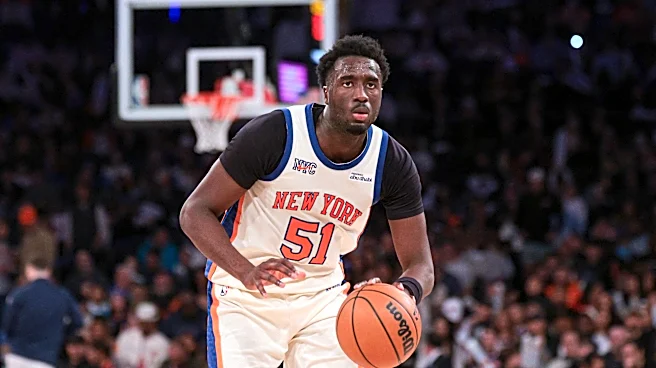
Everyone else, Immanuel Quickley, Quentin Grimes, Deuce McBride, Tyler Kolek, Ariel Hukporti, and Mo Diawara, were announced as someone else’s pick. The Knicks have now made a baffling 18 trades in 6.5 drafts under Leon Rose. The only year they didn’t make one was when they physically did not have a pick to trade.
The Knicks’ front office is a perfect one for a professional sports franchise.
They don’t care about your feelings. They don’t care about the fans’ wants. They care about one thing.
Winning.
Rose operates like he’s playing NBA2k MyGM. There’s no emotion, there’s no considering the wants of others, it’s all about what he needs.
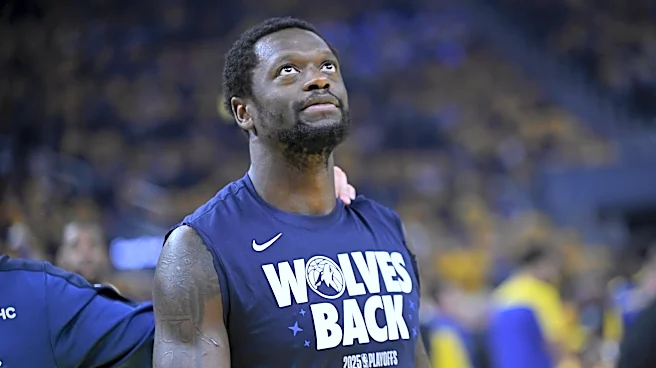
Knicks fans begged to trade Julius Randle and “Play the Kids” in 2022. He responded by doubling down with the Brunson signing and eventually traded almost every one of the kids (and Randle, eventually) for upgrades. It resulted in a Larry O’Brien Trophy. The roster that fans dreamed of in 2022 would’ve never even gotten us to the ECF.
Fans want a new toy every year. We barely saw any of Mo Diawara, and yet everyone can’t get enough of drooling over his potential. That’s how starved we are in terms of “shiny new toy syndrome”.
This is a front office that traded four unprotected firsts, a Bucks’ first, and a pick swap for Mikal Bridges, who’s currently the team’s fourth option. It’s the biggest overpay in NBA history in regards to true talent level and value, yet it doesn’t matter. He fit like a glove and is an NBA champion. Who the hell cares about those picks now?
Would Danny Wolf have brought us here? Would some 10th grader in a few years? Odds are, no!
This draft was simply a continuation of what Rose has done as President of Basketball Operations. A lot can be done on the margins, so you must take advantage of any margins you can.
By collecting five seconds, the Knicks have partially restocked a quickly deteriorating war chest. Remember what they traded for Jose Alvarado? Two seconds. How’s another few Jose Alvarado’s sound in the future?
Those are moves made on the margins. Moves that separate the good FOs from the great. It’s Sam Presti-esque, who I firmly believe is the only POBO better at his job than Rose, all things considered.
Speaking of Presti, the two are best friends on draft night. Remember when I said the Knicks traded the No. 24 pick in 2024 for a bunch of seconds?
The full details were that they traded that pick to the OKC Thunder for five 2nds (sound familiar?). They then used some of those to trade up for Tyler Kolek later in the draft.
The player that Presti selected? Dillon Jones, who was salary-dumped a year later, was waived by the Wizards and won a championship as a two-way player for the Knicks last week. Sure, Presti’s outsmarted us a few times with Ajay Mitchell and kinda Jalen Williams, but you take small wins when you can get ’em.
The Knicks are definitely not done in this draft, one way or another, so there’s still another chapter of the book to be written. One thing is for certain, though.
The Knicks are playing chess. A lot of other teams are playing checkers.