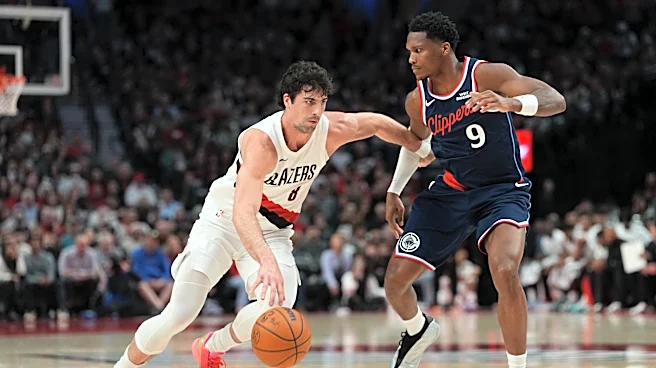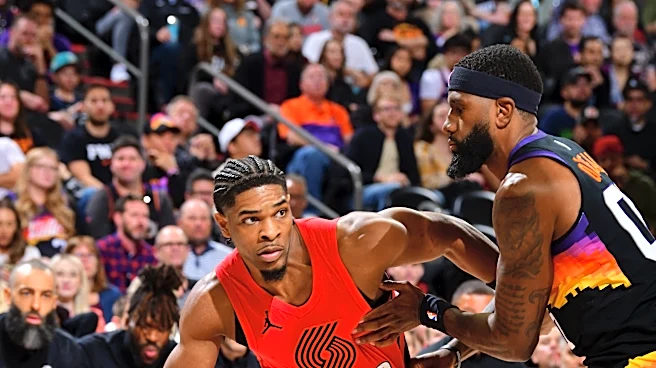





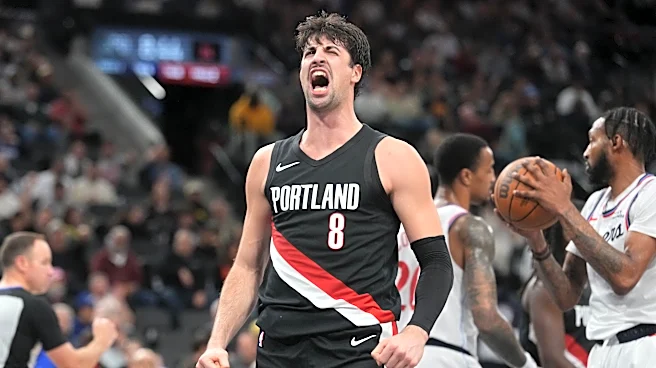
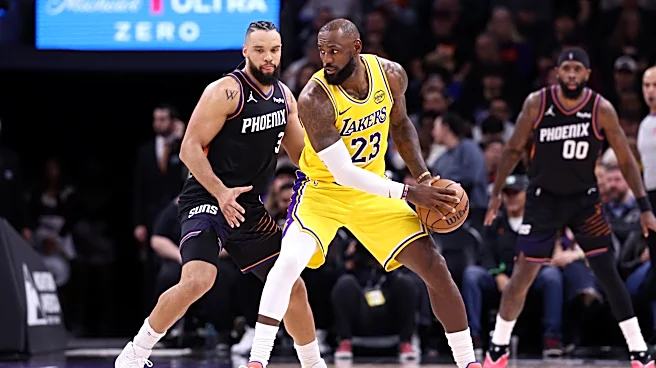
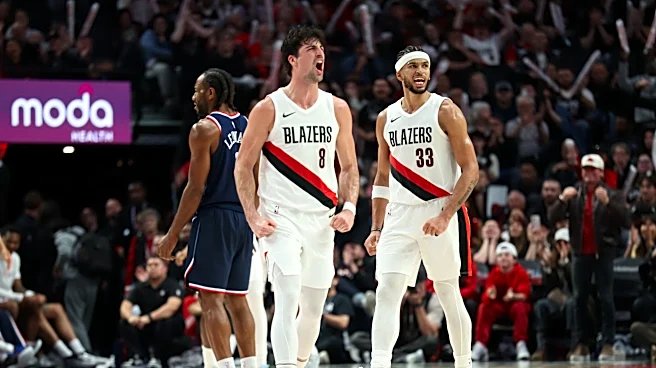
The Portland Trail Blazers and Phoenix Suns will meet in the first game of the 2026 NBA Western Conference Play-In Tournament on Tuesday night. The game will tip at 7:00 PM, Pacific Time.
In preparation for the big event, here’s a post covering all the details of the Play-In Tournament and the specific matchup between the two teams.
How the Play-In Works
For those just catching up to how the tournament works, here’s the breakdown:
- The winner of the Portland-Phoenix game will become the 7th seed in the Western Conference Playoffs bracket this year. That’s it. No more games needed. On to the first round!
- The loser of the Portland-Phoenix game will go on to play a second game on Friday night. They’ll face the winner of a parallel matchup between the Golden State Warriors and Los Angeles Clippers.
- The winner of Friday’s game will become the 8th seed in the Western Conference Playoffs Bracket. The loser is out of the playoffs.
Tuesday’s game is important to Portland for a few reasons. First, instant entry into the playoffs
is better than having to play a second game to get there. Second, the 7th seed in the West will draw the San Antonio Spurs in the playoffs while the 8th will get the defending champion Oklahoma City Thunder. San Antonio is a marginally easier assignment. Third, Tuesday’s victor will have most of a week to prepare for their playoffs opponent. The Friday winner only has a couple days. For all these reasons, winning on Tuesday is better than winning on Friday even though both will get you to the playoffs.
Phoenix vs. Portland Overview
The Suns and Blazers have played three times this season. Phoenix won twice, Portland once. Those games may not necessarily reflect the upcoming matchup, though.
In the first game between the two teams, way back on November 18th, the Suns beat Portland 127-110. Jerami Grant, Jrue Holiday, and Scoot Henderson all sat out the game with injuries.
Portland also lost to Phoenix 130-125 on February 3rd. This time the Blazers were without Deni Avdija, the Suns without star guard Devin Booker.
Portland finally broke through against Phoenix on February 22nd, winning 92-77. Once again the Suns were missing Booker. Portland was relatively full-strength, with Shaedon Sharpe the only major player on the injury list.
At no time have the teams faced each other anywhere near to full-strength. Tuesday’s matchup will be a new challenge for both sides.
By the Numbers
One of the most fascinating aspects of the Portland-Phoenix matchup is how the teams paralleled each other statistically this season.
Point Production
The Blazers rank 17th in the NBA with a 115.5 per game scoring average. Phoenix comes in 26th at 112.6. This would appear to give Portland an offensive advantage.
Flip the coin to the other side and Phoenix allows 111.1 points per game, 6th best in the league. Portland ranks 16th at 115.8.
Put that all together, and you’ll find that the margins nearly null out. Portland has a -0.3 scoring margin, Phoenix +1.5. That’s a small advantage for Phoenix overall but the small difference isn’t likely significant in a single game. Modest margins of victory are exactly why these two teams hover around .500. You can flip a coin to see which will prevail on a given night. It’s been that way most of the season.
Style of Scoring
One of the significant differences between the two teams is how they score. Portland generates around 48 points in the paint per game, Phoenix just 43. The Blazers aren’t great, but the Suns are near paint-phobic. Phoenix defends the interior slightly better, but the margin isn’t enough to make up the difference.
Both teams take a large number of three-pointers. Portland ranks 3rd in the league in three-point attempts, Phoenix 5th. But Phoenix ranks 12th in the NBA in three-point percentage at 36.1%, the Blazers a rancid 28th at 34.3%. The three-point arc is likely to be a major contention point. Whoever gets hot on their threes will have a massive advantage, given the amount both teams shoot.
The foul line is another huge differentiator between the teams. Portland generates 25.2 foul shots per game (9th in the NBA), Phoenix just 20.3 (28th). That’s a significant gap.
If the Blazers can establish an inside game, cutting and drawing fouls, then use that to free up their three-point shots, they’re likely to fare well. If the Suns spread Portland’s defense via the long ball then find openings inside, that’s a big advantage for Phoenix.
Defense
Phoenix excels defensively in a couple of ways.
- They’re 2nd in the league guarding the arc, allowing just 34.7% distance shooting to opponents. They allow the 6th-fewest three-point attempts at 35.1 per game.
- They’re 3rd in the league in steals per defensive play, 3rd in overall turnovers forced per possession.
This hits Portland in a couple of weak spots. First, the Blazers aren’t good shooters. Throttling down their already-poor three-point marksmanship may impoverish the offense entirely. Second, Portland is infamous for the number of turnovers committed, worst in the NBA. Phoenix is viewing that like a pack of dogs after a ketchup-covered pork chop.
The Blazers aren’t helpless, though. They’re 7th in the league at turnovers forced per possession, 5th in opponent three-pointers attempted. Phoenix wants to play on the perimeter. The Blazers will be in the business of making that tough for them, not allowing them to get off shots outside or pass freely.
Here’s a potential issue for Portland. Phoenix ranks 3rd in overall field goal attempts allowed at 85.5 per game. Portland shoots 90 on average. The Suns also average 90 shots; the Blazers allow 89.3.
Portland succeeds (or at least succeeds more readily) when they generate a significant edge in field goal attempts. They’re starting five in the hole, on average, against Phoenix. Outside of offensive rebounding, Portland’s number one way to generate more shots is usually quick three-pointers, exactly where the Suns defend the best.
It should be pretty easy to see how this game is going for Portland. Are the Blazers getting good shots? Are those attempts coming early in the shot clock? Whether they fall at a given moment is probably beside the point. If Portland is generating open looks at a fairly rapid tempo, they have a decent chance. If they’re going isolation against coverage, slowing down, and end up shooting from range (particularly with a hand in their face) they better hope that foul shot advantage gets really big. Otherwise it’ll be a long night.
Rebounding
Normally rebounding, particularly offensive rebounding, provides a counterpoint to the Blazers’ ills in shooting and shot generation. Portland ranks 2nd in offensive rebounding percentage at 31.3%, a significant number. The problem is, Phoenix comes in at 28.9%, a hair lower but still good for 7th in the NBA.
This may be the secret battleground on which the game is decided. If the Blazers generate the same rebounding margins against Phoenix that they do against most teams, they’re going to have a great chance to overcome the Suns’ edges over them. If Phoenix stays even or wins that rebounding battle, Portland is forced to rely on made threes and/or free throws to generate extra points, if not both.
Otherwise…
Other than that, these teams are nearly identical in a dozen other stats. They shoot similar percentages from the floor. Defending field goal percentages are nearly identical as well. Their pace is a little different (103.6 Portland, 100.1 Phoenix) but neither one is good on the break. Neither one generates many assists as a percentage of their total buckets. Basically, it looks like two teams scrambling to establish an identity, succeeding in a few ways each but otherwise ending up pretty nondescript.
Key Matchups
The stars for these teams—Devin Booker and Deni Avdija—will be the most immediate factor governing success. Both have capable supporting casts, but without the dominant leader, these aren’t playoffs-level squads.
Booker is averaging 26 points and 6 assists in 33.5 minutes per game for the Suns this year. He’s an all-round scorer. His weak spot this season has been the three-point shot. He’s averaging only 33% for the season beyond the arc. But you may remember him from the All-Star Weekend Three-Point Contest. Whatever those percentages say, leaving him open for threes would be a bad idea.
Equally concerning for Portland about Booker: he generates 8.1 free throw attempts per game. That’s not the 9.2 that Avdija creates, but it’s close enough that a little home cooking could easily make up the difference. Portland lives off of those Deni free throws. Having them matched would not be good.
Avdija is averaging 24 points, 7 assists, and 7 rebounds in 33 minutes per game. He’s a better defender than Booker is on most nights. But his three-point shooting is even worse at 32%.
Here’s the big thing to watch for: is either star converting or getting fouled consistently off the drive? If that’s happening, the other side is in trouble.
Hot rod firecracker Dillon Brooks provides Phoenix a secondary scorer. He averaged 20 points per game this season, though he’s only topped that mark once in his last five games since returning from late-season injury.
The rest of the cast—Jalen Green, Grayson Allen, Collin Gillespie, and Royce O’Neale—all fall under a similar banner: can defend just fine, truly dangerous when they start hitting threes. This is the place where the Blazers can get undercut. If you make any of these players create shots, or even work for them consistently, you’re probably going to keep even with them. As soon as they get hot from the arc, the Suns will smoke you. The big riddle for Portland will be containing Booker’s drives while recovering to the perimeter to stop wide-open shots from the players alongside him.
Of moderate interest, at least, is center Mark Williams. Blazers center Donovan Clingan has the size advantage, but Williams is quicker. Williams doesn’t have a perimeter offensive game and he’s not as strong of a rebounder as Clingan. But if Williams runs Clingan around or gets Donovan in foul trouble, Portland is not the same team.
Phoenix also has no problem going small. The Blazers can play that game too. Jrue Holiday, Scoot Henderson, Shaedon Sharpe, and Toumani Camara can get around the court. All are dangerous. But Portland’s smaller lineups sometimes get swamped defensively and aren’t as apt at scoring as you’d think, given their firepower. Watch for Portland’s guards to provide energy covering the floor. If they’re mobile and pesky, Phoenix won’t overwhelm them. If the guards get tired and fail to move, the Suns could generate an offensive advantage that the Blazers can’t overcome.
Final Analysis
There’s no way to call a winner in this one, or even to say one team or the other has a definite edge. It all depends on the type of game and who executes better. Portland letting Phoenix free at the arc would be a major mistake. The Suns allowing the Blazers to drive the lane hard and rebound strong would be equally bad. Each wants to rebound and take advantage of the turnover game to generate edges, but neither one takes care of the ball well enough to press that advantage consistently. The one dark horse factor may be that Phoenix wants the refs, but Portland needs them. Playing in a road arena makes those whistles harder to come by sometimes.
This feels like the kind of contest where one team is going to get hot and have it easier while the other team struggles. Whomever starts out on the correct end of that equation is going to have a significant advantage gaining the win. But we’re not going to know who that is until the ball tips on Tuesday night.