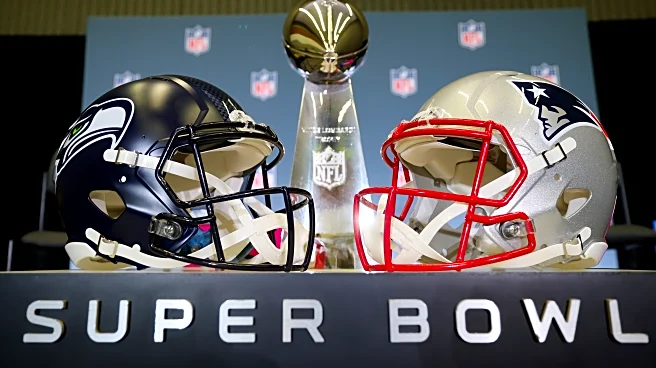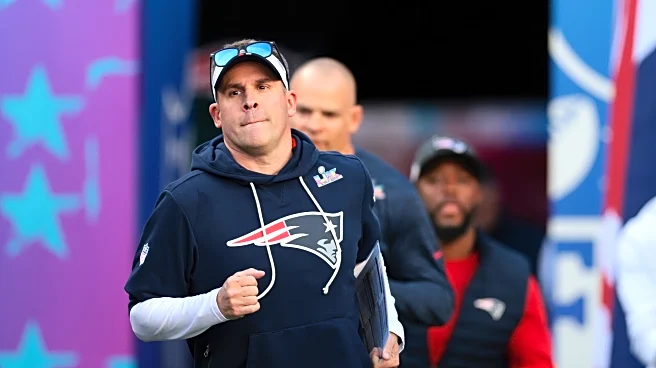

Led by NFL Assistant Coach of the Year Josh McDaniels, the New England Patriots offense was among the very best in the league during the regular season. In the playoffs, however, the unit ran into repeated issues culminating in a 29-13 defeat against the Seattle Seahawks in Super Bowl LX.
While the Patriots showed some promise on their first two drives, gaining three first downs and driving into Seattle territory both times, it could not get anything going on that side of the ball afterwards. It took
McDaniels’ crew until the early fourth quarter to cross midfield again, at which point the team was already trailing 19-0.
The reasons for New England’s offense being virtually nonexistent for more than two quarters are manifold and intertwined. One of the more curious aspects, however, was the team’s personnel usage and by extension game plan: despite the offensive line clearly having issues in pass protection and Seattle being comfortable operating predominately out of nickel and dime looks, the Patriots neglected to go big.
The following breakdown illustrates this:
The usage of two players illustrates this more than anything. Fullback Jack Westover was on the field for only five snaps, his lowest output since Week 3. Thayer Munford Jr, the Patriots’ jumbo tackle regularly used as an extra blocker up front, played one solitary snap on the second drive of the day, that ended with the team picking up 21 yards on a pass to Kayshon Boutte.
New England seemingly entered the Super Bowl relying on its core group of players and the concepts they were comfortable with, but the Seahawks simply did not give up much ground. And yet, McDaniels and company kept at it even as the deficit continued to grow and quarterback Drake Maye got increasingly more flustered operating from a muddy pocket regularly collapsed by Seattle’s four-man rush.
While head coach Mike Vrabel noted after the game that the fatal flaw was a different one in his eyes — “I think the turnovers ultimately cost us.” — the Patriots’ offensive inconsistency as a whole sunk the operation in the first place. And while it would be too simple to point to New England being underprepared, the apparent “wear and tear” approach also did not show many positive results until it was too late.
And even when it did starting with a touchdown drive in the early fourth quarter, the overall execution under what had become an increasingly high-pressure situation was not up to par either. For Vrabel, it all blended together.
“It starts with us as coaching staff and making sure that we’re doing our part,” he said. “And then obviously, we have to be able to execute. We got to be able to protect. When we do protect, we have to be able to progress through and throw the ball to the guy that’s open and help the quarterback. And then he’s got to be better. That’s just how it goes. That’s never going to change.”