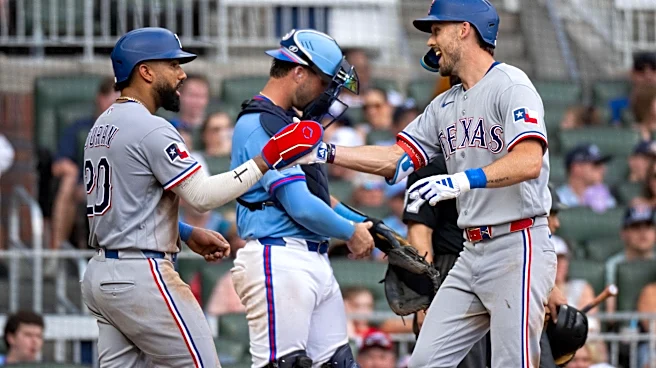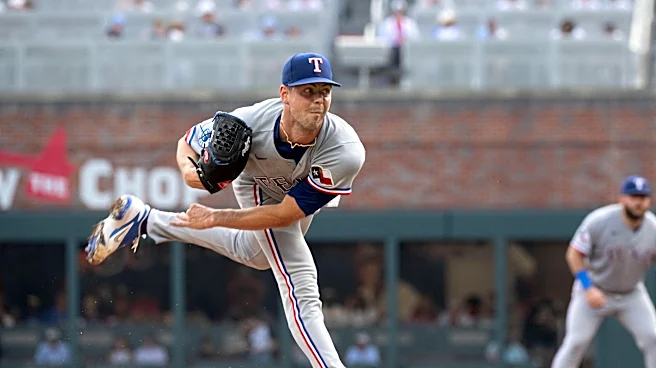





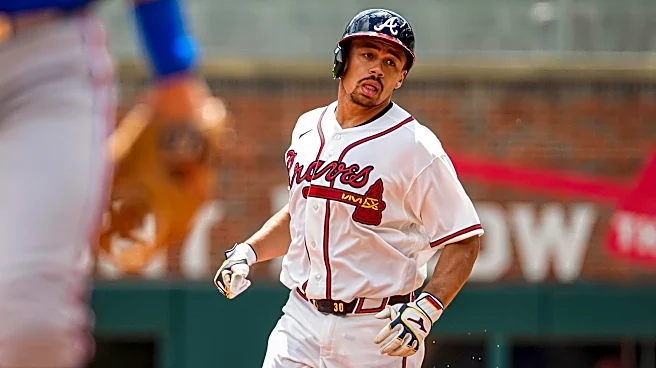
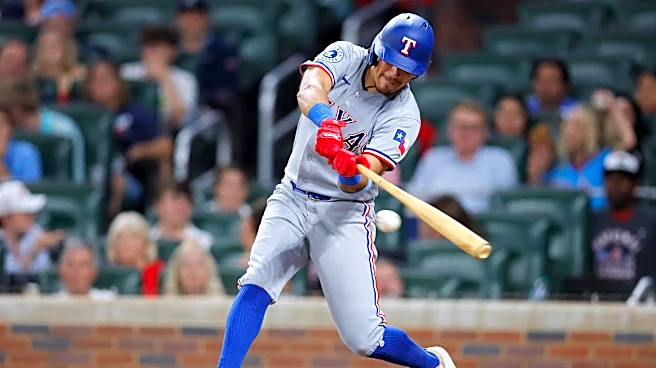
Back in January, Paul Toboni made his biggest move of his young Nats tenure, trading MacKenzie Gore to the Texas Rangers in exchange for 5 prospects, none on top 100 lists, but all with their own unique traits. Six months later, let’s check in on how the trade is working out for both the Rangers and Nats.
Starting with Gore, both his expected and actual numbers have taken a hit in his first season with the Rangers, as his ERA has jumped from 4.17 to 4.80, and his FIP from 3.74 to 3.82. As has often
been the case with Gore, he is generating plenty of swing and miss and has the occasional start where he dazzles, but too often, he loses command of the zone and gives up loud contact, resulting in outings where he is shelled and pulled early. Of his 21 starts this season, he has allowed 4 or more runs seven times.
Gore’s expected numbers are better than his actual numbers currently, suggesting he should improve in the long run, but this is also the third straight season where Gore’s FIP has been much better than his ERA. FIP also does not account for all the loud contact Gore gives up that does not leave the yard, reflected in his 14th percentile hard hit rate. Many wondered if Gore would put it all together upon leaving the Nationals organization, but so far in Texas, it’s been the same story that Nats fans became familiar with for Gore.
As for the return package the Nationals got for Gore this winter, the headliner of the deal was Gavin Fien, an infield prospect who was selected 13th overall in the 2025 MLB Draft. Fien has actually not played any infield this season, becoming a center fielder primarily.
Fien got off to a slow start in the Nats organization, but has been one of the better bats in the system recently, with a 124 wRC+ since June 1st. As it stands, Fien likely profiles in a corner outfield spot more long-term, and his hit tool appears to be about average, with solid raw power and a strong ability to hit fly balls to his pull side. Fien doesn’t quite look like he’ll be a franchise cornerstone for the Nats, but he could be a solid corner outfielder in the bigs one day.
The prospect who has been the most discussed from the Gore trade this season has been Devin Fitz-Gerald, who started the season off in High A, despite never going above Low A in the Rangers organization. Fitz-Gerald lit up High A pitching, with a 132 wRC+ in 51 games, but his offensive success has come to a screeching halt in Double A, with a 28 wRC+ in 30 games, and just 1 home run compared to 12 in High A. Still just 20 years old, I’m not letting Fitz-Gerald’s recent struggles deter me too much from his long-term projection as a pure hitting second baseman.
The first prospect in the Gore return to make the big leagues was Abimelec Ortiz, who got one start right before the All-Star Break, where he smoked a double in his second big league at bat, before being returned to Triple-A. Ortiz has been as advertised so far for the Nats in the minors, a first baseman with plus raw power and the ability to tap into it, posting a 117 wRC+ and hitting 17 home runs in 74 games. He may be in line for regular big league at-bats the rest of the season if Luis Garcia Jr. is indeed traded.
Yeremy Cabera was one of the more underrated names in the Gore return package, but he announced himself loudly upon his Nats organization debut, with a 186 wRC+ in 30 games at Low A. He earned a callup to High A, but he has struggled since his callup, with a 58 wRC+ in 49 games there. He had some swing-and-miss concerns even when he was dominating Low A, and those have unfortunately followed him to the High A level. Cabrera has the traits to be a big league center fielder one day, but he’ll need to make enough contact to make it there.
The most mysterious prospect in the Gore return is Alejandro Rosario, a right-handed pitcher who missed most of 2025 with an arm injury, yet did not get the required Tommy John Surgery until just a few months ago. It’s unknown what took Rosario so long to finally go under the knife; if he had gone through with it last season when he was injured, he may have already been back. Nevertheless, he should return to the mound in 2027, where, if he is as sharp as he was pre-injury, he could turn out to be a steal for the Nats.
It’s far too early to declare a winner and loser of the MacKenzie Gore trade, as it’ll take years for the prospects received’s careers to play out. What we can note, however, is Gore has not had the breakout some expected upon leaving the Nats, and the Nats added 5 prospects who broke their top 30 prospects on most publications, with 1 already making a big league impact, and one cracking many top 100 prospect lists. I expect it is a deal the Nationals would do over everytime, and one the Rangers may want back.