
I’m not proud to admit this, but I did not watch much Georgia Tech basketball this season. And honestly, that fact alone may say everything you need to know.
For the better part of the last 15 years, watching Tech basketball has been part of the routine. Good, bad, ugly, it didn’t matter. I tuned in. During 12-19, 13-19, and 12-20 seasons, I still watched every game. Back when my friends and I were students, we were in the front row of the student section every game, even as Tech cycled through disappointing
seasons and never finished higher than ninth in the ACC.
But this year, apathy finally set in.
And yes, the 11-20 record and two conference wins are the obvious explanations. But Tech has had bad seasons before. So what made this one feel different?
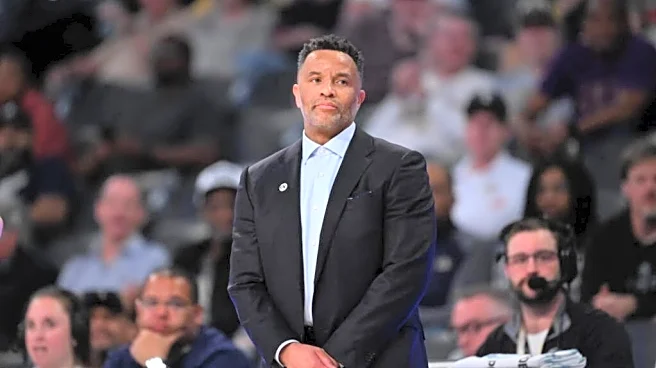
Maybe it was the massive step backward under Damon Stoudamire. After going 14-18 in his first season, then improving to 17-17 with an NIT berth in year two despite major injury issues, this looked like a program that was at least trending in the right direction. A jump to relevance did not feel crazy. A collapse to 11 wins did.
Maybe it was the embarrassment of being, statistically, the worst team in power conference basketball. Entering Saturday, Georgia Tech sat 169th nationally in KenPom. Boston College was just ahead at 160th, and then the next lowest power conference team was Penn State all the way up at 137. That is not just bad. That is isolated bad.
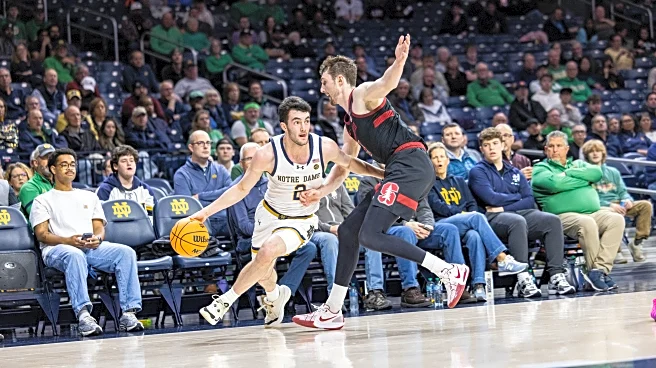
And part of why Tech ranked so poorly is that these were not heartbreaking, competitive losses. These were beatdowns. Since the team’s last win on January 17, Tech lost by 14 to Clemson, 16 to UNC, 23 to Stanford, 16 to Wake Forest, 15 to Notre Dame, 26 to Virginia, and 17 to Louisville. To anyone watching from the outside, it looked like a team that had stopped competing.
Some fans would say the warning signs were there from game one, when Tech needed overtime to beat Maryland Eastern Shore.
So, what went wrong? How did it get this bad?
- Injuries wrecked any chance at continuity
This has to start with injuries. Freshman Mo Sylla, the five-star recruit who was supposed to be Damon Stoudamire’s headline recruiting win, played just 16 games. That hurt Tech in two major ways. First, his talent simply was not on the floor for nearly half the season. Second, his constant availability issues made it nearly impossible for the team to build any kind of rhythm or consistency.
Sylla has not played since January 24, and Tech went 0-11 after that point.
And while Sylla is the biggest name here, he was far from the only player to miss time. Not a single Tech player made it through the entire season healthy. Even Baye Ndongo missed four games. Injuries do not excuse everything, but they absolutely help explain why this team never looked settled. - Baye Ndongo did not make the leap Tech needed
Baye Ndongo looked like a future star almost immediately. As a freshman, he made the ACC All-Rookie Team. As a sophomore, he took another step and earned Third Team All-ACC honors. Naturally, the hope entering year three was that he would make another jump and become one of the clear pillars of the program.
That did not happen.
Instead of breaking out, Ndongo stagnated, or maybe even regressed. His minutes, rebounds, and scoring all dropped from last season. On a team desperate for a reliable centerpiece, Tech needed him to become more dominant. Instead, he became less impactful.
That is not all on him, of course. Injuries, roster instability, and poor spacing all played a role. But if you are asking why this season cratered, the lack of a true leap from Ndongo is a big part of the answer. - The turnovers never stopped
This one will sound painfully familiar to Georgia Tech fans.
Turnovers have felt like a recurring problem for years, and this season was no different. Tech averaged 13.4 turnovers per game, ranking 328th nationally. That is the kind of number that makes it hard to function offensively, no matter what else you do well.
You cannot be a poor shooting team and a sloppy team. You especially cannot do that in a league as unforgiving as the ACC. Too many empty possessions, too many avoidable mistakes, and too many stretches where Tech beat itself before the opponent even had to. - The half-court offense just did not work
At some point, the simplest explanation is the right one: Tech struggled to score.
The Jackets ranked 301st nationally in two-point percentage at 48.4 percent. That means they were not just missing jumpers. They were inefficient inside the arc too. For a team that was supposed to have frontcourt pieces like Ndongo and Sylla to work through, that is a killer.
It is hard to win when you cannot generate easy offense, and Tech rarely looked like a team with a dependable identity in the half court. Too often possessions felt cramped, rushed, or broken before they ever had a chance to produce a decent shot. - The three-point shooting was not bad enough to blame, but not good enough to matter
This is where the season gets a little more frustrating, because the raw numbers do not tell the full story.
Georgia Tech ranked 123rd nationally in three-point percentage. That is not good, but it is far from disastrous. The bigger issue is that three-point shooting needed to be a strength for this roster, and it was not.
Tech attempted just 19.8 threes per game, ranking 291st nationally. For a team that needed spacing to open up the floor for Ndongo and Sylla, that number is way too low.
One of the top incoming transfers was Kam Craft from Miami (OH), a player who had made 2.9 threes per game while shooting 43 percent. This year, he dropped to 1.6 made threes per game at 36 percent. That is a major decline in the exact skill Tech brought him in to provide.
To be fair, Kowacie Reeves was one of the few bright spots, averaging 2.1 made threes per game at 38 percent. But even he had streaky stretches, including games of 2-for-9, 3-for-9, 2-for-10, and six games without a made three. Jaeden Mustaf also shot well at 40 percent, but only attempted 1.8 threes per game.
So the problem was not just accuracy. It was volume, consistency, and the fact that Tech never really leveraged shooting as a true offensive weapon. Without that threat, the paint stayed crowded, and the entire offense became easier to defend. - A little bit of bad luck too
This is not the kind of point anyone wants to hear after an 11-20 season, but it is worth mentioning.
According to KenPom, Tech ranked 267th in “luck,” which is essentially a measure of how a team’s actual record compares to what its underlying metrics say it should be. In plain English, the numbers suggest Georgia Tech probably should have had a slightly better record than it ended up with.
That is not exactly comforting. No one is hanging a banner for “better than your record in theory.” But if the question is what went wrong, then yes, some amount of bad fortune belongs in the conversation too.
So what went wrong?
A little bit of everything.
Injuries wrecked the rotation. Baye Ndongo did not take the leap Tech needed. The team turned the ball over constantly. The offense could not score efficiently inside. The shooting was supposed to be a strength, but it never became one. And once the losses piled up, the effort and belief seemed to vanish too.
That last part is what made this season feel different.
Georgia Tech has had bad teams before. Tech fans have lived through bad records, empty stretches, and long winters. But there was usually still something that kept you invested. Maybe it was young talent. Maybe it was fight. Maybe it was just the habit of believing the next game might be different.
This year felt empty.
And maybe that is the most damning thing you can say about a season. Not just that the team lost, but that it became hard to care. For a fan base that has shown up through plenty of losing before, that is a new low.
An 11-20 record is bad. Two conference wins is bad. Being at the bottom of power conference basketball is bad. But more than anything, this season felt like a program spinning its wheels and then falling into reverse.
That is what made this year so frustrating. It was not just losing. Georgia Tech fans have seen losing before. It was the sense that a team that seemed to be building toward something instead took a massive step backward in almost every way imaginable.
However this season ends, that is what fans will remember. Not just that Tech was bad, but that for the first time in a long time, it became hard to even recognize what this team was supposed to be.