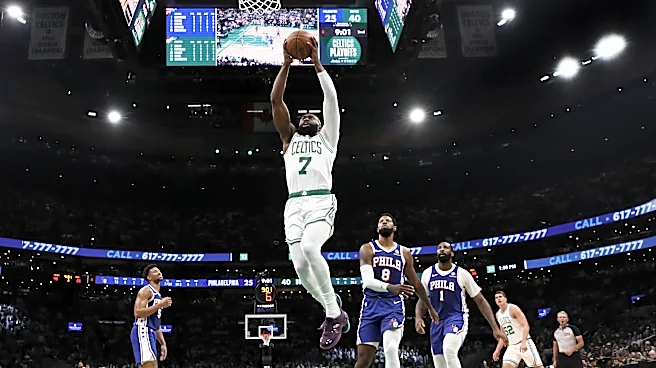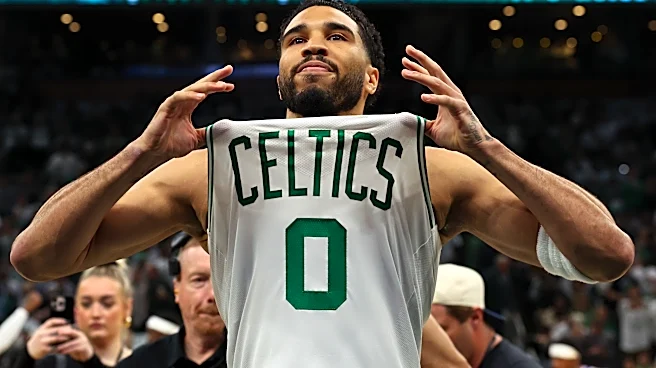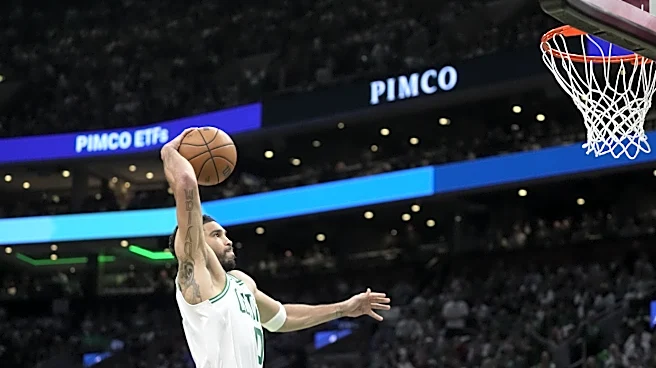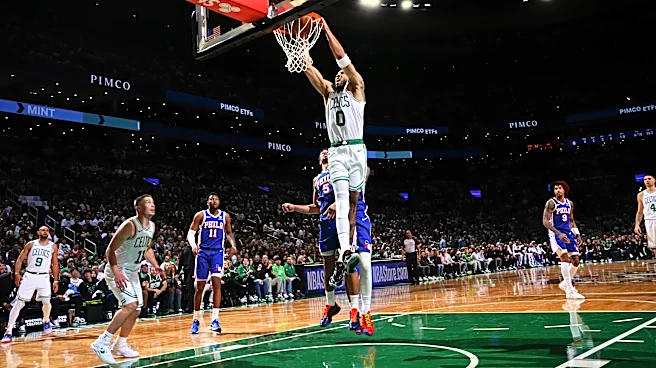





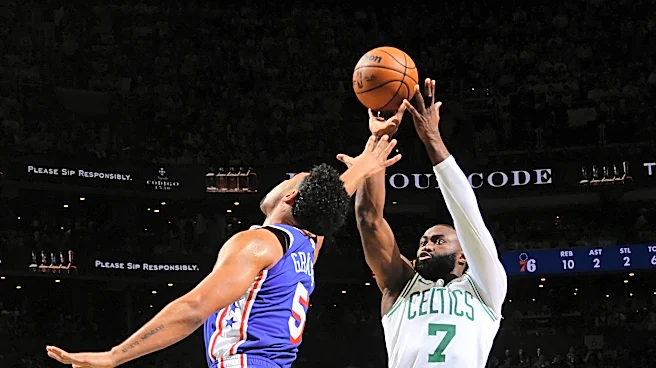
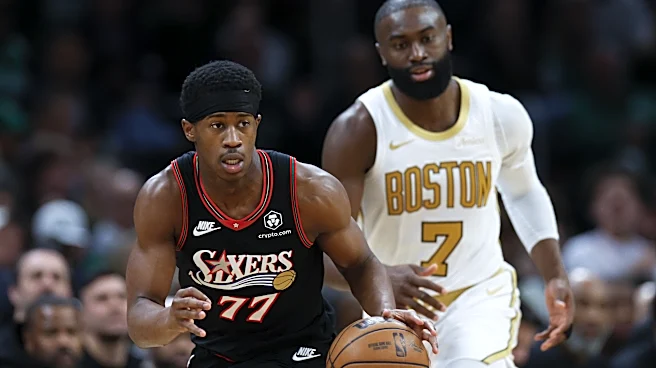
The Philadelphia 76ers targeted Jayson Tatum early and often in Game 1 — and may have revealed that one of Boston’s old strengths is still available for another title run.
Now, it’s no secret that Tatum is back and looking good. He made headlines with a dominant showing in his return to playoff basketball on Sunday, finishing with 25 points on 52.9% shooting from the field, 11 rebounds, 7 assists and 2 steals, as he and Jaylen Brown led the Celtics to a 32-point blowout.
While his offensive output
was impressive, his defensive performance may be just as important for Boston’s title chances.
Tatum has always been a strong defender. He’s got the length and lateral agility to stick with guards on the perimeter, and the size and strength to battle with some big men in the post. That versatility enables the Celtics to deploy a highly switchable defense, especially when the team runs Tatum as a small-ball 5.
The Celtics utilized Tatum defensively against opposing 5s to great effect during the team’s 2024 championship run, when it used the strategy to defang the lob-happy Mavericks in the Finals. By having Tatum guard Dereck Lively II or Daniel Gafford and switch on screens, Boston neutralized the benefits of Dallas’ 1-5 pick and rolls, as Luka Dončić was unable to use the action to hunt the Celtics’ slower big men. Limiting that action also pulled Dallas’ bigs out of their comfort zone, since they were unable to fulfill their most dangerous roles as PnR lob threats.
Nevertheless, last year’s Achilles tear threw all of that into question. The Achilles tendon is like a spring that enables people to push their feet off the ground, so many who rupture it lose lateral agility and explosive burst — two crucial factors for a defender in the NBA.
Yet in the small sample since his March return, Tatum’s defense has shown little evidence of a drop-off.
In the 16 games he played before the end of the regular season, Tatum posted a career-low in block percentage (0.6%), but also career-highs in defensive rebound percentage (31.3%) and steal percentage (2.1%). While advanced defensive metrics can be unreliable, Tatum set another career-high with a +1.8 in defensive box plus/minus, according to Basketball Reference.
However, the Sixers did not appear to be convinced heading into Game 1.
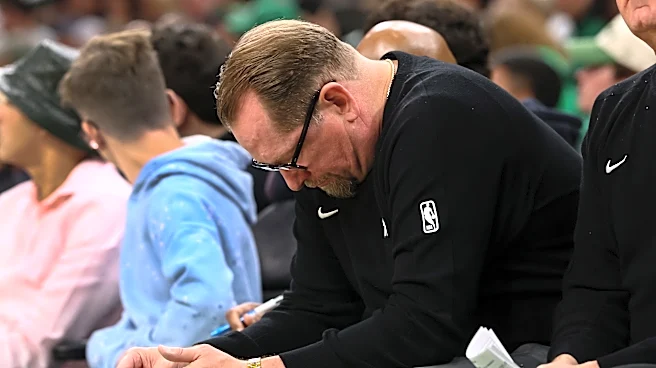
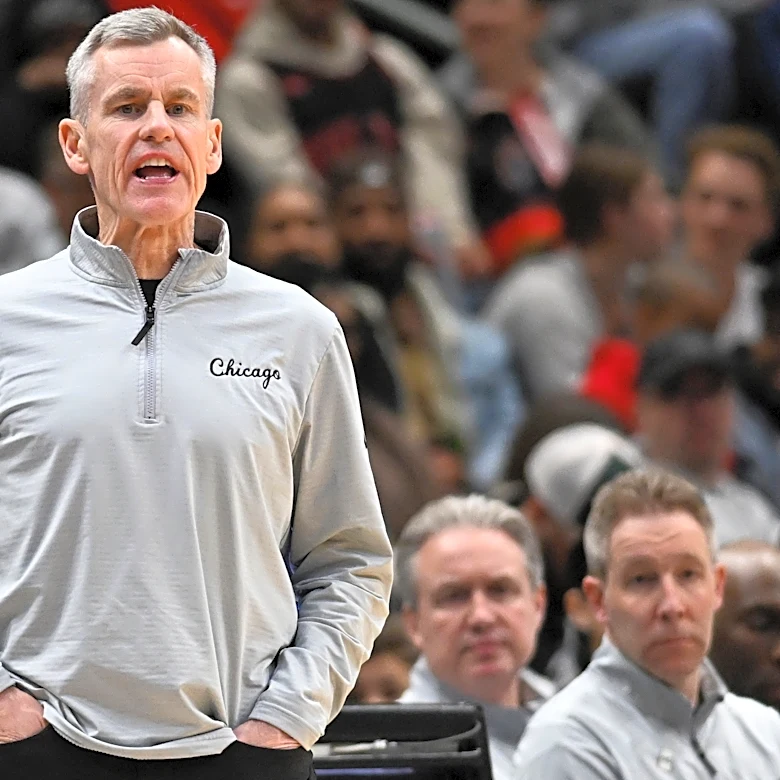
The NBA Playoffs are all about poking and prodding for weaknesses, then game planning to exploit those weaknesses. Philadelphia Head Coach Nick Nurse clearly believed Tatum’s defense could be a potential weakness, as the Sixers deliberately targeted him from the jump.
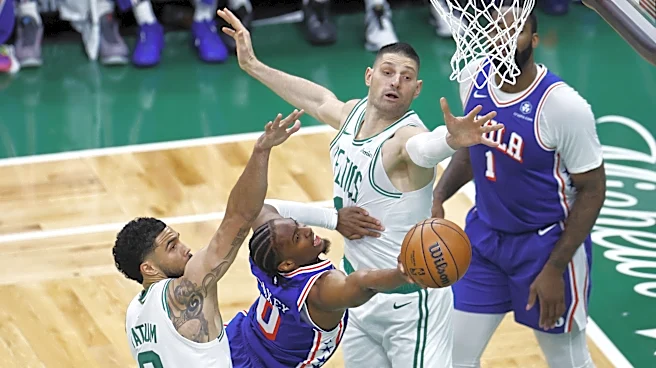
In Philly’s second offensive possession of the game, Sixers star Tyrese Maxey isolated Tatum on the wing, pulled back to wind up for a blowby, then drove to Tatum’s left. But, instead of a blowby, Tatum stuck hip-to-hip with Maxey, steered him to the baseline and forced a pass into a missed corner three-pointer.
If that was an isolated incident it wouldn’t mean much, but it wasn’t. Maxey — whose blazing speed makes him a tricky cover on the perimeter — targeted Tatum in isolation three more times in the first quarter alone. Of those four isolation possessions, Maxey only scored on one, where he drove into the paint, improvised a couple moves and slipped a circus shot past the outstretched arms of Tatum and Nikola Vučević.
Four possessions is very little to work with, but the results did not appear to be a fluke. Tatum was able to keep up with Maxey’s drives, dance with him on the perimeter and get a good contest on each shot.
Nurse and the rest of the Sixers must have noticed, too, since they tested Tatum in isolation less and less as the game went on. In the second quarter, Maxey and Kelly Oubre Jr. both got an isolation possession against Tatum, but neither resulted in a bucket. By the time the third quarter rolled around, the Sixers had multiple chances to isolate Tatum, but started passing out to explore other action. Philly only tried to isolate him twice over the second half of the game, with neither attempt proving successful.
In addition to his impressive work in isolation, Tatum played solid help defense and displayed his elite versatility by switching onto multiple Sixers, including Philly’s 6’10” starting center, Adem Bona.
Overall, the Sixers only shot 6-19 from the field (31.6%) in Game 1 with Tatum as the primary defender, according to NBC Sports Boston’s Chris Forsberg.
That number will change as the series progresses — Philly struggled to hit shots all night and likely won’t continue to shoot so poorly — but Tatum has so far passed the test with flying colors.
While Tatum has yet to be tasked with regularly guarding opposing 5s as he was in the 2025 NBA Finals, if he can keep up this level of defensive play, there’s little reason to think he can’t handle that role again. And, at this point in Tatum’s return, how could anyone who has been paying any attention doubt him?