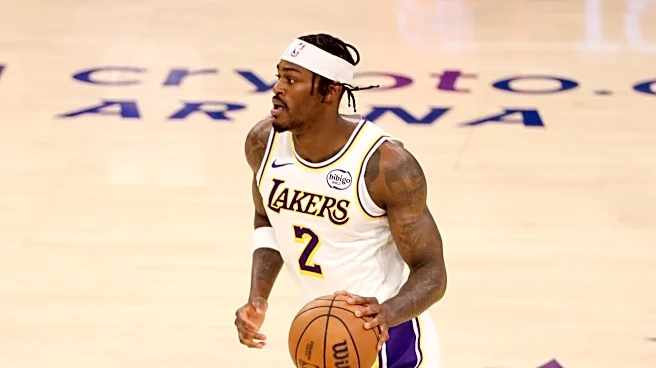




Welcome to our annual Lakers season in review series, where we’ll look back at each player on the team’s roster this season and evaluate if they should be part of the future of the franchise. Today, we c
ontinue our series with a look at Jake LaRavia.With the NBA Finals in full swing, one can’t help but notice how many good players the Knicks and Spurs have at their disposal.
This is, of course, not a controversial observation. But it is rather the latest example of how important depth still is to
winning from both a quantity and quality perspective.
The Lakers actually took a significant step forward in this regard with their roster this season. All of their notable free-agent additions hit to varying degrees, and each made a credible case why they should be back in the fold next year as well.
Among those players is Jake LaRavia. While not a household name like Deandre Ayton or Marcus Smart, LaRavia’s gritty and versatile play showed why he warranted being the Lakers’ first call in free agency last summer.
However, like the Lakers themselves, there was ultimately a ceiling to LaRavia’s effectiveness, an unfortunate truth that was crystallized when the team needed him the most.
How did they play?
Before diving into how he played, it’s wise to acknowledge when LaRavia played, which turned out to be a lot and all the time.
As the only player to appear in all 82 games this past season for the Lakers, LaRavia’s doggedness and durability were a breath of fresh air for a team that has been riddled with injuries in recent years. His constant presence on the floor was also a result of his biggest role to date.
After previously playing on middling and rebuilding franchises, LaRavia arrived in Los Angeles in search of a bigger spotlight. And that is exactly what he got with the Lakers, as, alongside games played, LaRavia also posted career highs in minutes.
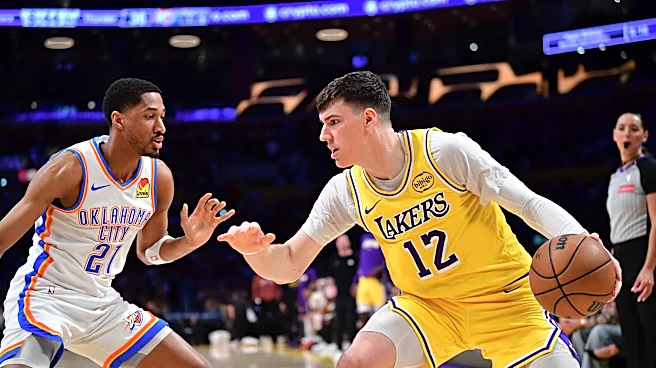
It was easy to see why JJ Redick and the rest of the coaching staff quickly entrusted LaRavia with opportunities. From the start, the 25-year-old played with motor, toughness and a level of versatility that made him a useful part of nearly any lineup.
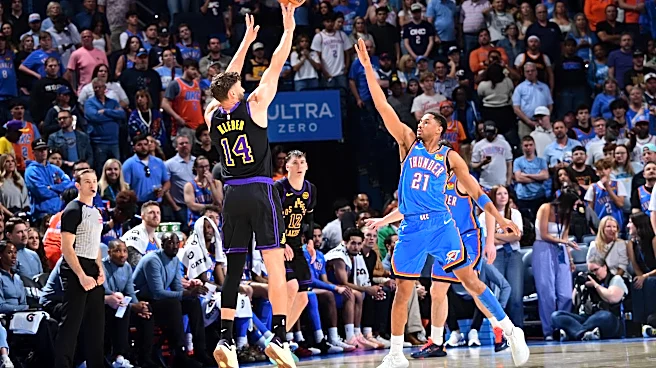
A true master of none, LaRavia performed his best when he could leave his fingerprints all over the court. He finished the year in the 75th percentile in block%, 84th percentile in steal%, 90th percentile in offensive rebound% and was tied for first on the team in deflections.
Unfortunately, LaRavia’s erratic 3-point shooting would end up preventing him from playing even more. Following three seasons of shooting 40% or better from beyond the arc, LaRavia converted a career-low 32% of his threes in the regular season.

His inability to keep defenses honest eventually became detrimental in the playoffs as his minutes (13.5) and effective field-goal percentage (34.5%) plummeted.
Noticeably looking off his shot, LaRavia’s lack of confidence came at a suboptimal time given the injuries to the team’s key offensive engines. It became such an issue that Redick ultimately opted not to play him in two games.
If the poor shooting proves to be an outlier rather than a new trend, LaRavia could become exponentially more valuable. If it continues, it could be the very thing that jeopardizes his upside and future with the Lakers.
What are their contract situations moving forward?
LaRavia is one of just six Lakers who have guaranteed deals heading into next season. But there is nothing guaranteed about his future in Los Angeles.
After signing a straightforward two-year, $12 million deal back in July, LaRavia is set to earn just $6 million this upcoming campaign before becoming an unrestricted free agent the following offseason cycle.
Externally, the combination of his team-friendly salary and expiring nature could make him an attractive trade chip. Internally, LaRavia and his contract could also be the exact player and price point the Lakers will look to surround Luka Dončić and Austin Reaves with going forward.
Should they be back?
With so much uncertainty about how the roster will look heading into the new year, it is still difficult to conceive a scenario where LaRavia wouldn’t deserve to have a spot on whatever shape it ultimately takes.
He certainly shouldn’t be off limits if a trade presents itself, but the Lakers also shouldn’t be actively looking to move off a young player with his skill set and intangibles either. Especially given his comparability to the team’s stars on and off the court.
The Lakers were an impressive +12.2 when LaRavia, Doncic and Reaves were on the floor this season. And it is worth noting that LaRavia shares the same agent as Reaves. Before signing with the Lakers, Reaves also publicly recruited LaRavia.
Given Reaves is set to be paid as one of the team’s cornerstone stars, what he says and does could start to have some sway in which players find a long-term home with the Lakers.
Ultimately, LaRavia must rely on only himself if Los Angeles is where he wants to be going forward. The scrappiness and connectivity he plays with have to continue. But if he wants to become the type of player who not only can survive in the playoffs but be counted on, he must also grow.
All stats courtesy of Cleaning the Glass unless otherwise stated. You can follow Alex on Bluesky at @alexregla.bsky.social