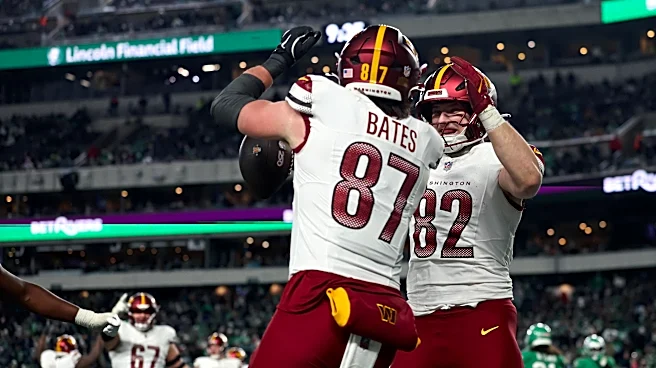





The start of OTAs is always exciting as fans get their first full look at the team after free agency and the draft. In terms of real information, there is usually very little to be had, but occasionally useful nuggets may be gleaned from short clips and interviews. One such find came from JP Finlay’s OTA notes from the first open session and was provided by veteran tight end John Bates.
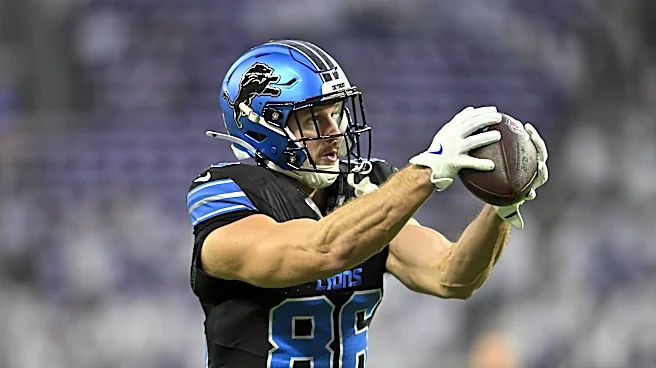
I spoke with veteran tight end John Bates after practice and asked him specifically about the TE role in the new
offense. Bates explained tight ends will have a bigger role and expect to see multiple sets with multiple tight ends on the field. Maybe even 13 personnel like the Rams ran to great success last season. That’s exciting.
For those that don’t know, personnel groupings are represented by two digits. The first digit stands for the number of running backs and the second stands for the tight ends. The remainder out of 5 skill players represents the wide receivers, so 13 personnel is one running back, three tight ends, and one wide receiver.
The Commanders were not well known for this deployment last season. According to SumerSports, Kliff Kingsbury used the grouping on 5.5% of Washington’s plays. So why the excitement from the other JP? Sean McVay and the Rams used 13 personnel to great effect last season after Puka Nacua went out with an injury. In fact, the coach liked the results so much he kept using it after Puka returned to the lineup. Is it possible Commanders offensive coordinator David Blough and the Commanders could find the same success copying McVay’s model?
As luck would have it, ESPN’s Bill Barnwell examined this exact question in an article a few weeks ago. The writer looked at both the Rams usage and how it might apply to the rest of the league. The examination raised some interesting questions, along with providing some interesting answers.
For starters, how effective was Los Angeles with 13 personnel last year? According to Barnwell, very effective.
The Rams averaged 0.14 expected points added (EPA) per play last season, their best mark since 2018. Working out of 13 personnel, that jumped to 0.22 EPA per play. To put that in context, the only offenses since 2017 to average that much in terms of EPA per snap over a full season were the 2018 Chiefs and 2020 Packers. The 2007 Patriots, one of the greatest offenses in NFL history, averaged 0.24 EPA per play. The 13 personnel Rams weren’t far behind.
Clearly the Rams were successful when running 13 personnel. Seven-year veteran Colby Parkinson had a career year and set the Rams franchise record for most touchdowns by a tight end in a single season with eight. His previous career high for a season was two touchdowns. So why was 13 personnel so effective for Los Angeles? According to Barnwell, 13 personnel groupings require the defense to shift out of their preferred sub-packages, play more base, and limit the number of blitzes and stunts defensive coordinators have ready for an unfamiliar look. For teams that want to run the ball, heavier sets up front obviously help achieve their goal, and we saw Kliff Kingsbury use a sixth offensive linemen to great effect last season. In his article reviewing the top five tight end groups in the league, NFL.com analyst Bucky Brooks agreed.
The unique personnel grouping poses several problems for defenses due to the “heavy” look. It can force opponents to keep their base defensive personnel on the field against a diverse collection of blockers and playmakers. Additionally, head coach Sean McVay can deploy a few traditional and overload formations that create extra gaps at the line of scrimmage, opening up the running game when defenders do not properly align or fill their assigned gaps at the point of attack. With personnel and formation diversity creating mismatches against lumbering linebackers or undersized defensive backs who struggle to handle the unit’s size, strength or speed, the Rams were able to dictate the terms of the game with their three-TE package.
While the Commanders did not land on Bucky’s top five list, the addition of Chigozeim Okonkwo adds a dynamic receiving threat that wasn’t on the roster last year, and John Bates easily slots into the system as one of the best blocking tight ends in the game. While not a prolific receiver, Bates has enough ability to force defenses to account for him in the passing game. Ben Sinnott still hasn’t established himself as a receiving threat, but the associated mismatches 13 personnel provides, along with motion concepts could help create separation for the third-year tight end. Below is a clip from Barnwell’s article that shows how using a motion and a switch release versus a third linebacker can create plays downfield.
Terry McLaurin also still has the ability to benefit from the favorable one-on-one matchups 13 personnel typically provides. The wide receiver room has yet to find a clear WR2 to draw coverage away from the star wide receiver, so this grouping gives Blough another option to create it. It all sounds good, so should we sign that Commanders offense up for a heavy dose of 13 personnel this season?
Not so fast, reports Barnwell. The Rams’ success in 2025 was somewhat of an anomaly.
The average offensive snap in 2025 generated 0.02 EPA. The average 13 personnel snap generated minus-0.01 EPA, but much of that is weighted toward the Rams, who were both the league’s most frequent user of 13 personnel and most successful doing so. The league’s other 31 teams averaged minus-0.06 EPA per play when they used 13 personnel. To put that in context, the Vikings averaged minus-0.06 EPA per play across all their offensive snaps last season, which ranked 27th in the league. “Turn your offense into that thing you saw with J.J. McCarthy and Max Brosmer!” isn’t exactly going to thrill coordinators or their teams’ fans.
The same effect was present for six offensive linemen groupings. Teams averaged minus-0.03 EPA per play with six linemen on the field, which would have ranked between 26th and 27th in the league — the offenses of the Panthers and Saints. No metric can calculate the joy of seeing an offensive lineman catch a touchdown pass, but teams weren’t getting a boost from going to these jumbo packages.
Barnwell’s data is backed up by this graphic from Nutshell Sports.
As you can see, the Rams were a tier unto themselves last season with their usage and success in 13 personnel. What made them different? Barnwell projects several reasons, but his overall impression is the Rams were already a good offense, and using 13 personnel made them even better. He closes his article with the following:
The Rams will be efficient out of 13 again in 2026, but that will be because they have great players and a brilliant coach, not because they’re doing something the rest of the league should emulate.
Barnwell’s conclusion is anecdotally supported by the graphic, as the Bills’ already potent offense had a higher EPA than the Rams, despite significantly reduced usage. This makes sense as Buffalo had an excellent rushing attack last season that was enhanced by their usage of heavy personnel. The Rams have an effective receiving game and frequently passed out of 13 personnel, which helped their EPA per play. Conversely, the Raiders lackluster offense remained ineffective, despite their switch to 13 personnel.
So where does that leave Blough and the Commanders offense for 2026? For answers, we will look to Ben Johnson’s offense that Blough, in part, is expected to incorporate. According to SumerSports, the Bears ran 13 personnel the 5th most out of any team in 2025, at a rate of 8.32%, but you can see from the chart that wasn’t substantially greater than the 5.38% that was the league average. Where Johnson’s personnel sets really separated themselves was in 12 personnel usage. The Bears used this package the 6th most out of any team at 32.64%, which is 10% higher than the league average of 22.34% last season. If you look out at how the Bears deployed their first-round rookie tight end Colston Loveland, the numbers start to make sense. Frequently split out wide or in the slot, Loveland still counts as a tight end regardless of the formation, while Cole Kmet was used in a blocking role. The two tight end set equates to 12 personnel. I could see Blough using Okonkwo in a similar role in his offense, with John Bates in-line providing blocking and protection for both the rushing and passing games.
Sinnott could be worked in as a H-Back, which is a role that he has played frequently in his first two years, and is arguably a better fit in a wide zone scheme. Okonkwo could still add to the receiving game as a move tight end. In addition, Blough could also utilize Sinnott in the Kyle Juszczyk role preferred by Kyle Shanahan in San Francisco. Juszczyk is considered a running back, so that grouping would be considered 21 personnel, which the Niners ran a league-high 36.32% last season. As Sinnott is considered a tight end, his use in the same role would constitute 13 personnel. Both looks should suit David Blough’s expected penchant for play-action passes, misdirection, and trick plays.
My expectation is Blough follows the Bears model, with 12 personnel being more of the “base” grouping, but also utilizing 13 personnel. Sinnott is a better talent than the Bears 2025 third tight end, Durham Smythe, so I could see Blough lean into him in the H-Back role that would push their estimated usage towards the 10-15% range. This would place the Commanders offense well above the league average for the 2025 season, but still far behind the Rams usage that is drawing all the hype this offseason.
Post Note: If you have the time, I recommend giving Bill Barnwell’s full article a read. If you prefer to listen instead, Barnwell also appeared on the Kevin Sheehan Show discussing the same topic and you may listen by clicking here.