






Seventeen months ago, on December 19, 2024, Dan Friedkin’s The Friedkin Group (TFG) bought Farhad Moshiri’s 94.1% stake in Everton Football Club. The deal followed months of failed bids, complex club debts, and regulatory hurdles. It was the end of a turbulent time that appeared to herald a new dawn for the club and it’s long suffering fans. As this season has come to a conclusion, the question is whether we are in a better place than we were before the takeover.
From a financial standpoint, the answer
is obviously yes. The purchase of the club by TFG’s vehicle Roundhouse Capital Holdings has entirely transformed the club from a state of near-terminal financial collapse into a financially stable entity. TFG has financially and operationally revitalized the club by reducing net debt by 57% and replacing high-interest loans with a low-interest JP Morgan Chase package, ensuring PSR compliance. (Guardian) TFG also guaranteed the completion of the Hill Dickinson Stadium and has boosted projected revenues with a coordinated increase in sponsorship revenues.

The angst that fans had felt over the last five years had been incredible. Relegation fights and PSR restraints had made it impossible to build a team that was primed for success. After spending ridiculous amounts on poor players under Moshiri, there was a need to sell our best players to stay above the PSR line. The takeover diminished those pressures and when David Moyes returned to the club there was an upswing in our fortunes which led to a positive second half of the year. It got even better when the team was given the funds to begin a major rebuild of the squad.

Everton spent heavily to rebuild, starting with the £35 million signing of winger Tyler Dibling from Southampton. They reinforced their attack with Thierno Barry from Villarreal for £27 million and strengthened the midfield by bringing in Kiernan Dewsbury-Hall from Chelsea for £24 million. Midfielder Carlos Alcaraz joined permanently from Flamengo for £12.6 million, while young fullback Adam Aznou arrived from Bayern Munich for roughly £7.6 million. Goalkeeper Mark Travers was secured from Bournemouth for £3.9 million, and Manchester City winger Jack Grealish joined on a season-long loan to complete the major incoming business.

With the squad in place, it was then up to David Moyes to shape the team into something that could compete in the Premier League. The season was a tale of early promise followed by a late-season collapse. After a strong start in August, the Toffees steadily consolidated their position in the top half of the table through the autumn, peaking in March following a dominant 3-0 win over Chelsea. However, European qualification hopes evaporated during an dismal spring slump. We went winless in our final seven matches across April and May, ultimately sliding down the table to finish the campaign in 13th place with 49 points.
The disappointing end to the season has forced Evertonians to reflect on the place that we currently sit as a team. The fast start in the first half of the season was great to see and we happily jumped on board and dreamed of greater things. Those dreams were shattered in the run-in as the team capitulated and dropped out of the European race.

So the big question is, ‘what now? No team has been built in one year and Everton are no different. However, with TFG injecting substantial financial stability and restructuring the club’s massive debt, Everton’s new recruitment strategy has shifted dramatically in several key areas. The Friedkin Group’s youth-centric model introduces smaller baseline salaries that immediately reduce Everton’s payroll, while creating a profitable “buy low, sell high” cycle to ensure long-term financial stability. On the pitch, these fast, high-energy recruits inject necessary pace into the squad. Ultimately, because these prospects can anchor the team for five or more years, the club secures lasting assets and ends the cycle of constant, costly squad rebuilding.
This all looks good on paper but in reality, these younger players hardly had a sniff this season. As the club evaluates this season, there must be an understanding of how their investment is being utilised by Moyes. Grealish and Dewsbury-Hall had Premier League experience and were given a chance from the start. Barry fought all season to overtake Beto in the pecking order so ended up playing in all 38 games including 21 starts. As a result, he ended the season with 8 goals and his value has increased.

On the flipside, Tyler Dibling has found minutes hard to come by, largely featuring as a substitute. He logged only 14 Premier League appearances for Everton during the 2025–26 season, playing a total of 358 minutes. That number was surprising when you consider that he was signed in a deal worth an initial £35m with £5m in add-ons. If we look at the value of Tyler Dibling in the last 16 months, there is a distinct trend downward.

So the £35m with £5m in add-ons that they paid for Dibling 12 months ago is now listed on Transfer Market at £14.5m at time of writing. The big question is how the Friedkin Group views this lack of play for their largest long term investment and how the lack of play is affecting the value of the player. Of course, he is young and he has potential but without any playing time, that value will continue to drop.
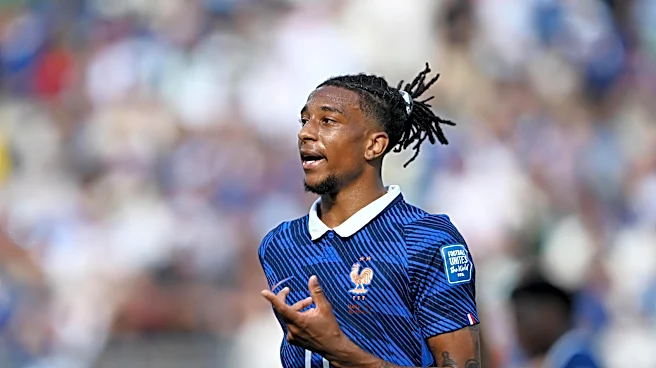
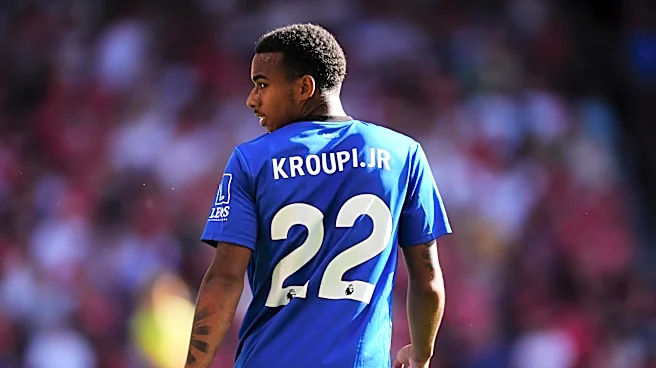
This week, Everton’s transfer activity has started. Hayden Hackney, last year’s Championship player of the year, has been signed in a deal that could rise to £25m. We have also been waiting for a confirmation that Tyrique George has been signed, with a £20m pricetag being possible. What is obvious is the continued focus on younger talent that has a huge potential both on the pitch and in a future transfer.
The conundrum is whether David Moyes is a willing supporter of these players. At West Ham, he was known as ‘Dithering Dave’ and if he continues to stick to his historical pattern of player selection then these young players will struggle to get game time. Has Moyes been involved in the selection of Hackney and George and did he give final approval?
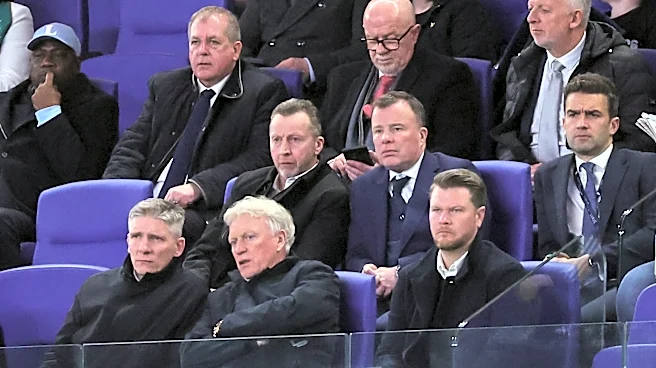
The new leadership team is there to find the players. Director of Scouting and Recruitment, James Smith builds the shortlists, Director of Football Strategy and Analytics, Chris Howarth provides comprehensive data overviews, and Player Trading Lead, Nick Hammond conducts financial negotiations. So is this team working in tandem with Moyes or are they working with the CEO Angus Kinnear to follow the plan which TFG are implementing.

With another preseason on the horizon, Everton fans want to know where the team is going. The collapse at the end of last season was seen by many resulting from the manager’s unwillingness to play more players and as those players faded with overwork, results suffered. We cannot have more of this moving forward. Either Moyes starts to incorporate these players or we find someone who will.
David Moyes did a yeoman’s job in 24/25 to save the season after the Dyche debacle. However, Moyes finished the last season with the same number of points as he did in 24/25 which means that last season was as bad as when Dyche was involved. Not the improvement we need. Of course, we were in the fight for European places but ultimately, we were no better. Can the ownership be okay with these results?
We are at a crossroads and I am not sure if Everton’s future growth can include both Moyes and the Friedkins. The vision on the pitch and in the recruitment doesn’t seem to match. It seems that the next few weeks will show us which course that the Friedkins are going to chart. They have made great decisions for the club up to now, what next? Over to you Dan, Angus et al.