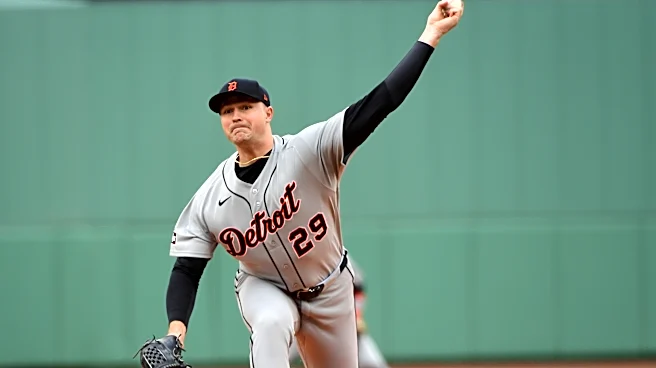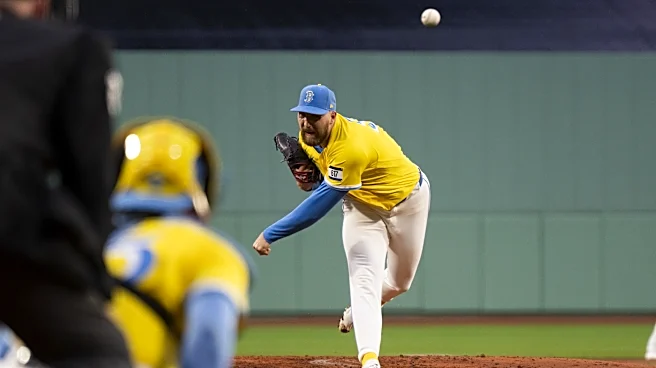






The 2025 American League Cy Young runner-up, Garrett Crochet, ranks 72nd of 73 qualified pitchers in ERA this season. Through five starts, he’s registered a 7.88 ERA in 24 innings. Over his last two starts, he’s allowed more earned runs than strikeouts, and more home runs than scoreless innings. After the worst start of his career against the Minnesota Twins, he came out and surrendered a first-inning run against the Detroit Tigers, making Red Sox Nation hold its collective breath. After cruising
through the second, third, and fourth innings and allowing Red Sox fans to exhale, the Tigers jumped on him for four more runs in the fifth inning so fast that any breath would have been a gasp.
So, is it time to worry? I touched on this briefly in my game recap, but I say no. The velocity dipped in his start against Minnesota, and he paid the price for it, but it was following a 100+ pitch performance, and consistent with an early-season outing last season after a long outing, when he also temporarily lost some velo. It was back up on Sunday, and the stuff looked as sharp as it normally does. His sinkers on the armside earned strikes, while his fastballs above the zone flew by hitters in two-strike counts. He didn’t get as many strikes with his cutter, but it wasn’t so bad that he couldn’t use the pitch at all.
But there are two problems worth keeping an eye on.
The first is that he’s falling behind hitters. In 2025, Crochet threw 31.5% of his pitches ahead in the count. So far in 2026, that number is down to 25.2%. The league average is down to about 28% from 29%, potentially in part due to ABS, but Crochet went from above average to below. He’s also getting to two-strike counts against fewer hitters. In 2025, according to my janky Excel work, he got two strikes against 57% of the hitters he faced. In 2026, he’s getting to put away counts against 46% of opponents.
The second problem is his execution with two strikes, particularly with his sweeper. I’m going to focus on righties because Crochet isn’t going to see many lefties. Lefties are 4 for 13 against Crochet this season, but his sinker is still incredibly effective, and opponents will start as many righties as possible against him.

In two-strike counts against righties, his sweeper accounts for almost 35% of his offerings. That makes it his most used pitch in those counts, a year after his four-seam dominated in two-strike counts. While he’s throwing it more, it’s been less effective. The putaway rate is down from 30% to 19%, despite a nearly identical shape. When the shape is the same, and the way a pitch is deployed is the same, but the results are different, it typically comes down to location. That’s the case here.


Simply put, he’s not getting the ball to the glove side as frequently. A left-handed sweeper to a right-handed hitter will play best at the back foot, and Crochet hasn’t thrown to that spot as often this season. When it’s over the middle or up, righties can get around it and pull it to left field for hits. The good news is the stuff is still there. Maybe it’s feel, maybe it’s a mechanical issue. Let’s look at it in practice.
Here’s Spencer Torkelson in the fourth inning. His first time up, we walked on five pitches, three of them nowhere close to the strike zone.
The at-bat starts with a fastball for a called strike. It looks like he wanted it up and in, but misses on the arm side, but it’s a strike nonetheless. Good start.
At 0-1, Crochet goes to his sweeper and locates it low in the zone. It’s hard to say if Narvaez’s target is meant to be where the ball is supposed to start or finish, so he might have been looking to backdoor it for a called strike. If it is a miss, it’s not a bad one. It’s low in the zone, and Torkelson’s early swing fouls it off. Now at 0-2, Crochet can throw whatever he wants. I’d probably elevate a four-seam, or double up on the sweeper, and try to get it to the back foot.
He goes with a sinker that’s supposed to be away from Torkelson, but he spikes it for ball one. It’s a non-competitive pitch and a hard sequence off. At 1-2, I’d again look for an elevated four-seam or sweeper.
It’s the sweeper, and it’s a really good one. It doesn’t get a swing, but it’s located in an area where he will get swings if he throws it consistently. It’s maybe a little bit low, but that’s nitpicking. After spitting on a good breaking ball, hitters often look for a fastball because they feel as if they showed the pitcher they have the breaking ball covered. He also knows that Crochet doesn’t want to get to 3-2 with a runner on base and two outs. With that in mind, Crochet can double up on the sweeper in the same location to get a chase from Torkelson.
See what I mean? Torkelson is clearly looking for something hard, and he’s way out in front of this one. That’s basically it for Crochet. When he locates the sweeper, he’s going to carve up lineups. When he doesn’t, and hitters can look for one of his fastballs, things get more difficult. The ability to drop changeups in for called strikes to keep hitters honest would go a long way, but he’s never shown the willingness to commit to the pitch or the ability to throw it in the strike zone.
So that’s what it looks like when it’s going good, but what about when it’s going poorly? Here’s a look at some two-strike offerings against Matt Vierling in the first inning.
The first 0-2 pitch is a sweeper that’s fouled off. Notice the location? It’s in the zone, neither inside nor low enough to get a whiff.
He doubles up on it after the foul ball, this one misses on the arm side, where it’s never close to being a strike. Here are all the whiffs he got on the sweeper against righties last season.

There are a few away from righties, but the vast majority came down and in. Moving on.
At 1-2, Crochet goes to the cutter, and it again catches too much of the plate. Vierling fouls it down the line, and we do it again.
He tries to elevate a four-seam for his fourth two-strike pitch of the at-bat, but it’s down in the zone and fouled straight back. A straight-back foul ball typically means the hitter just missed it, so I’d avoid doubling up on that one.
He goes back to the sweeper, and it’s up in the zone. Vierling gets around it and pulls it into left field for a double. As an aside, sweepers typically benefit from velocity. This one was only 80 mph, a few ticks below his average. I know this is the forum where I’m supposed to dive into this stuff, but it’s late, and I have a deadline, so keep an eye on my Twitter for more on how his sweeper velocity could be impacting his performance.
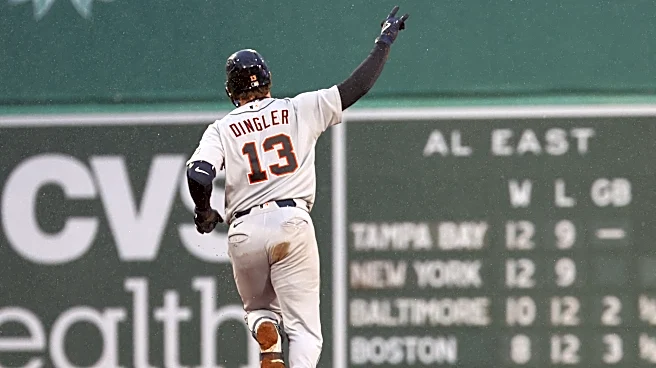
That’s an example of Crochet not being able to put guys away, one of the issues I mentioned. The other is falling behind hitters. I won’t bore you with videos of Crochet missing with his fastball over and over again, only for the fastballs in the zone to get hit because hitters are ready for it. That’s what happened with Dillon Dingler, who blew the game wide open with his fifth-inning home run.
Long story short, I’d bet on a bounce-back from Crochet. The stuff is still there, and it’s just a matter of execution. Why he hasn’t been able to locate with two strikes, I can’t tell you. Fortunately, it likely isn’t a months-long fix. It could be as simple as throwing on the side between starts and making a tweak to get right. It’s not as if he was totally lost on Sunday, either. It’s easy to think about the run he allowed in the first inning and think that he struggled all day, but in reality, he dominated for the better part of 4.2 innings. His next start will likely come against the Orioles this weekend. I’m backing the pig to get back on track when that time comes.