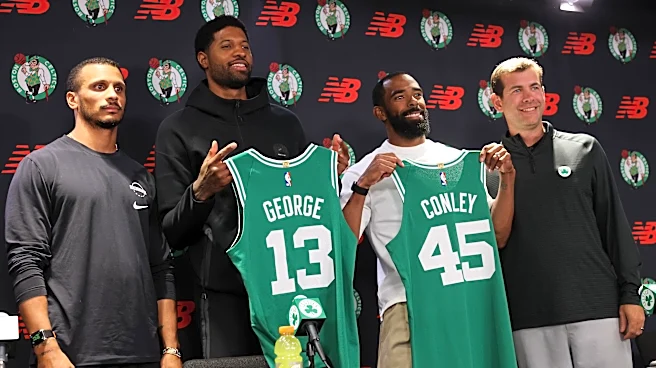




1. The Jaylen question: The Celtics’ stated reason for moving on from Jaylen Brown is that they didn’t believe that they could build around two players each making 35% of the Cap. Yet the end result of the trade is that the Celtics have two players each making 35% of the cap. Without using the word “optionality” can you describe the bigger picture strategic rationale behind the Jaylen Brown trade. (Note that I’m not asking you to defend or endorse the move)
Can I use the word “flexibility” instead?
Please don’t make me dig out the thesaurus to go deeper than that! Being serious, flexibility is what it was really about. In the NBA’s apron era, it’s really hard to build long-term around two max players, especially two 35% of the cap max players who are moving into their 30s. You’re either going to end up over the second apron, with all the penalties and restrictions that can come with that (as we’ve already seen for the Celtics), or your roster is going to be somewhat weaker with a lot of players on rookie deals or minimum deals.
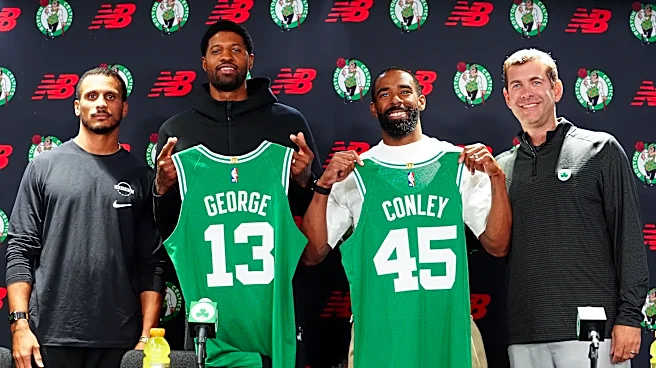
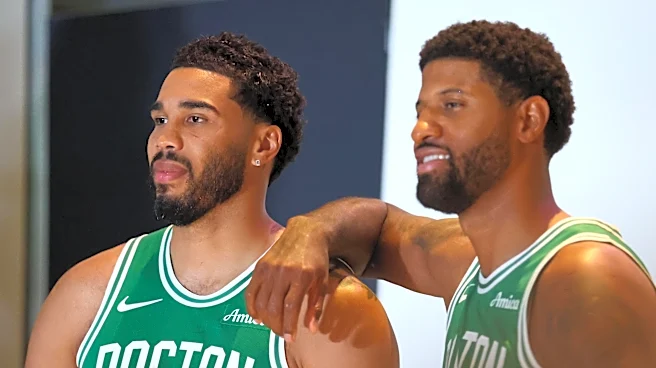
To be clear: Trading Jaylen Brown right now didn’t really save the Celtics any money. Brown and Paul George make roughly the same amount this season, and will for the 2027-28 season too, assuming George picks up his option. It was about 2028-29 and beyond for the Celtics. When extension discussions could have started with Brown, he was likely going to ask for a 35% of the cap max, as he should have and as he earned. If the Celtics said no, or delayed the conversation, there was a chance things could have gotten ugly. With the goal to have long-term flexibility with the cap/tax/aprons, and the idea of not extending Brown at his asking price (either at 35% of the cap or at all) and that turning sideways, it was best to make the move now. You remove any drama (well, kind of. There was plenty of drama!) and you can start your long-range planning knowing your cap sheet will be a lot more flexible.
Also, I believe Brad Stevens, and the rest of the team’s leadership, when they say that they believe Paul George has a lot of good basketball in him. Jaylen Brown was immensely popular in Boston for great reasons. That meant trading him hurt. But the way some of taken it out on George and acted as if he’s a washed-up bum, is comically wrong. Yes, he has very real injury concerns, but George can still play. He’s a more consistent shooter and better passer than Brown. And their defensive gap isn’t nearly as large as some would have you believe, if there is one at all.
2. Big picture question: The Celtics have some great ingredients. Namely a top level superstar, some high level support stars, and a deep bench of talented players on rookie (or manageable) contracts. What archetype of player or players do you think the Celtics should focus on adding to the roster in the next year or so?
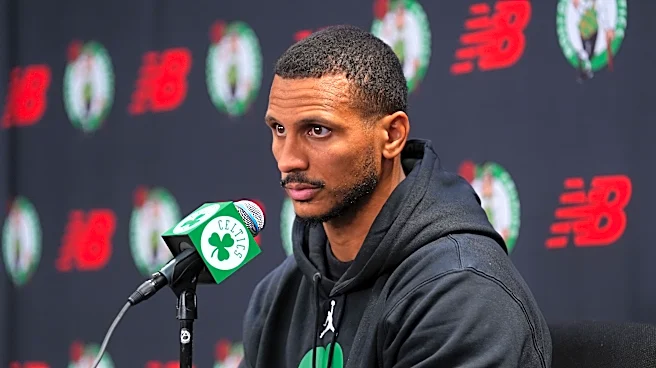
I think the Celtics focus since Brad Stevens came in as a coach has been to acquire versatile players with good size that can dribble, pass, shoot and defend. I know that sounds cliche, but I think that’s what Boston has looked for over the last decade-plus. Sometimes you sacrifice one skill for others, but generally they want well-rounded players. Since I’m answering these questions on Media Day, I’ll also reference something that Stevens said during his availability: The team is always focused on fit. It’s not just about talent. The players they acquire have to fit. That’s both together as a team and in Boston.
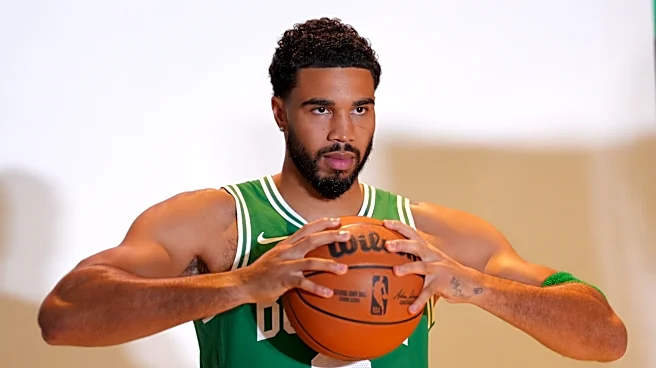
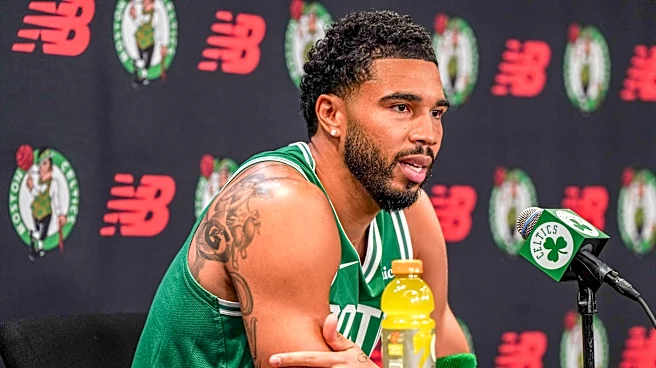
Even if no one is saying it directly, and he dodged the question himself, this is Jayson Tatum’s team now. He’s the guy. Everything Boston does is now going to orbit around Tatum. That’s not so different from the team building around both Tatum and Jaylen Brown, but now it’s about finding players who fit with Tatum and lift up his skillset.
I think in the next couple of transaction cycles (the 2027 trade deadline and the 2027 offseason), Stevens and the front office will be focused on adding high-end, established talent. That could involve trading Paul George, plus draft capital, to acquire another star-level player. Or it could be about building depth. I’m a firm believer that you need 100-plus games of depth to win a title. You have to get through the regular season and the playoffs. The good news is that the Celtics depth is already pretty good. One thing to keep an eye on: Whoever the Celtics acquire, expect there to be a good level of team control with that player’s, or those players’, contracts.
3. The parameters around the 2028 Clippers pick still hurt my head. In plain terms, what teams and standings should we be focusing on in the next couple of years?
Yeah, it’s a doozy! Basically, the Celtics want the Clippers to be bad. But maybe not so bad that they lose out on the extra lottery balls by dropping into the relegation zone. So, bad, but not truly awful? Either way, that Clippers pick is a pretty good asset.
The alternative, and this is probably a natural rooting interest anyway, is to root for the Sixers to be bad. The Celtics are getting the better of the Sixers or the Clippers pick, so rooting for one of them to be bad is the play.
4. What are some extension decisions that the Celtics have coming up (and what do recent extensions for Queta and Walsh tell us about their thought process)?
Paul George is extension-eligible, but that’s not happening barring something really unexpected. I don’t expect Paul George to be with the Celtics past this season, unless he’s an incredible fit and has a great season. If that happens, then maybe an extension comes where George opts out, takes less per year (something down around $20-$30 million AAV) but adds three years. That could be the play.
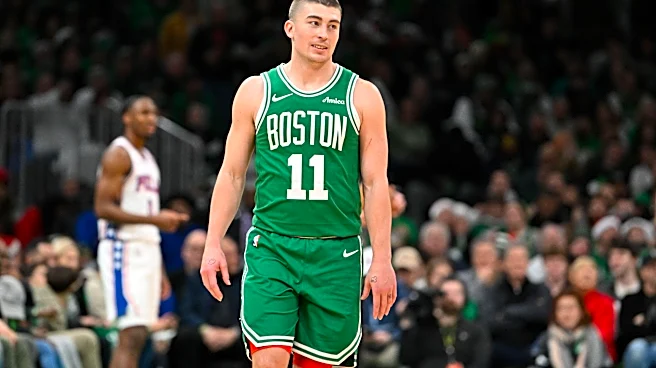
Payton Pritchard is also eligible to extend. The thing with Pritchard’s deal is that he has two seasons left. So, this isn’t that pressing of an issue. Boston and Pritchard both may want one more year of seeing how things go before locking into a new contract. Waiting would also allow for an additional year, as Pritchard could only add three years to his current deal by extending now.
As for Neemias Queta and Jordan Walsh, this continues the idea that if you develop into a rotation-level player in Boston, the team is going to try to keep you around. Queta earned his extension by improving enough that he was not only a viable starting center, but a good one. Walsh still hasn’t quite locked in that every-night rotation spot, but he’s been valuable when he’s played. Improving his jumper and focusing on defense have turned him into a solid 3&D wing. Both guys got paid more than they have ever made, which is great for them. But for the Celtics, these were pretty team-friendly contracts, and, just as importantly, these contracts are very tradable down the line.
TL/DR version: I don’t expect either Paul George or Payton Pritchard to sign an extension before the season starts. And the Neemias Queta and Jordan Walsh extensions were good values at team-friendly prices.
5. Give us a prediction for the upcoming season. This can be related to transactions or the on-court product – totally up to you.
I think some of the doom and gloom about the Celtics is off base. I think they’ll have a good to very good regular season. Yes, Jaylen Brown is gone, but the team will have Jayson Tatum healthy for the whole season. Paul George is good. Mitchell Robinson is good. Hugo Gonzalez and Baylor Scheierman continue to improve. Neemias Queta proved he’s a good starting center. Payton Pritchard and Derrick White are back, and White almost has to shoot better this season.
I think Boston will finish as a top-four seed in the Eastern Conference once again. And I think they may actually have more playoff upside, because the team is more versatile on both ends of the flood. Maybe I’m being overly optimistic, but the suggestion that this isn’t even a playoff team by some seems really silly. They aren’t likely to be much worse than a year ago, even in an Eastern Conference that is much improved.
6. Tell us what you are working on and remind the readers where they can read, hear, and see you on a regular basis!
The best places to find my written work are on Spotrac if you like roster, cap, CBA-related articles. If you want more general hoops coverage, you can find that on The Basketball Bulletin. When the regular season starts, I’ll be relaunching my NBA Game Notes, which is a broader around-the-NBA version of the 10 Takeaways I used to do on Celtics Blog. You get a taste of each post, and every Friday is Free Friday, where the entire piece is free. The plan is to post every day of the week with coverage of the previous night’s games. During the preseason, I’ll have a handful of articles up as well. Working on that planning as I write this.
We’re also going strong with NBA Front Office Show. You can catch us on YouTube if you want to watch. Or if listening is more your thing, you can find the show on any major podcast player that’s out there.