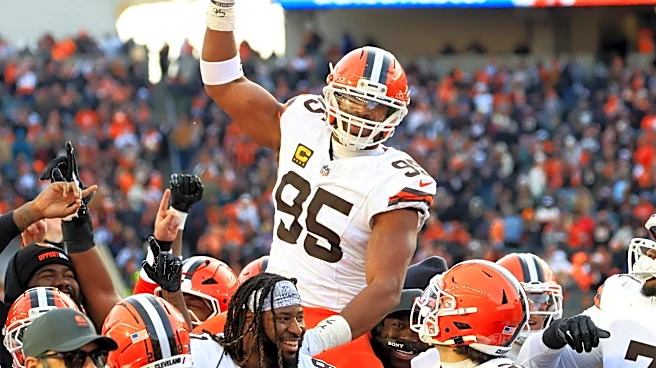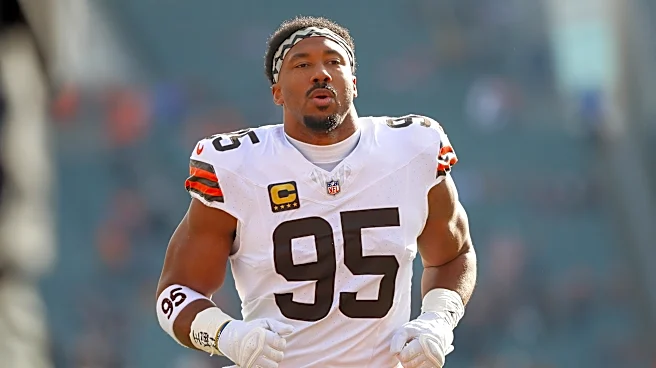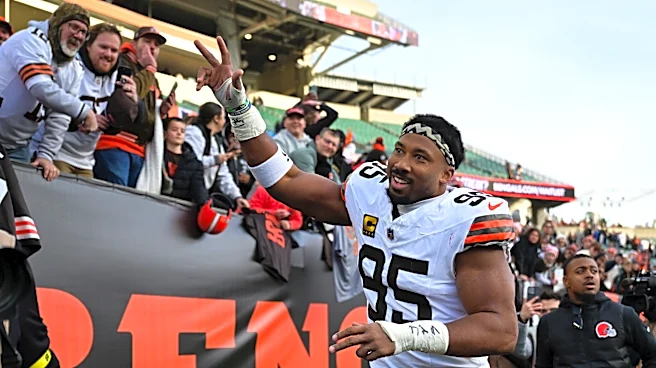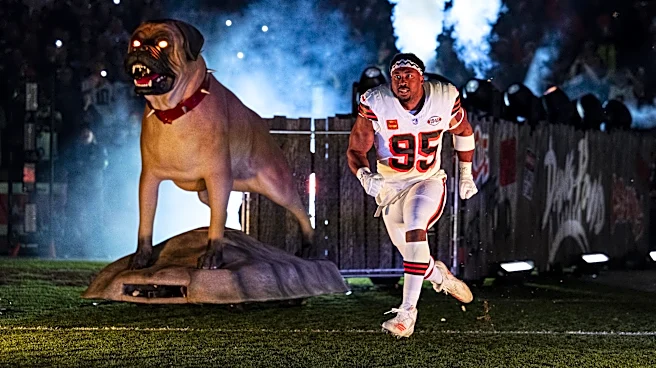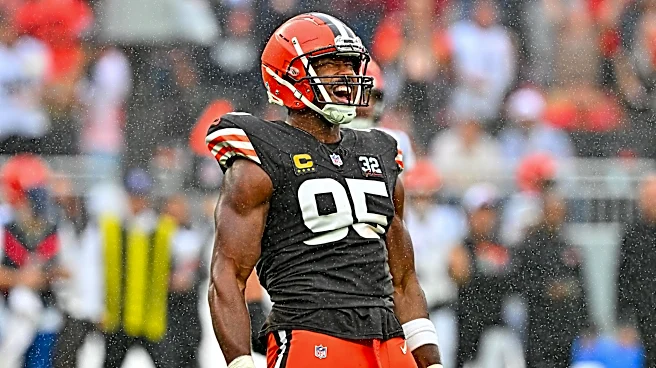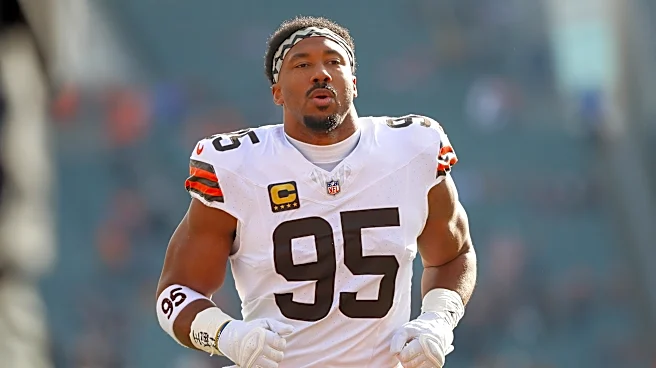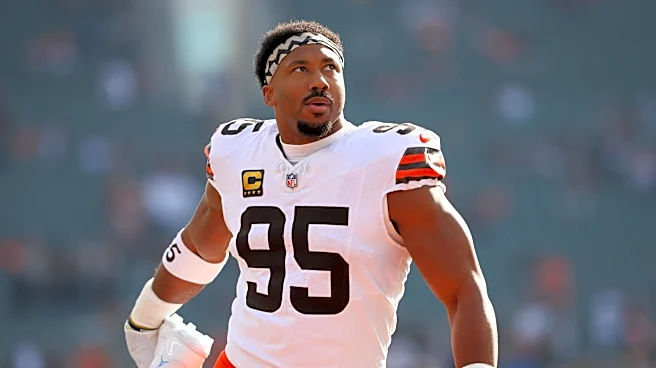





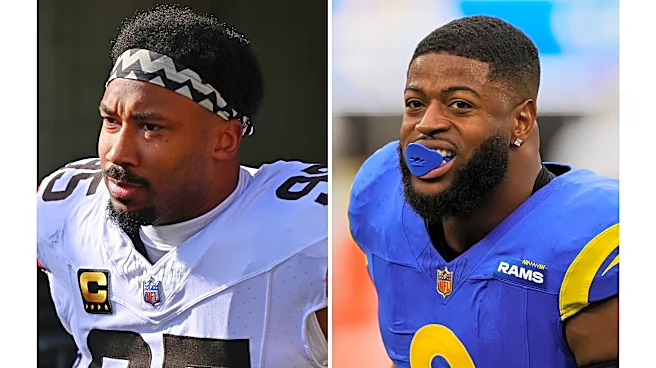
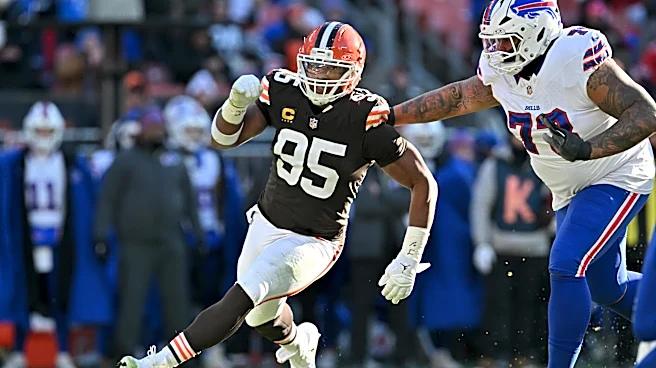
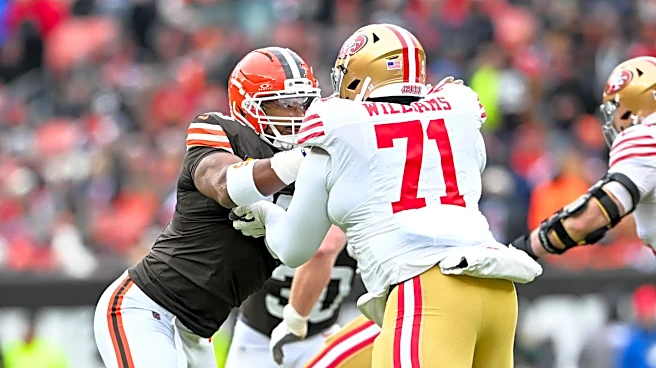
The first question that came to mind after the Rams traded for Myles Garrett on Monday was, “Was it worth it to spend this much to upgrade one of the team’s greatest strengths?”
After all, between Jared Verse—the player L.A. gave up alongside a first-round pick to acquire Garrett—and Byron Young, the Rams were not lacking talent on the edges of the defense. Of all the ways for general manager Les Snead to invest resources in a blockbuster trade acquisition, was an outside pass rusher necessary?
Well,
after looking a little deeper, the answer is a resounding yes.
Myles Garrett is vastly superior to Verse
Garrett to me was one of those guys I never really saw play much. Who goes out of their way to watch the Browns? I certainly knew about him with all the accolades: Seven-time Pro Bowler, seven-time All-Pro, and two-time Defensive Player of the Year. Not to mention, he set a new sack record last year with 23.
But it’s not only gaudy sack totals. By almost any measure, Garrett was miles ahead of Verse’s production last season and figures to be next season and beyond too.
There’s been much discussion that hurries and pressures are just as important as sacks, and in a lot of people’s eyes, they are.
- Verse had 10 hurries and 36 pressures
- Garrett had 14 hurries and 53 pressures.
- Verse had 7.5 sacks
- Garrett had 23 sacks
Total tackle numbers are almost identical, but the missed tackle percentage goes to Garrett again, 3.2% to 6.5%.
All of these numbers would be impressive if they were competing on an even playing field, but there are a couple of substantial differences.
Not all opportunities are equal
Verse was double-teamed at a 26% rate, but Garrett was looking at a 55% rate of double-teams!
An anonymous DC said Garrett was a guy you had to plan to get four hands on, every play. What makes these numbers, pressures, sacks, etc., even more remarkable is the fact that Cleveland was behind in so many games that teams didn’t need to pass as often against them. The Browns had the third-fewest opponent pass attempts allowed in the league!
What about the cost?
As pointed out by TST’s Kenneth Arthur here:
“The Rams traded a 2027 first-round pick (which could be 32nd), and picks worth roughly a third and a fifth next year, plus Verse, for MYLES GARRETT.“
The trade was phenomenally inexpensive in terms of draft capital, one that only the Browns are wont to do.
But what about the contract?
My first reaction was triggered by that $160-million contract extension Garrett signed back in March. There was no way the Rams could afford to pay him $40 million per year while keeping most of their foundational pieces, but the Browns had quietly reworked the contract to where the Rams’ cap would reflect an $8.1 million hit in 2026 and just over $16 million in 2027. So, for an extra $6 million this year and $14 million next year, the Rams upgraded to Myles Garrett. Wow…can it get better?
Yes.
As per Mike Chiari, it would appear the Browns are eating some of the guaranteed money:
Citing OverTheCap.com, Jackson noted that a post-June 1 trade of Garrett would see the Browns take on $15.53 million in dead money this season and $25.56 million in dead money in 2027.
An absolute masterclass in upgrading a position that is always important and doing so at a cost that won’t prohibit the Rams from extending all the players they want to keep moving forward. As I wrote here, Snead is a Hall of Fame GM. If the Myles Garrett trade works as expected, he’ll be too busy holding the Lombardi to worry about Canton.