





The scientific method has been long established. Unfortunately, when it comes to human endeavors experiments are a bit messy. The first step in the scientific method is to actually observe what is going on. This is where things get a bit tricky. The human mind is a peculiar thing and that is particularly true when it comes to memory. We often remember what we want to remember and forget what we want to forget. Other factors color that memory and sometimes alter it. Criminal justice experts constantly
tell us that eyewitness testimony is extremely unreliable.
This is why the lab exists in the first place. There is nothing more emotional than following your favorite sports team. Millions of people form their mood and rate their day based on what their favorite team does. In that universe it is easy to bypass facts and go with feelings. I may seem like a cold, unfeeling analyst but I am a fan too. I have emotional reactions to what I see. The numbers insulate me from that. That’s why the lab exists.
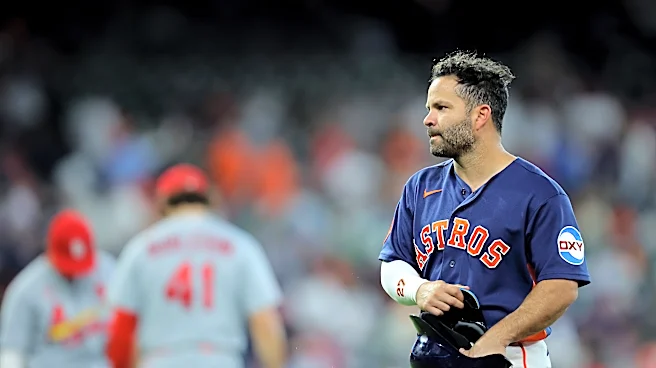
So, we get to the question of slow starts. Before we can analyze why we have slow starts we have to establish the fact that the slow starts have been patterns. If we go through the annals of this current run we can split the Astros dynastic period into two relatively equal parts. There are the A.J. Hinch Astros and the Dusty Baker/Joe Espada Astros. We eliminate 2020 because there was no April. So, we are splitting it to 2015 to 2019 and then 2021 to 2026. We will throw in March into April when it is applicable.
2015-2019
If we look at the winning percentage we see .580 winning percentage. That would be equivalent to a 94-68 record in a 162 game schedule. Obviously, 2016 is an outlier and it is the only season in that run where the team did not make the playoffs. In fact, it was the only season before 2025 where the Astros did not make the playoffs. If we remove that season then the winning percentage shoots up to .645. That would be equivalent to a 104-58 record. So, if it felt like those Astros teams got off to fast starts it is because they did.
2021-2026
Obviously, I don’t need to translate this to a 162 game record. Given that this team went to the playoffs in four of the five seasons and came within one game of the playoffs in the other one, these starts are pretty significant. So, the first step of the scientific method is complete. There is in fact a difference between these two eras. We now move onto the next step in the process. This is where we come up with a hypothesis we can test. Unfortunately for us this will be the last step in the process. I can think of two possibilities and I will leave the reading audience to determine which one they think is more plausible.
Hypothesis One: Finding the sweet spot
One of the things you will notice when looking at the records above is that they seem to get progressively worse as we get closer to the present. When the Baker era began, the entire dynasty was intact. With each passing year, one more brick was kicked out of the wall. First it was George Springer. Then it was Carlos Correa. We then moved on to Justin Verlander (a couple of times), and finally Framber Valdez.
Each manager has their own style. Joe McCarthy might have been the best manager in baseball history record wise (.627 with the Yankees). He plugged in the same lineup every day and sat in a rocking chair. That’s easy to do when you have Babe Ruth, Lou Gehrig, Joe DiMaggio, Earle Combs, and Tony Lazzeri. Baker will be a Hall of Fame manager someday and his style was wholly different. Espada seems to have taken on that style in the interim, so it makes sense to lump them together.
The Astros have used a different lineup every game this season. It wasn’t quite that bad in seasons past, but the pattern is still there. Of course, necessity is the mother of invention. When you don’t have thoroughbreds you have to do some experimenting. So, both Baker and Espada spent the early months figuring out what players could do and when they could do them. That meant how to shape platoons, what the batting order should be, and which relievers we could trust.
One old baseball adage is that Memorial Day is the day when performance stops being a trend and become something resembling reality. Unfortunately, that means another month of flailing around. Some of that is due to the “back of the baseball card” mentality. Yet, some of that is genuine small sample size issues. This is particularly true when looking at relievers. Obviously, Espada in particular has come under fire for how he uses his relievers. Either way, by the end of May this team finds its level based on figuring out who they can trust that particular season.
Hypothesis Two: It’s a training issue
My podcast partner and I (“Born on the Bayou Sports”) raised this issue earlier this year. We were wondering why certain pitchers weren’t building up innings this spring. Suddenly, you have four starting pitchers on injured reserve. Luck? Possily. Coincidence? Maybe. However, when you add that to the total number of injuries the team has faced in recent seasons in the early going.
Obviously, the change in trainers this offseason put that in the spotlight. Last season, the Astros had the most injuries in baseball and they are currently in the lead in that department. Is it an aging roster? That could be one explanation. Maybe it is just bad luck. The team was extremely healthy in 2022 when they won the World Series. Some seasons just go that way. Yet, when you have two consecutive seasons of players going down at a record pace it is difficult to chalk that up to chance.
This leaves us with two possibilities (of which both can be true). Either there are still issues with the day to day treatment of aches and pains. There are still issues with how often those are happening, how often they keep players from playing, and possibly their return to play. The second possibility comes back to Spring Training itself. Are these players ramping up in the right way during Spring Training? Are they getting ready?
Putting it all together
Of course, both is a possibility. Neither is a possibility. We are not in a position to test these hypotheses yet. That will have to come later. It would involve breaking down how the other 29 teams do business and determining how the Astros are different if at all. My own hypothesis is that both are true in part. A fungible roster demands time to figure out exactly who can do what. There are also probably some things the team could do differently to remain more healthy and start faster out of Spring Training. What do you think?