
A versatile and highley rated performer, on paper it seemed to some as if Calvin Palmer’s big money move in February 1968 was exactly what Sunderland’s struggling squad needed, and yet when he departed two years the later his release felt inevitable – and the man that had brought him was certainly happy to see him go.
Bought by the recently reinstalled Alan Brown, Palmer’s issues rarely came down to ability. Although fans felt they never got to see the same all action displays he produced at previous
club Stoke City they still recognised his versatility and commitment to winning, particularly during one early appearance when against Stoke he took over from the injured Jimmy Montgomery in goal. It was an example of the type of self-sacrifice Brown would usually appreciate and yet the pair were unable to ever strike up a working relationship, a clash of personalities meaning that the notoriously formidable manager and his unconventional recruit often butted heads.
Palmer would invariably take his football seriously but as a character struggled to acquiesce to Brown’s rigid structure and expectations. A squad trip to a cinema the month after signing, during which Palmer decided to leave early, led to Brown disciplining him for a breach of club rules for instance, and once the tone was set a number of other battles followed. By January 1970 Palmer was on the transfer list at his own request, and there was clearly no way back for him.
A court case and subsequent driving ban that month served to emphasise the differences between the player and manager; Palmer had found himself on the wrong side of the law whilst Brown had previously served as a police officer and maintained a strict zero tolerance attitude towards any sort of infringements thereafter. In more modern times it might be sensed that Palmer’s nature simply warranted a different approach, but the ‘Bomber’s’ management style never relied on subtlety and in the May he confirmed his decision to cut his losses on the £70,000 fee that had been paid and gave his player a free transfer.
It was presumed that this would be the end of the matter, but Palmer, often accused of being ‘outspoken’ in those more deferential times, did still intend of having the final word. In August he joined Cape Town City and the following month there was to be a rude awakening for Brown when on this day a national Sunday paper launched a ‘warts and all’ series detailing from South Africa the views and stories of the now ex Rokerman. Whereas Palmer’s seemingly divergent traits would be better understood now it was easy then to tag him as a controversial figure, but even still the new column was quite the exposé, with the account being labelled as an ‘explosive’ chat with ‘football’s stormiest rebel’.
The People had the exclusive, with Palmer stating in the opening instalment that he and his former manager “clashed everywhere. In hotels, dressing-rooms, at training. Life was all fines and club suspensions.” The series was to run for three weeks, yet that starting paragraph gave the best indication possible about what to expect, continuing by saying “I thought Bomber’s ideas of discipline were old-fashioned. He thought I was a rebel, someone stubbornly refusing to confirm, one of his favourite words. In the end…he gave me a free transfer. Now I can tell you the whole uncensored storey – a story that began with respect on both sides yet ended in bitterness.”
The point about respect was an intriguing one. Brown’s two tenures as manager at Sunderland AFC are still debated now and there is sometimes a split in opinion. Whilst results could be poor under his watch he did earn the club its first ever promotion – only to surprise everybody by quitting in the aftermath. His decision, widely understood to have been made on a point of principle, only complicated matters as whilst his disciples have remained loyal ever since, and in some instances developed his ideas to become hugely successful coaches and managers themselves, those that were on the wrong side of his thinking often argue that he was too authoritarian for his own good. Onlookers can never be too sure just how absolute he was behind closed doors, yet even in the case of Palmer, one of his biggest adversaries, the original standpoint was one of admiration.
The article went on to out-line Palmer’s initial appreciation of how difficult a task it was to clean up Sunderland’s reputation as having one of the hardest drinking cultures in football. He touched on rumours of Bacardi being smuggled onto the team coach and ‘blatant play-boy activities’, and compared this with one of his earliest interactions with Brown, when the then Sheffield Wednesday manager asked him to take part in a testimonial at short notice and was impressed by his decision to ask for nothing but fuel money in return. That goodwill quickly dissipated however after the infamous movie incident, and various other spats, Palmer putting across his version of events like this;
“We checked into the Hallam Towers Hotel and were taken to the cinema before dinner to see Burt Lancaster in ‘The Scalphunters’.” “This was the main feature, it came on first, and I really enjoyed it. I never normally watch second features, and this one, Jack Palance and Aldo Ray in ‘Hong Kong’ on what looked like a shoestring budget bored me stiff within 20 minutes.”
“I remembered there was golf on TV, and I’m a golf fanatic. At Stoke City they nicknamed me ‘Arnie’ [Palmer].” “The golf’s for me, I thought, and so I said to Billy Elliott, the trainer: ‘This is a load of rubbish this. I’ll get a taxi and go back to the hotel and watch the golf.’ “’No, you won’t’ he barked, ‘Sit down there’…a real bossy tone, and I’d only been with the club three weeks.”
“I tried again: ‘Look, Bill. I’m not wasting my time watching this’, ‘Sit down there’ he repeated. I refused. ‘No, I’m back to the hotel. I’m not a schoolboy.’” “I found a taxi, paid my fare and went right to the top of the hotel to the TV lounge. As the golf came on, an enormous figure plonked itself in front of me. The Bomber. ‘Hello’ I said cheerily, ‘come to watch the golf?’ ‘You left the cinema without permission my trainer tells me’ he thundered. ‘Mr Brown, the picture was rubbish’ He brushed the point aside ‘We do everything together here at Sunderland.’ ‘Look’ I said, ‘I’m not in a brothel with a pint in each hand. I’ve paid my own fare from the cinema and I’m sitting in the team’s hotel watching television before dinner.’ “Brown pounded the edge of his chair ‘You will conform’ he roared, ‘You will conform’”
“This is ridiculous I thought, and so I asked him again… ‘What have I done’ and again, and again. This went on until in the end he gave the chair an almighty thump, it seemed the whole hotel shook, and said: ‘You will be suspended for one week’ “I watched him storm out for the lounge thinking ‘It’s a dream, it can’t be happening to me when I’ve only been here three weeks. What am I going to tell Norma when I get home? She won’t believe me. No wife, no one indeed, would believe that a footballer has been suspended for a week just for leaving the pictures. They’ll think I was out somewhere, in a night club or something.’”
“I was still musing when Brown reappeared from the dining-room. ‘Get down’ he growled, ‘get down and get your food’” “Mr Brown, I don’t want any food. After that exhibition I couldn’t eat anything. He repeated ‘Get down’ and once more I refused. ‘No, you have suspended me and so have no control over me. In the morning I’ll go home.’ “He fixed me with a baleful eye, saying ‘I’ve moved George Herd out of your room’ – in a tone that suggested George might be contaminated by staying with me.”
“As you must have gathered, the Bomber is a big man. A strong man too, and proud of his strength. He once offered to fight the lot of us after a blow up over three lagers at Lilleshall.” “We were there on special training for 12 days – in relegation trouble again, of course. For six days we knuckled down to it. Even the Bomber was pleased, and that made a change. “And then, after a day’s training in scorching hot weather, Charlie Hurley, George Mulhall and myself went into the canteen, and I ordered three lager and limes. We thought we deserved just one drink.”
“As I gave the order, Ian Porterfield and Bruce Stuckey, who were in the canteen, but sipping soft drinks, hissed ‘Look out Calvin, the Bomber’s coming.’” “Ian and Bruce weren’t kidding. Brownie was in the canteen, and he sat down at my table. ‘Stick these drinks behind the bar’ I whispered to the barman. But the barman dropped us in it later by going up to Brown after dinner with the lagers and asking ‘one of your players ordered these drinks. What am I to do with them?’. Bomber’s eyes popped and he snarled ‘Pour then down the sink.’
“Then he leaped from his table and called an emergency team meeting. Fists clenched, he lashed the lot of us as bums, boozers, shirkers, slackers, failures.” “I can see him now, shoulders hunched and glowering at his startled audience while demanding: ‘Any man who wants to fight, stand up!’ There were no takers.
“As I’ve said, Brown had good grounds, in view of Sunderland’s recent history., for being concerned about the demon drink but, in my view, he made it an obsession.” “For instance, there was the case of Porterfield being hauled before the boss and reprimanded because Elliott called at his house one day and spotted a line of lager bottles by the dustbin – relics of an anniversary party. Now perhaps I shouldn’t be criticising Bomber’s attitude to drinking because, it must be confessed, that I was involved in an incident that set the North East ablaze with rumours and, eventually, landed me in court.”
“There was a spectacular crash on the road between South Shields and Sunderland at a quarter to three in the morning. I’ll tell you the facts, but ought to say in self-defence that normally I’m not much of a drinker. A few beers, a lager and lime – that’s my lot as a rule, and then usually only on a Saturday night.” “This night out though, was a Monday – a permitted drinking night at nearly all football clubs, especially when there’s no mid-week match, as there wasn’t for us. It was a stag party for one of the young players, a lad from Sheffield who was getting married.”
“About 12 of us congregated in a club at South Shields. I left about 2.30 in the morning, not the last by any means, and drove home fast in my Humber Sceptre, a fast car.” “As a stranger to South Shields I didn’t know that I’d driven down the wrong side of a dual carriageway in the town centre – but the police did, I was chased by a sergeant in a Cooper S. I didn’t see him – or the ice patch I was on when I touched my brakes at 85 mph. I skidded 160 feet, hit a wall and the car rolled over three times. I escaped with a slight fracture of the jaw and a bruised chest. The hospital kept me in for only a day and a half.”
“Norma came to see me in hospital. I said to her ‘Go and see Brownie and tell him the truth. That I’ve blown the bag, they’ve taken a sample and I shall obviously, get done.’” “I went back to training but couldn’t play because of the fracture – I couldn’t head the ball. I saw the Bomber and apologised. ‘Get yourself fit’ he said, ‘and show this club and the board that you mean to make amends, then I’ll see the board and there should be nothing more said.’ So, for the next six weeks, I trained morning and afternoon at the ground. “Come the court case and I was fined £65, done for dangerous driving and banned for a year over the breathalyser.”
“Brownie called me in next day. He was stern faced; I knew that was bad for me. He said ‘We’ve had a board meeting and decided to fine you £100. You’re not doing well enough, you must conform.’ I said, thinking of all that extra training: ‘You know what you can tell your board to do. That’s finished me with this club.’ And that, seven months ago, was the last civil word I spoke to him.”
Although it gave only one side of account, the article appeared to provide a fascinating close up take of a man that dominated periods of Sunderland’s history, all from the view of another figure that could have been a major part of their intentions had the circumstances been different. Palmer, amongst the more salacious aspects, displayed an incredible level of candidness with regards the driving incident but whilst Brown always valued honesty, he would have been unimpressed at the club’s dirty laundry being aired in full view of a gossip hungry circulation calculated to be in the millions each week.
Right from the start, certain observers had expressed surprise at him bringing Palmer to Sunderland in the first place. The manager would sometimes be accused of struggling with any larger-than-life characters in the playing squad and was said to prefer working with younger, less experienced individuals – or as critics put it, less self-assured. It was assumed though that maybe he took a gamble because he knew what Palmer was capable of on the pitch, Sunderland were desperately trying to avoid the drop when he was brought in after all, or that the previous testimonial interaction had made Brown look on him more favourably than others in the game had.
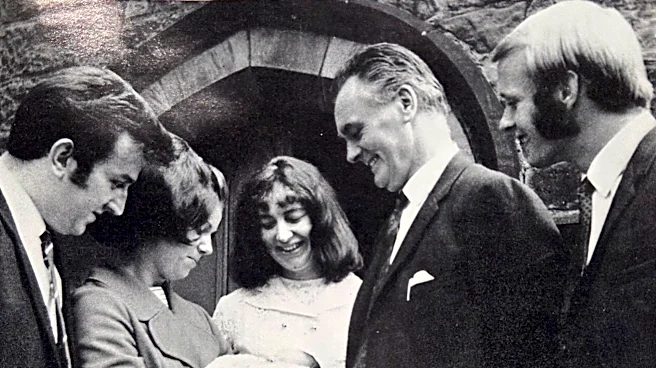
There was obviously a softer side to Palmer’s supposedly brash exterior too, another trait that Brown may have warmed to in a different universe. Those reading the Manchester City edition of the Roker Review in August 1969 for example learnt that the pair had recently attended a christening at All Saints Church, West Harton, for the newly born son of terrace regulars Cathy and Jimmy Gunn after the couple had asked Brown and Palmer to act as godfathers to their arrival, Calvin Mark Gunn. Selected presumably to be positive role models, perhaps Palmer wasn’t the bad influence his more reserved manager thought, and it was just the case that they were not the type to get the best out of each other when it came to football.