



While gambling institutions are pretty high on the 2026 Green Bay Packers, holding their current win total at 10.5, there is a sense among some pundits that Green Bay may come crashing down to earth while the division champion Chicago Bears remain ascendant.
We here at Acme Packing Company are fans of the team, yes, but we’re also quick to respectfully praise our opposition when they behave in an intelligent manner. This is why we’re all pretty sad to see Kwesi Adofo-Mensah out as Minnesota Vikings
GM. The Vikings are already showing some signs of intelligence with the addition of Kyler Murray, and the Bears have knocked it out of the park lately, especially with the absolutely outstanding 2025 draft class. And of course, the Lions were historically great until injuries caught up with them in the 2024 season. The NFC North is a tough division with tough opponents.
And when everyone is pretty evenly matched, luck can play a big part in how the division shakes out. My favorite example of a lucky team is the 2022 Vikings, who went 9-0 in one-score games (and 11-0 in games decided by eight or fewer points), were actually outscored on the season, and still went 13-4. It’s not surprising at all that they were upset by the Giants in the first round of the playoffs, as regression comes for all of us eventually.
The 2022 Vikings were enormous frauds, but they’re also a pretty extreme example of the role that luck plays on a season-to-season basis. Usually, luck has a more subtle impact, granting or robbing a game or two from a given team. And Luck appears in many forms and is measurable in many ways, so let’s take a quick look at what we can expect from lady luck and her badass cousin, regression to the mean, next year. We will be partially relying on Tom Bliss’ work focusing on four aspects of luck in a given season: interceptions dropped by opponents, passes dropped by opponents, kicks missed by opponents, and fumble recoveries.
Fumble luck is quite well established at this point, as once a ball hits the ground it’s essentially a coin flip (with some caveats around fumbled snaps) as to who recovers the ball. And the Packers were quite lucky in their fumble recoveries last year. But that’s only part of the story.
Let’s start with the NFC North champs:
Chicago Bears
Record: 11-6
Expected Record: 9-8
Record in One Score Games (7 points or fewer): 7-4
Luck WPA (Tom Bliss Metric) +49% (8th luckiest)
We’re certainly not above bashing the Bears around here and so let’s start with some level setting: While the Bears were definitely lucky last year, they were certainly not frauds. That 2022 Vikings team was positively defecating horseshoes, while the 2025 Bears were well within the normal range of luck. That said…I also don’t think the Bliss numbers fully capture just how lucky this team was as you can’t put a number to Colston Loveland’s 58-yard touchdown catch against the Bengals with just 25 seconds left, when two Bengal DBs just ran into each other. As for the numbers we can know for sure though, the Bears got the benefit of pretty good fumble recovery luck and excellent opposing kicker luck. As the Packers still employ Brandon McManus, maybe that kicker “luck” actually sticks around for another season, however it’s likely that the Bears do experience some regression next year.
For starters, the Bears were not only the luckiest team in the division in one-score games, they also played the most one-score games with eleven (Green Bay played the second-most with nine). Historically, great teams play fewer one-score games as they blow more opponents out, and historically, one-score games are statistical coin flips, and if the Bears play eleven such games next season their likely record will be 6-5 or 5-6.
The other potential headwind for Chicago is the high-variance nature of Caleb Williams. Williams actually led the NFL last season with six fourth quarter comebacks, and he also finished dead last in the NFL (min:250 attempts) in completion percentage with 58.1. Williams was exciting, and exciting is fun, but he was frequently the reason that the Bears were trailing in the first place, even if he eventually did manage to lead a comeback. Williams was an extremely effective deep passer finishing fifth in Yards per Completion, but living by the big play is dangerous, and when you’re relying on completing bombs in one-score victories, a few additional incompletions will lead directly to losses.
Williams could also develop further, and if he starts hitting at something like a 64%+ clip, he’ll be truly dangerous and a likely MVP candidate, and should mitigate some of their luck exposure. Until then, he leaves Chicago vulnerable to regression next season.
Minnesota Vikings
Record: 9-8
Expected Record: 9-8
Record in One Score Games: 4-3
Luck WPA: 52% (7th)
Hoo boy. The Vikings were lucky on all four of the Bliss metrics except for opposing dropped interceptions, and just glancing at the numbers, it’s hard to conclude anything except that in 2025, Minnesota wasted some truly good luck. Luck doesn’t care if you improved your QB situation from JJ McCarthy (and worse, Max Brosmer) to the perfectly cromulent Kyler Murray, it’s still going to come for you. All you can do is hope you’ve improved more on your underlying talent than the regression hammer is going to take away.
The reason the Vikings were competitive at all is the brilliance of Brian Flores’ defense, and any kind of offense at all would have had this team in the playoffs, but they were 26th in points scored, and next year they are unlikely to have their opponents botch so many opportunities. The only teams to experience more luck than the Vikings and miss the playoffs last year were the Bengals, who lost half a season of Joe Burrow, and the Ravens, who somehow went 1-4 in one-score games despite all of their underlying good luck, but had their own QB problems.
And QB problems are the operative word. Having a bad or injured QB will swamp anything else. Fewer teams suffered more at the position than Minnesota, who saw their incumbent leave and win a Super Bowl in Seattle while their second-year replacement crashed and burned like few others. Murray should bring stability and a nice floor for a team with an elite defensive coordinator and the best receiver in football this side of, well, Seattle. But they will likely have to contend with some regression.
Detroit Lions
Record: 9-8
Expected Record: 10-7
Record in One Score Games: 2-5
Luck WPA: -99.9% (30th)
How does a team fall from a 15-2 Super Bowl contender to a 9-8 also-ran with the same record as the JJ McCarthy-led Vikings in just a year? Some of it is definitely the loss of Ben Johnson to the Bears, but much of the rest of this decline was simply out of their control. Before we get to one-score games and the Bliss metrics, the Lions also had the misfortune of ranking second to last in FTN’s Adjusted Games Lost statistic, which quantifies how much each team suffered from injuries, weighting lost starters and important players more heavily. (Lions – 31st, Bears – 17th, Packers – 15th, Vikings-9th).
I think AGL understates the magnitude of Green Bay’s injuries, and we’ll get to that in a second, but the Lions really were snake-bitten in terms of health. But in addition to being second-to-last in health, they were third-to-last in luck, and the only team in the league that suffered a negative outcome (and a substantial one at that) in all four of the Bliss categories. They were especially hard hit in fumble recovery luck, where they lost a full half win of WPA, but more than anything, across the totality of circumstances, it’s actually pretty amazing this team won nine games at all (especially given that they lost to Minnesota twice). They’re a good bet to bounce back a bit next season, although age and injuries may continue to negatively impact their starting baseline.
Green Bay Packers
Record: 9-7-1
Expected Record: 9-8
Record in One Score Games: 4-4-1
Luck WPA: -90.3% (29th)
Getting back to Adjusted Games Lost, where the Packers were basically average, this is a scenario where I don’t think the adjustments in question really capture the magnitude of the situation. When Micah Parsons was lost for the season with a torn ACL, the Packers fell from basically average (in EPA per Play) to one of the worst defenses in football. Few non-quarterbacks are as valuable as Parsons and losing him isn’t equivalent to losing an average edge rusher.
But Parsons is just the tip of the iceberg. Tucker Kraft was, on a per-play basis, the best receiving tight end in football last season. When he was lost with his own ACL injury, it was a devastating blow to the offense. Injuries to Christian Watson, Devonte Wyatt, Zach Tom, Elgton Jenkins, and Jayden Reed were not just injuries to generic “starters” but to some of the best players on the team, and in in some cases, in football. But the numbers are what they are, so let’s gat back to where the Packers were objectively snake-bitten.
Aside from injuries, the Packers were only a hair luckier than the Lions, although in a very different way. The Packers were absolutely lucky on their fumble recoveries last year (a statistic where I think the eye test agrees). Only the Jaguars, Steelers, and 49ers were luckier than Green Bay when scooping balls off the ground. But if that’s true, how were the Packers so unlucky overall?
The Packers experienced the absolute worst luck in the league on opposing dropped passed. Please keep in mind that this statistic has NOTHING to do with the quality of the Packer defense, or of any other defense. This statistic is based on the “normal” number of passes that you can expect an opponent to drop, and whether or not your opponent dropped more or fewer passes. The Eagles gained 118 points of WPA (Win Percentage Added) on opponents dropping passes last year, which is more than a full win. The Packers lost 77.8 WPA on a lack of dropped passes, or more than three quarters of a win. If it seemed like Packer opponents were catching absolutely everything, well, there is a lot of truth to that.
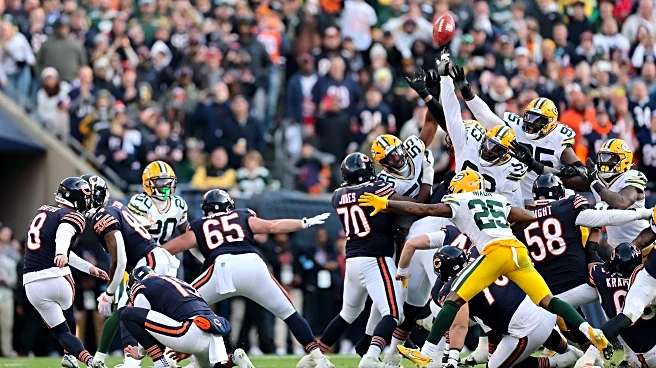
The Packers were also the third-least lucky team in the entire league on opposing kicks, ahead of only the Jets and Giants. While Brandon McManus (who the Packers do control) was out there missing kick after kick for the Packers, their opponents were making absolutely everything. The Packers played the Bears three times this season. Cairo Santos made all eight of his field goal tries and all four of his PATs against Green Bay. Brandon McManus made three of five field goal tries and eight of nine PATs. The Packers could certainly improve on McManus, who is terrible, but there is no reliable way to force your opponents to miss more.
Green Bay didn’t really play above or below their expected record, and they were perfectly normal in one-score games, but under the hood there was a great deal of bad luck. For purposes of projecting next year, the one thing that is undeniably true is that the team wasn’t in any sense lucky. If the Packers do regress to the mean next year, it will be in the positive direction, and if you’re wondering why that win total at the casinos is way up at 10.5, now you know.
Whenever I write a post like this, I invariably get accused of “hating” the teams I believe will suffer some negative regression next season. I assure you, if you flipped the Packers and Bears in this scenario (or gave the Packers the luck of the 2022 Vikings), I would be projecting a negative regression for them as well. Luck doesn’t care about my or anyone else’s feelings, it simply is what it is. And I like what the Bears have done in matters that they DO control and believe that even with a few headwinds they’re still very real contenders to win the North, especially if Caleb Williams can pump his accuracy numbers up just a hair.
But the scenario we actually have is one where the Packers and Lions were on the far low end of the luck scale and will likely bounce back to average, while the Bears and Vikings will come back down to earth just a bit.