








For weeks, the conversation surrounding Juventus has been dominated by a recurring, frustrating theme. Between disjointed performances, a hollowed-out midfield, and an attack that too often relies on late desperation rather than coherent structure, the criticism has been entirely warranted. Under Luciano Spalletti, the team has built a foundation upon defensive resilience, but the offensive process has felt stagnant, isolated, and fundamentally out of sync.
So when Juventus stepped onto the pitch
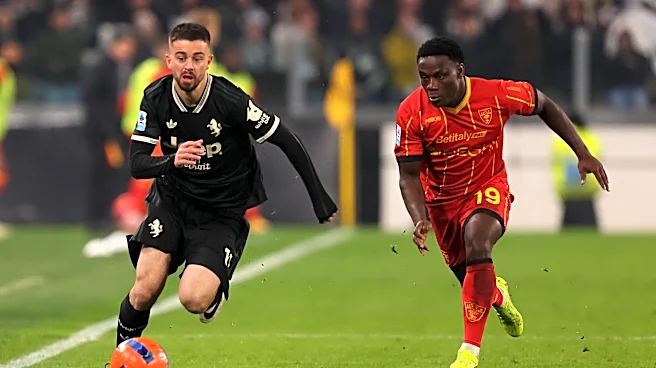
against Lecce on Sunday night, the underlying question wasn’t just about securing three points — it was about whether the coaching staff could actually fix the structural cracks. For 45 minutes, the answer was a resounding yes. Juventus delivered arguably their most fluid, well-connected half of the 2026-27 season, showcasing a midfield shift that solved old problems with intelligent movement and numerical superiority.
Yet football rarely offers simple, uninterrupted progress. What began as an encouraging tactical blueprint unraveled after halftime when Lecce flipped the tactical script, exposing a lingering fragility: Juventus can solve their initial problems brilliantly, but they still struggle immensely when forced to adapt on the fly.
To understand where this team is truly at right now, you have to look at both halves of this match — the brilliant, patient solutions of the opening period, and the concerning tactical stall that followed.
The midfield shift
For the first time this season, Juventus deployed a more traditional three-man midfield, particularly during the build-up phase. With the ball circulating in the backline, Douglas Luiz dropped deep to assist, working alongside Weston McKennie and Teun Koopmeiners to form a fluid 1+2 midfield combination.
What made this shift notable was Douglas Luiz’s exact role within the build-up geometry. Juventus have typically relied on a double pivot — whether out of a 4-2-3-1 or 3-4-2-1 — where two midfielders share the workload side-by-side. Here, for the first time this season, Luiz functioned as a single pivot sitting deep on his own line between the center-backs and the rest of the midfield. But rather than leaving him isolated as a stranded single pivot, this 1+2 framework kept McKennie and Koopmeiners close enough to provide immediate options, giving him the spacing and outlets needed to control the tempo out of the back.

In previous matches under Spalletti, Juventus’ double-pivot often resulted in predictable, flat passing lanes across the first line of build-up — making them easy to press laterally toward the touchline. By dropping Luiz into a solo 6 role with McKennie and Koopmeiners positioned as dual 8s/10s in the half-spaces, Juventus created a natural staggered triangle.
This geometry forced Lecce’s first line of pressing into an impossible trade-off: if their front line squeezed inward to deny Luiz time on the ball, passing lanes opened directly into Koopmeiners and McKennie between the lines. If Lecce’s midfield stepped up to tight-mark the two higher midfielders, it liberated Luiz to dictate the tempo unbothered.
As the play progressed up the pitch, McKennie pushed higher into the right channel, Douglas Luiz stepped up to join Koopmeiners’ midfield line, and Nick Woltemade dropped deeper while Randal Kolo Muani tried to stretch the defense by running in behind. It created a system of constant movement and numerical superiority — directly addressing two of the biggest issues from recent matches.
This movement profiles complementary forward play at its best. With Kolo Muani staying high to pin the central defenders, Woltemade functioned as a dropping 10, pulling away from the defensive line to receive in the space between the blocks. That movement forced Lecce’s midfield and defense into a split-second dilemma: follow Woltemade into the half-space and leave their backline vulnerable to Kolo Muani’s vertical runs, or stay deep and give Woltemade the time to orchestrate.
By creating this vertical axis, Juventus effectively widened the “interline space” — the crucial area between Lecce’s midfield and defense. McKennie’s surges into the right half-space weren’t just random runs; they were direct exploitations of the vacuum created by Woltemade’s clever withdrawal.
In the opening 45 minutes, this design ensured that Juventus always had numbers during build-up and numerical advantages once they transitioned into the final third. Rather than leaving the midfield isolated — as happened against Lazio — the new setup ensured that midfielders always had pairings, partners, and support close by.

That constant motion also made it incredibly difficult for Lecce’s defense to settle. With both forwards operating in opposite directions, Lecce’s backline and midfield were forced into a perpetual state of shifting and adjusting, which allowed McKennie and Pierre Kalulu to connect effectively out wide in the final third.
Despite all this movement, the build-up remained remarkably patient. Holding 67% of possession in the first half, Juventus took just four shots. Yet the quality was high: McKennie’s opener from a set piece weighed in at 0.59 xG, Kolo Muani tested the keeper in the 37th minute with a 0.18 xG effort, and the other two attempts were lower-value looks (an open-play effort and a 0.02 xG free-kick goal from Douglas Luiz). The system seemed intentionally designed to generate higher-quality chances rather than volume, preferring to draw opponents out with patient central possession before striking quickly. This was reflected in the passing geography, where 58% of Juventus’s passes occurred in their own half, compared to just 43% for Lecce.
If the first half showed Juventus’s structural ideal, the second half exposed how vulnerable that ideal is when the source is choked off. Recognizing that Douglas Luiz was orchestrating the game unimpeded, Lecce adjusted at the break by locking down Juventus’s center-backs with aggressive man-marking.
Rather than allowing the ball to circulate comfortably in the backline before finding Luiz in his deep 1+2 pocket, Lecce’s front line forced the issue right at the root. With the center-backs heavily shadowed, Juventus were repeatedly forced into safe, unproductive escape routes back to the goalkeeper.
The second-half stall
Spalletti effectively made my job redundant after the match. During his post-match press conference, Spalletti addressed the stark shift in quality between the halves,pointing directly to Eusebio Di Francesco’s tactical adjustments:
They came out in a 4-3-3 and in the second half they played three at the back and went man for man. We stayed put, we didn’t press with any force and we no longer built from the back. The goalkeeper had a lot more passes to make in the second half.
The catalyst came straight off the bench at halftime when Lecce replaced midfielder Mohamed Kaba with central defender Jamil Siebert to shift into a 3-4-3. It was a masterstroke. By matching Juventus’s two-man front line of Kolo Muani and Woltemade with a trio of center-backs, Lecce secured an immediate numerical advantage at the back. That extra body freed their wing-backs and midfielders to aggressively lock down Juventus’s build-up at the root.
With the backline heavily shadowed, play started more and more with goalkeeper Guglielmo Vicario which meant long balls over the top — bypassing the midfield along the way. As a result, Woltemade stopped dropping deep and Kolo Muani had nowhere to run and no one to play him the ball.
On paper, the blueprint to break a three-man high press exists: Juventus needed to morph their build-up into a back four. Dropping Pierre Kalulu deeper while shifting Jhon Lucumí into a makeshift left-back role (or introducing Lloyd Kelly) would have created a 4-v-3 overload, restoring a free man in the first line and reopening passing lanes for Douglas Luiz.
Yet executing that mid-match is easier said than done. Shifting to a back four would have exposed Federico Gatti without sufficient structural cover. More crucially, recent reports suggest the squad actively lobbied for a three-man defense to find some baseline stability after a rocky stretch. Ripping up that safety blanket on the fly to counter Lecce required a level of tactical risk-taking Juventus simply weren’t willing — or healthy enough — to gamble on.
The statistical drop-off mapped that suffocation precisely. Juventus failed to record a single shot between Andrea Cambiaso’s 47th-minute effort and Woltemade’s 78th-minute miss, with only Woltemade’s late look (0.15 xG) breaking the 0.05 threshold. Meanwhile, possession plummeted from 67% in the first half down to 47% in the second.

While I’ve often argued that Juventus should hold less possession and play more directly, this drop-off wasn’t a proactive choice. It was a reaction to an opponent’s adjustment, and those are rarely positive. Juventus didn’t want less of the ball; they were trapped between the tactical need to change shape and the psychological reality of protecting a defensive system holding them together by threads.
In many ways, the Lecce match was a microcosm of Juventus’s entire season under Luciano Spalletti. For 45 minutes, we saw the high-water mark of this project: a clever, imaginative tactical redesign that proved this squad has the technical intelligence to solve its own structural riddles despite the injury crisis. The 1+2 build-up framework and Woltemade’s fluid rotation as a dropping 10 showed that the raw materials for a modern, cohesive attack are there.
But the second half delivered a sobering reality check. Tactical blueprints are only as good as a team’s ability to protect them when the opponent inevitably punches back. When Di Francesco pulled the tactical rug out from under them, Juventus defaulted back to hesitation, trapped by a combination of physical limitations, defensive frailties, and a psychological reliance on a safety-net formation. They didn’t evolve; they endured.
For Juventus to take the next step, finding brilliant solutions for the first half of a match won’t be enough. The real work — and the true test of Spalletti’s tenure — lies in cultivating the tactical flexibility to improvise when the script is torn up. Until this side learns to answer back when the puzzle changes on the fly, they will remain a team that finds their solutions just in time to run out of answers.