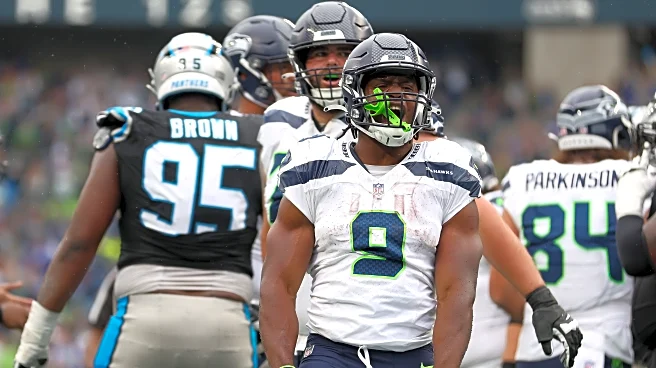


On paper, this looks like a straightforward matchup. In reality, it’s the kind of game that tests discipline, preparation, and patience — especially for a Seahawks team still fighting to control its own destiny to be the seed 1 in the NFC.
The Carolina Panthers’ decisive game isn’t against the Seattle Seahawks, but against the Tampa Bay Buccaneers in the final round. Would that make them rest their energy against Seattle?
If Seattle approaches this game assuming it will resolve itself, the Panthers
are capable of turning it into a four-quarter grind.
The Panthers offense vs the Seahawks defense
Carolina’s offense is still a work in progress, but the structure is clear: simplify reads for the quarterback, rely on timing throws, and avoid obvious passing downs with a good run game.
That’s where the matchup tilts heavily toward Seattle.
Without Derick Hall, the Seahawks lose some edge rotation, but the defensive identity remains intact. The pressure plan is likely to shift inward rather than outward. But the teams need a plan to keep Bryce Young inside the pocket.
Where Seattle has the edge
Expect Leonard Williams and Byron Murphy to be featured prominently, collapsing the pocket and forcing the quarterback to make early decisions. If Seattle wins inside, the Panthers’ passing game becomes predictable.
Ikem Ekwonu is No. 12 among offensive tackles allowing pressure. The standout player on the offensive line is a familiar face, Damien Lewis, who is 14th in run blocking and also the second guard (with at least 514 snaps) who allowed the fewest pressures.
Could we dream of his return next season?
How Carolina tries to counter it
The Panthers will likely respond with:
- Faster releases and shallow concepts;
- Screens and misdirection to slow the rush;
- Rolling pockets to avoid interior pressure;
The challenge for Seattle’s linebackers and safeties will be recognition and tackling. This isn’t about explosive plays — it’s about avoiding death by a thousand short gains.
The Seahawks offense vs the Panthers defense
This is the phase where Seattle must be ruthless. Carolina’s defense plays hard but lacks consistency, especially on early downs. If the Seahawks stay on schedule, the matchup strongly favors them.
What Seattle should attack
- Linebackers in coverage on play-action;
- Soft zones on early downs;
- Edges that struggle to set the run consistently;
If Seattle establishes balance early, it forces Carolina into predictable fronts — and that’s where the Seahawks’ passing concepts can stress the defense horizontally and vertically.
The danger zone: situational football
This is where “easy games” become uncomfortable.
Carolina has stayed competitive this season by:
- Limiting turnovers;
- Converting in the red zone;
- Keeping games close into the fourth quarter;
Seattle must:
- Win third downs;
- Avoid penalties that extend drives;
- Finish drives with touchdowns, not field goals;
Letting the Panthers hang around is the fastest way to create unnecessary pressure late.
What this game really comes down to
This isn’t about talent disparity. It’s about execution. If Seattle controls the interior trenches, the defense dictates the game. If the offense stays patient and avoids forcing throws, points will come. If the Seahawks play clean football, this game should never tilt toward Carolina.
But if they don’t? This is exactly the type of matchup that exposes complacency.
Final thoughts
The Panthers aren’t a trap because they’re dangerous — they’re a trap because they’re ordinary. For the Seahawks, the path is clear: dominate inside, stay disciplined, and leave no doubt. Anything less turns a manageable road game into a test Seattle doesn’t need right now.