


Do you remember as a kid when you would go to the Boardwalk and there would be a sketch artist sitting on the pier somewhere and they would ask if you would like to have your picture drawn? Then they would create a picture with an oversized head and a tiny body trying to ride a bicycle or something like that?
The 2026 Phillies were a caricature. They had a big head and a tiny rest of its body.
They entered the 2026 season knowing they were a top-heavy operation. Offensively, Kyle Schwarber ($30 million),
Trea Turner ($27.3 million) and Bryce Harper ($25.4 million) were their big-ticket items, high priced veteran superstars whose job it was to carry the team. They were led by a starting rotation featuring Zack Wheeler ($42 million), Aaron Nola ($24.5 million), Jesus Luzardo ($11 million) and Cristopher Sanchez ($5.7 million), as well as a top closer in Jhoan Duran ($7.5 million). J.T. Realmuto signed a big off-season free agent contract, but was never considered someone who would provide a major impact.
The majority of the roster was a mix of returning veteran bats, some bargain basement outfield additions, and a bullpen that seemed to be a strength until it very quickly became apparent it wasn’t.
Turner was a disaster. Harper and Schwarber were fine, ranking 13th and 15th, respectively, in MLB OPS among qualified players. The rotation was as good as advertised, and the bullpen was one of the worst in the league as the playoffs rolled around. Nearly every returning member of the Phillies regressed from 2025 to 2026.
In the end, the Phillies tried to skate through the season with two “great” position players, three elite starting pitchers, and one elite bullpen arm. The rest was a collection of underachieving veterans who were unable to provide enough value to substantially move the needle.
Simply put, there were not enough solid Major League contributors on the 40-man roster this year compared to the other 12 MLB playoff teams.
This year, the Phillies had three position players worth at least 1.5 fWAR on their roster: Bryson Stott (3.8), Harper (3.3) and Schwarber (2.9). That was the fewest of any team in the playoffs. The Brewers and Cubs each had 8. The White Sox had 7. The Dodgers, Guardians, Padres, Yankees and Rays each has 6.
Pitching-wise, the Phillies had 6 pitchers worth at least 1.0 fWAR: Sanchez (6.2), Luzardo (5.5), Wheeler (4.0), Duran (2.9), Nola (1.3) and Andrew Painter (1.1). The Dodgers had TWICE as many, 12, with the Brewers and Red Sox each having 9. The Yankees had 8. The Braves, Padres and Rays had 7 each.
When you add up all the hitters with 1.5+ fWAR and pitchers worth 1.0+ fWAR, the Phillies had 9 such players, the fewest of any postseason team. By comparison, the Dodgers had 18. The Brewers had 17. The Yankees, 14. Four teams had 13.
Dombrowski will have money to spend this off-season. There will be raises to Luzardo and Sanchez thanks to their well-deserved contract extensions, but there is significant money coming off the books. Dead cash for Nick Castellanos and Taijuan Walker, about $38 million, will be freed up. However, there are no star free agents outside of Japanese imports worth spending big bucks on.
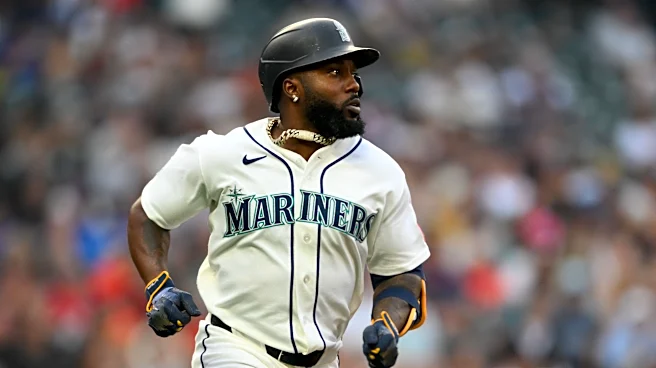
The most likely free agent of note the Phils could sign is outfielder Randy Arozarena, who put up a career year in Seattle this season. They will give the soon-to-be 32-year-old a contract that everyone will be uncomfortable with to play left or right field, and it will probably be the right move. But outside of that, Dombrowski’s mission must be to find more 1.5+ fWAR hitters and 1.0+ fWAR pitchers.
He must balance the roster.
Harper is no longer good enough to be at the head of a top-heavy roster. After a 2025 season in which Dave Dombrowski questioned whether Harper was still elite, Harper was actually worth a little less in ‘26 than he was in ‘25:
- 2025: 132 games, 3.4 fWAR, .261/.357/.487, .844 OPS, 27 HRs, 75 RBIs
- 2026: 162 games, 3.3 fWAR, .269/.380/.485, .865 OPS, 29 HRs, 87 RBIs
We now know what Harper is at 33 years old. He’s slightly less than a 3.5-win player. That is a very fine thing to be and right in line with his very reasonable $25.4 million salary. Schwarber, the team’s other big bat, did not have as productive a season as his previous two:
- 2024: 150 games, 3.2 fWAR, .248/.366/.485, .851 OPS, 38 HRs, 104 RBIs
- 2025: 162 games, 4.8 fWAR, .240/.365/.563, .928 OPS, 56 HRs, 132 RBIs
- 2026: 156 games, 2.9 fWAR, .232/.354/.503, .857 OPS, 45 HRs, 97 RBIs
Schwarber is still one of the game’s most feared power hitters, and when he’s on a hot streak, he can carry the team for a solid month. But he can also go quite cold. He had just a .199 batting average in the second half last year, hitting .172/.330/.379 in September. He will be 34 next year.
When your two best players are streaky and, frankly, do not provide elite production, they need to be supplemented with other players throughout the roster who do more things well than what we saw this season.
It’s well past time to have serious conversations about Bryson Stott, Brandon Marsh and Alec Bohm. Despite another mediocre year at the plate and his annual disappearing act in the postseason, Stott led the team in fWAR thanks mostly to his defensive versatility and baserunning. He would likely fetch a decent price as a trade chip this off-season. After starting the All Star Game last summer, Marsh finished as a player who was barely above replacement-level, with a 0.3 fWAR in 155 games. He should be traded. Bohm, worth 0.2 fWAR despite a better second half, should not be back.
The Phillies can only hope J.T. Realmuto and Trea Turner figure something out this off-season, because while Dombrowski might want to trade them, he won’t find any takers. And despite what you may have read, it is highly unlikely Harper or Schwarber are going anywhere in trades. They control their destiny, although Dombrowski should be willing to listen to any and all offers and present them to his two veteran stars.
Dombrowski has to rely on his pro and minor league scouts to earn their money. They need to comb through the 40-man rosters of every team in the league, identify players who can contribute at the Major League level, and swing some trades. They need to make smarter free agent decisions. That means no more Adolis Garcia-Max Kepler one-year deals to failing, washed-up veterans. This also means bringing aboard guys who are more well-rounded. Guys who play good defense, don’t chase at the plate, and understand what a professional at-bat looks like.
More importantly, they need to load up their system with bullpen arms and stash as many guys with plus-stuff on their minor league teams and on the 40-man as they can. The only minor league reliever to have any significant impact this year was Alex McFarlane, and they waited until late July to get him on the 26-man roster. Getting even 2 or 3 guys who can provide 1.0+ fWAR out of the bullpen as a middle reliever would be a major victory.
This is where champions are built. If there was a big-money free agent that could take over as the No. 1 star on the team, the Phillies would, and should, go for it. But outside of Japan, that player isn’t out there. So, the Phillies will enter the 2027 season with Harper and Schwarber as the guys they’re building around, hoping that Turner re-joins them in creating a Big 3.
Big game hunting is fun, but in the case of this sinking Phillies team, they simply need more competent big league baseball players in the organization to make the top-heavy roster look less like a caricature and more like a real playoff team capable of winning a World Series.