

How much data do you need before you’re compelled to make a decision?
In the NBA, the answer to that question is as unique as the front offices tasked with making those decisions. There are countless philosophies surrounding what constitutes meaningful data, how much weight to place on sample sizes, and when statistical trends are reliable enough to warrant action. But here we are, 11 games into the new season, and I know I’m not the only person with two functioning eyes beginning to question whether
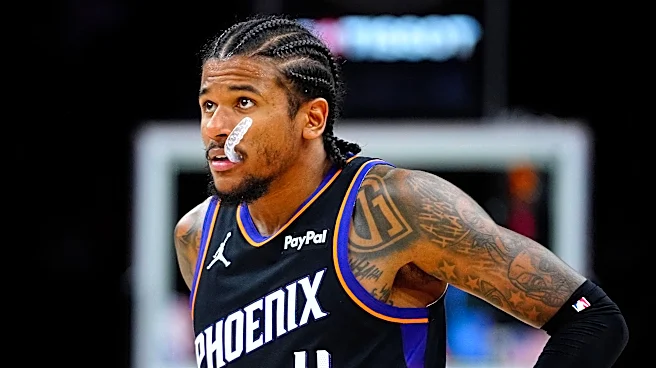
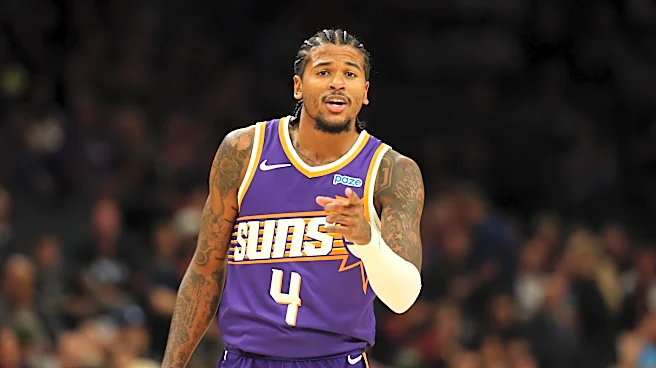
the Jalen Green experiment is going to work in Phoenix.
I’ll admit that I initially viewed Green’s acquisition as more of a necessity than an intentional pursuit. The Suns knew they needed to move Kevin Durant for a multitude of reasons, eventually found a trade partner that was acceptable to him, which is an entirely separate quagmire worth exploring, and needed to make the salaries work. In my mind, Green was simply part of the financial equation required to facilitate the deal.
After all, the Houston Rockets had four seasons of data to evaluate Green. Four years of watching his development, assessing his strengths and weaknesses, and determining whether he was someone they wanted to build around moving forward. Their willingness to include him in the trade suggested that perhaps they’d already reached a conclusion about his long-term value.
But apparently, I was wrong.
As Sam Amick revealed in his latest piece for The Athletic, Green wasn’t merely a contractual necessity or a convenient piece of salary matching. He was someone the Phoenix Suns actively coveted.
“(It) was never gonna get done without Jalen and Dillon (Brooks) in the deal,” Ishbia told me earlier this year. “Those are the two players we wanted. It wasn’t, ‘Hey, how do we fill a salary with these numbers?’ It was, ‘In order to have Kevin Durant on your team, I want Dillon Brooks to help me with my culture and my identity. I want Jalen Green as a 23-year-old up-and-coming leading scorer.’”
Ugh. So we actively signed up for this?
Last season was supposed to be the year of evaluation for Green, a player who arrived in Phoenix with an unbelievably clean bill of health, only to appear in 32 games due to lower extremity injuries. So there’s data point number one: 32 games. Of course, there’s only so much you can reasonably take away from that sample, considering Green was essentially joining a race that was already three-quarters of the way finished by the time he got involved.

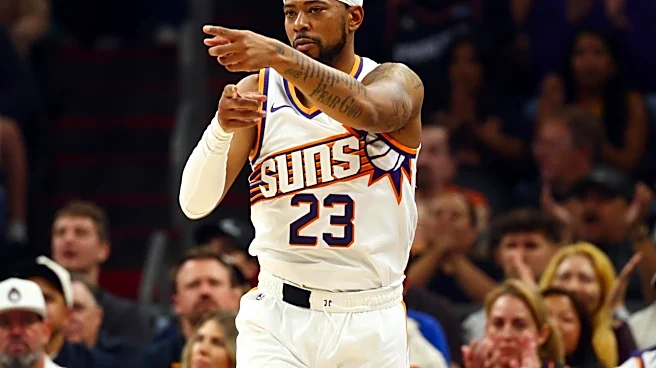
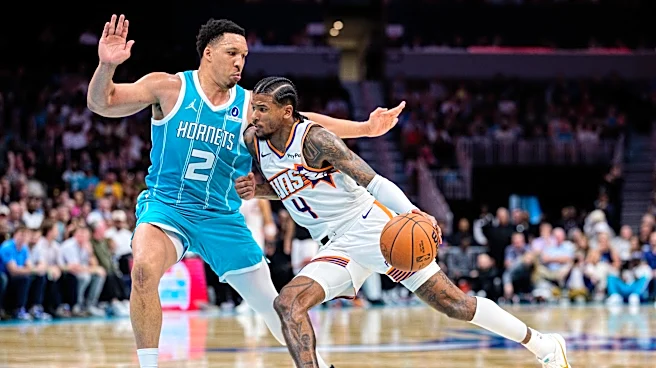
Which brings us to this season, the one in which the Suns would finally have an opportunity to evaluate what they actually have in Jalen Green. And the early returns? Less than optimal would probably be the polite way of putting it. Getting benched for the entire fourth quarter against the Charlotte Hornets, a team Green should theoretically thrive against, might be a more accurate description of where things currently stand.
And quite honestly, it was the right decision.
The Suns had been cooking, putting together an impressive 38-16 run in the first half and establishing the kind of offensive rhythm that has been painfully difficult to sustain this season. Much of this occurred with Green on the bench. But when Green checked into the game with 6:06 remaining in the second quarter, that momentum came to a screeching halt.
Charlotte proceeded to unleash a 31-11 run that extended into the third quarter, completely erasing the progress Phoenix had made. During Green’s stint on the floor, from 6:06 remaining in the second quarter until he was substituted out with 5:26 left in the third, the Suns were outscored by 18 points. And that was the last we saw of Jalen Green.
Once again, Phoenix struggled to generate productive minutes with Green on the floor, and I believe that gets to the heart of the problem. It’s becoming increasingly difficult to identify how his presence complements the players around him, particularly when the team appears to function more effectively without him. And for a player the organization actively coveted as a centerpiece of the Kevin Durant trade, that’s a pretty troubling development.
No one is questioning Jalen Green’s athleticism. No one is questioning his desire, his attitude, his likability, or his character. By all accounts, he’s a stand-up guy who has reached the highest level of professional basketball largely because of his extraordinary physical gifts. His explosiveness, speed, and ability to create separation are undeniable.
But when you reach the NBA, physical gifts can only take you so far. At some point, the difference between being a good player and becoming a great one comes down to your ability to understand the game, recognize situations, make the right decisions, and contribute within the structure of a functioning offense.
When you’re the second highest paid player on the roster, earning $36.3 million this season, the Phoenix Suns need you to be great. They need you on the floor in the fourth quarter, positively influencing the outcome of basketball games. They need you making intelligent decisions, creating opportunities for your teammates, and understanding when to attack and when to allow the offense to develop.
What they don’t need is someone disrupting the offensive rhythm, launching ill-timed three-point attempts that have little connection to what the team is trying to accomplish, or throwing the basketball directly into the hands of the opposition. Unfortunately, we’ve seen far too much of the latter. Green, who ranks 53rd in salary this season, is ranked 113th in scoring (11.8 points per game), 92nd in assists (3.1 assists), 189th in three-point percentage (27.0%), and 246th in NET +/- (-28.0).
The Ringer’s Rob Mahoney recently said of Green on the Bill Simmons podcast that he has gone, “from counterproductive to actively bad this season.” I can’t say I disagree.
Perhaps some of these struggles can be attributed to the Suns asking Green to operate in a role he’s never truly occupied before, that of a primary facilitator. It’s a reasonable explanation, considering his development in Houston was largely centered around his ability to score rather than orchestrate an offense. But as the games have progressed, I’m beginning to wonder whether that’s even what Phoenix is asking him to do anymore.
His assist percentage currently sits at 17.1%, placing him in the 44th percentile this season. That doesn’t exactly suggest a player being tasked with consistently running the offense. It feels more like the Suns want him to facilitate occasionally, score when opportunities arise, and somehow find a way to make everything fit together. Therein lies the problem. Green’s presence continues to look awkward within the structure of this offense. His movements feel disconnected from those around him, his decisions frequently interrupt the flow of possessions, and his inability to consistently operate within the team’s offensive framework has become increasingly detrimental.
That’s what makes this entire situation such a quagmire. Green is struggling to operate within the confines of everything happening around him, and much of what we’re witnessing mirrors the problems we saw last season. At the time, we could point to his injuries, the late start, and the lack of continuity as reasonable explanations for his struggles. Those were legitimate factors, and they made it difficult to draw any definitive conclusions.
But now? We’re beginning to see some familiar patterns emerge. And the Suns, as they seem to be in almost every avenue concerning their ability to build for the future, find themselves stuck between a rock and a hard place.
Green’s trade value isn’t particularly encouraging at the moment. If Phoenix were to explore moving him, the return would likely be underwhelming. Any opposing team willing to absorb his $36.3 million salary would have to believe there’s something worth salvaging, and even with his contract becoming an expiring deal next season, there’s a reasonable chance that team would want draft compensation to make the transaction worthwhile.
What exactly are the Suns supposed to offer? They don’t have an abundance of desirable draft assets sitting around, waiting to be attached to another expensive contract in hopes of making a problem disappear. They used those up to get off of the Nurkic deal or to acquire Mark Williams and Miles Bridges. We’ve already watched this organization sacrifice enough of its future trying to correct mistakes from its past.
So what do you do? One possibility is moving Green to the bench, and quite honestly, that might be the most sensible solution available. We’ve seen a version of this experiment before. In January 2025, Mike Budenholzer finally came to the realization that pairing Devin Booker with another ball dominant shooting guard in Bradley Beal was creating more problems than it was solving. The overlapping skill sets were limiting the team’s offensive ceiling, and something needed to change.
We all remember how that went. Beal wasn’t particularly receptive to the adjustment, and the situation became another chapter in the ongoing dysfunction surrounding that roster.
Green, to his credit, appears to have a different attitude toward making adjustments. He’s expressed a willingness to evolve his game, embrace more facilitating responsibilities, and has spent time working with Steve Nash to improve that aspect of his skill set. Everything suggests he wants to fit in, wants to improve, and wants to become the player Phoenix envisioned when it acquired him. I don’t question any of that. But wanting something to work doesn’t necessarily mean it’s going to work.
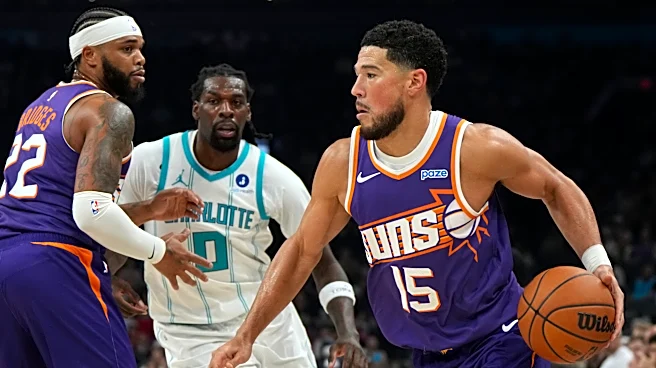
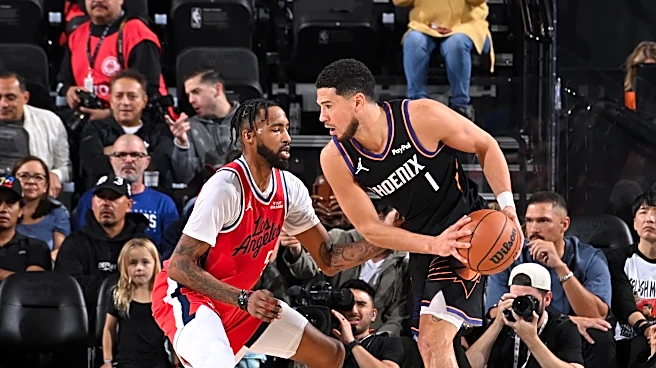
When you’re playing alongside Devin Booker, the fit becomes especially problematic. Booker possesses an extraordinary ability to control an offense, manipulate defenses, and create scoring opportunities for himself and others. Those are his superpowers. The players surrounding him should be enhancing those abilities, creating space for him to operate, and making his job easier. They shouldn’t be obstacles he has to navigate.
Perhaps the answer is allowing Green to find his footing with the second unit, where he can operate with greater freedom, develop some confidence, and establish a rhythm without constantly having to figure out how his game intersects with Booker’s. If he begins finding success in that role, maybe the comfort and confidence he develops can eventually carry over into shared minutes with the starters.
Of course, that raises another question. Who starts in his place? Collin Gillespie would seem to be the most obvious candidate, given his familiarity with the offense, his ability to play alongside Booker, and the success Phoenix has experienced with him on the floor. But at this point, you could certainly sell me on Jordan Goodwin as well. Goodwin might not be the traditional facilitator you’re looking for, but he brings something this team desperately needs: a player who can positively influence the game on both ends of the floor without requiring the offense to revolve around him. That’s a conversation worth exploring another day.
Ultimately, as I sat there watching the fourth quarter against Charlotte, knowing how ineffective Green had been throughout his minutes, I found myself relieved that he wasn’t on the floor. And I don’t particularly enjoy admitting that. Here was a player the Suns actively pursued as part of the Kevin Durant trade, someone they envisioned becoming a significant part of their future, and I was genuinely pleased that he was sitting on the bench during the most important stretch of the game.
Instead, Phoenix leaned on a group that looked much more familiar. Much of the lineup resembled the units that helped the Suns win so many games last season, with Luke Kennard occupying the role previously filled by Grayson Allen for much of the stretch. And what happened? The Suns played well. The offense flowed. Players understood their responsibilities, the ball moved with purpose, and Phoenix outscored Charlotte 29-20 in a fourth quarter that was void of his presence.
There was a familiarity to it, a sense that the players on the floor understood how to complement one another rather than compete for the same opportunities. And that’s what makes this entire situation so frustrating. The Suns have invested significant money, opportunity, and organizational belief in Jalen Green. They want him to succeed. They need him to succeed. But right now, some of their most effective basketball is being played when he’s watching from the sideline.
Eleven games into the season might not be enough data to make a definitive judgment about his future. But it’s certainly enough to start asking some uncomfortable questions.