






There is something uncomfortably foreign about Ohio State fans spending the final two weeks of November trying to figure out how a three-loss Buckeye football team can sneak into the College Football Playoff. For a program with OSU’s history, resources, talent, and expectations, this is not exactly where we envisioned ourselves when the season began. And yet, here we are, desperately searching for a way to turn a deeply disappointing season into one that still has the potential to end with a national
championship.
Fortunately, the rest of the college football hierarchy has spent much of the 2026 season demonstrating that practically everybody else is also as flawed, leaving the door ever so slightly ajar for Ohio State to potentially slip into the playoff field. So, while OSU’s postseason hopes are hanging by a thread, that thread is considerably stronger than it was just a week ago.
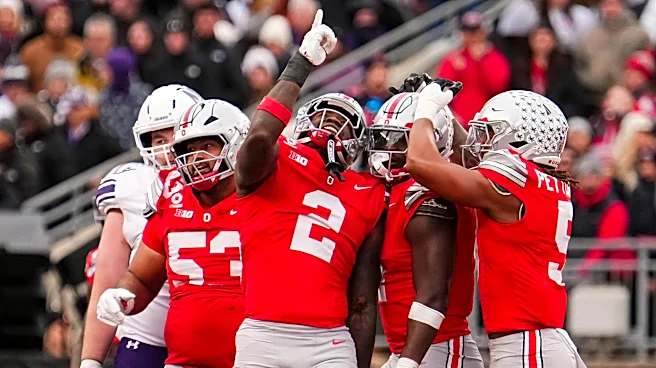
Following their victory over Northwestern, the Buckeyes jumped six spots to No. 14 in the latest College Football Playoff rankings. That’s obviously not yet high enough to get into the field, but considering they were sitting at No. 20 following the loss to Oregon, it’s a meaningful improvement.
Now, with just Nebraska and Michigan remaining on the regular-season schedule, the question is relatively straightforward: What has to happen for the Buckeyes to make the 12-team field? The answer, unfortunately, is considerably less straightforward.
First things first: Ohio State has to look like a playoff team
Before we start breaking down all of the cockamamie outcomes we need to start rooting for to give the Buckeyes a shot at the CFP, there is one rather significant piece of this puzzle that Ohio State actually controls: The Buckeyes have to win their final two regular-season games. And, frankly, I don’t think simply surviving those games is going to be good enough.
Ohio State needs to travel to Lincoln and beat Nebraska convincingly before returning home and absolutely blowing the doors off of That Team Up North. I’m not suggesting the Buckeyes need to win both games by 30 points, but that certainly wouldn’t hurt. At minimum, they need to demonstrate that the problems plaguing them over the past month are being addressed.
That starts with better offensive game planning and play calling, improved execution from the offensive line, and more consistent quarterback play from Luke Fahey. It also means making better use of Jeremiah Smith and the other offensive weapons, rather than continuing to operate an offense that occasionally seems determined to make moving the football as difficult as humanly possible.
Defensively, the Buckeyes need to rediscover the consistency that made them one of the country’s most formidable units earlier this season.
And perhaps most importantly, they need to stop sabotaging themselves on both sides of the ball with penalties, turnovers, dropped passes, and the kind of unforced errors that have turned manageable situations into completely unnecessary adventures.
The CFP committee doesn’t explicitly reward running up the score, but it does evaluate how teams play. If Ohio State finishes 9-3 by looking noticeably better against Nebraska and Michigan, it becomes considerably easier to argue that the Buckeyes are a dangerous postseason opponent rather than a fading team being propped up by its reputation.
And if the improvements aren’t there, I’m not particularly interested in arguing that this team should be one of the 12 competing for a national championship.
The playoff math is a little more complicated than No. 14 suggests
Although Ohio State sits just two spots outside the top 12, the Buckeyes actually have a little more climbing to do than that.
Under this year’s playoff format before it expands to approximately 139 teams next year, the champions of the ACC, Big Ten, Big 12, and SEC receive automatic bids, as does the highest-ranked team from the Group of Six conferences. Notre Dame also receives an automatic bid if it finishes inside the committee’s top 12.
Currently, Boise State is the highest-ranked Group of Six team at No. 17, meaning the Broncos would take the final playoff spot despite being ranked behind several Power Four teams.
That leaves No. 11 Wake Forest as the last team in the projected field, while No. 12 Texas Tech, No. 13 Oregon, and No. 14 Ohio State are the first three teams out.
Essentially, the Buckeyes need to move into the top 11, and potentially even higher if the conference championship games produce additional bid thieves. That means passing at least three teams currently ahead of them, while also avoiding being leapfrogged by anyone behind them.
The good news is that there are plenty of opportunities for teams to stumble. The bad news is that Ohio State doesn’t have another ranked opponent on its schedule to strengthen its résumé, so the Buckeyes are going to need other programs to do some of the heavy lifting.
Who should Ohio State fans be rooting against?
Here’s where things get interesting, because the final two weekends feature several games with the potential to dramatically change the playoff picture.
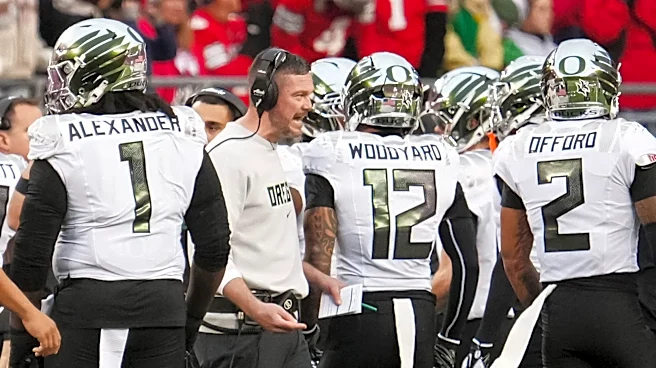
No. 13 Oregon: This is probably the most obvious place to start, even though it is a bit complicated, since the Ducks beat OSU just a few weeks ago. However, since Oregon is just one spot ahead of Ohio State and owns that head-to-head victory, they would be particularly difficult to pass if both teams finish with three losses. The Ducks took care of business against Michigan State on Friday night, leaving next weekend’s home game against Washington as the Buckeyes’ last realistic opportunity to get some help from Oregon. A fourth loss for the Ducks would eliminate one of Ohio State’s most significant obstacles.
No. 12 Texas Tech: The Red Raiders are 9-1, but currently sit outside the projected field. They visit Baylor today before hosting TCU on Thanksgiving, and a loss in either game would create an opportunity for Ohio State to narrow the gap. Even better would be a scenario in which Texas Tech loses again and fails to win the Big 12 championship, because an automatic bid would render its regular-season losses considerably less important.
No. 10 BYU: The Cougars have already suffered two losses, and they have potentially tricky games at Kansas this weekend and against Cincinnati next Saturday. Another loss would put them at three and make them a much more direct competitor with Ohio State. Buckeye fans should also be rooting for No. 2 Utah to take care of business and win the Big 12, rather than allowing a lower-ranked team to claim an automatic berth while Utah remains safely in the field. How do you all feel about rooting for UC next Saturday?
No. 11 Wake Forest: The Demon Deacons might be one of the most important teams to watch. At 9-1, they visit Georgia Tech on Saturday before closing the regular season against Duke. A loss in either game would help, but Ohio State would still need the committee to prefer the Buckeyes’ three-loss résumé over Wake Forest’s two-loss one. Another loss in the ACC Championship Game could create an even more interesting debate, provided Miami wins the conference and doesn’t introduce another unexpected automatic qualifier into the equation.
No. 9 Tennessee: The Volunteers are 8-2 and have upcoming games against LSU and Vanderbilt. A loss to either would give Tennessee three losses and put the Vols into the same general conversation as Ohio State. Their victories over Alabama and Kentucky would still make them formidable competition in the selection room, but at least the comparison would become more realistic. However, considering the fact that the committee bows down to all things SEC, the Vols would likely need to lose both remaining games to fall below the Buckeyes, regardless of how good OSU looks down the stretch.
There are additional possibilities involving teams like Kentucky, Iowa, and USC, but those programs are currently ranked behind Ohio State. The Buckeyes certainly don’t need any of them making a late surge, particularly USC, which also holds a head-to-head victory over OSU.
Ultimately, the ideal scenario would involve Oregon losing to Washington, Texas Tech dropping at least one of its remaining games, and at least one of BYU, Wake Forest, or Tennessee taking another loss. That wouldn’t automatically guarantee the Buckeyes a playoff spot, but it would make the argument for their inclusion considerably more compelling.
There’s also the Big Ten Championship Game possibility
Now, if you really want to dream, there is still a scenario in which Ohio State doesn’t have to depend entirely on the committee’s willingness to put a 9-3 team in the playoff. The Buckeyes can technically still reach the Big Ten Championship Game, although they need substantially more help to get there.
Assuming Ohio State beats Nebraska and Michigan, the Buckeyes would finish 7-2 in conference play. They would then need Indiana to lose at least one of its final two games against Washington and Purdue, while also getting help from Oregon, which could win a three-way tiebreaker involving the Buckeyes and Hoosiers. The cleanest general path would involve Ohio State winning out, Oregon losing to Washington, and Indiana dropping at least one of its remaining games, allowing the Buckeyes to capitalize on their head-to-head victories over Indiana and Iowa.
There are additional permutations involving UCLA, Iowa, and the conference’s tiebreakers, so those results alone aren’t a guaranteed ticket to Indianapolis. But the relevant point is that Ohio State hasn’t been mathematically eliminated from the conference championship race, and as unlikely as it might be, the Buckeyes could still find themselves playing for a Big Ten title.
If Ohio State somehow reaches Indianapolis and wins the Big Ten championship, all of this hand-wringing becomes irrelevant. The Buckeyes would receive an automatic playoff berth, regardless of their overall record. Of course, that would require winning three consecutive games against opponents of varying degrees of competence, something this team hasn’t exactly inspired confidence in its ability to do lately.
Still, there’s something undeniably appealing about the possibility of Ohio State stumbling through the middle of the season, sneaking into the conference title game, and then winning the championship in the final year of the Big Ten’s current title-game format. Stranger things have happened, although, admittedly, I’d appreciate it if the Buckeyes could start by making a few ordinary things happen consistently.
The biggest wildcard might be what happens on championship weekend
Even if Ohio State wins its final two games and gets the requisite help elsewhere, the Buckeyes could still find themselves sweating out conference championship weekend. The most frustrating possible outcome would be watching a lower-ranked team win a Power Four conference championship and steal an automatic berth while a highly ranked loser remains in the field. That’s particularly relevant in the ACC and Big 12, where multiple teams could conceivably finish the season with résumés strong enough to warrant consideration.
Ideally, unless Ohio State ends up winning the B1G, it wants the strongest remaining contenders to win their conferences, keeping the number of automatic qualifiers who wouldn’t otherwise earn at-large berths to a minimum.
In other words, once the regular season ends, Buckeye fans might find themselves rooting for favorites across the board and eschewing the chaos that we otherwise love about college football.
So, is this actually going to happen?
I still think Ohio State is far more likely to miss the College Football Playoff than make it, and, even if they do sneak in, I’m certainly not suggesting that a postseason berth would somehow erase all the problems that have plagued this team throughout the season. But the path is there, and it isn’t quite as absurd as it looked following the back-to-back losses to USC and Oregon.
The Buckeyes have victories over No. 8 Indiana and No. 15 Iowa, and their one-point loss to fifth-ranked Texas looks better now than it did a month ago. Their losses to USC and Oregon are difficult to excuse, but the committee has already demonstrated that it isn’t prepared to dismiss Ohio State entirely.
If the Buckeyes finish 9-3, beat Nebraska and Michigan convincingly, and benefit from a few strategically placed upsets, there is absolutely a credible argument for putting them in the field.
Would I necessarily agree that they deserve it? That’s a different question, and one I’ve already spent plenty of time wrestling with. But whether Ohio State deserves a playoff spot and whether Ohio State can get a playoff spot are two entirely different conversations. And for the next two Saturdays, I’ll be rooting very hard for both, because, after all, if college football is determined to embrace chaos, I see absolutely no reason why the Buckeyes shouldn’t benefit from it for once.