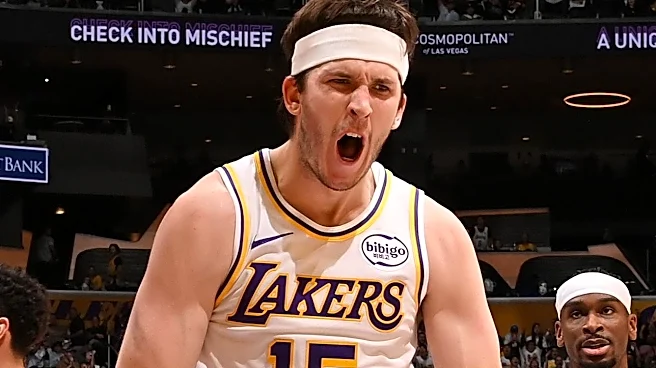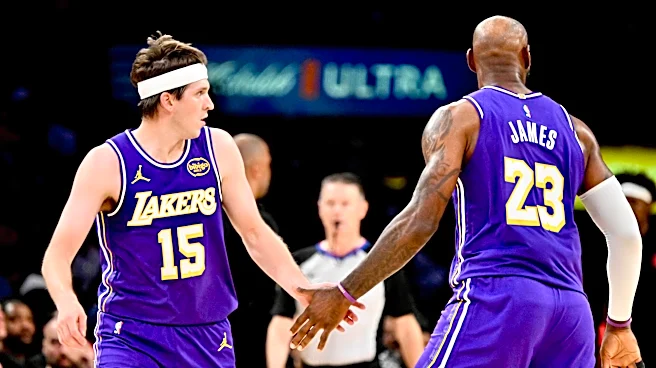




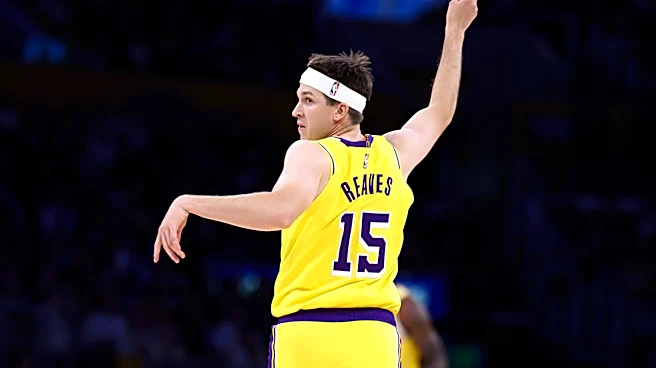


Austin Reaves is officially coming back to the Lakers.
On Wednesday, Shams Charania of ESPN reported that Reaves agreed to a four-year, $185 million max contract with a player option in 2029-30. Other teams couldn’t have offered him more than a four-year, $177.4 million deal, but the Lakers could have given him a five-year, $239.25 million deal by tacking on a fifth year worth nearly $54.5 million.
The best news of all? Reaves’ new contract has zero bearing on the Lakers’ potential spending power this
offseason.
Reaves has a $20.9 million cap hold, roughly $20.3 million less than he’s set to earn in 2026-27 under his new contract. His $41.25 million max salary won’t go on their books until he officially signs that deal, though.
As we’ve been telegraphing for nearly 18 months, the Lakers will first spend however much salary cap space they decide to manufacture this offseason. Once they’re out of cap room, they can officially re-sign Reaves via his Bird rights, even though that will push them well over the cap.
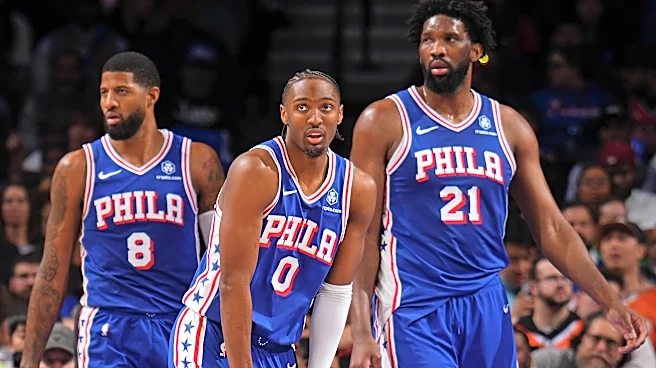
The Sixers pulled off this same strategy two years ago with Tyrese Maxey, which is what enabled them to sign Paul George. The Lakers won’t have quite as much cap space this summer as the Sixers did heading into the 2024 offseason, but they could still have $50-plus million to spend.
However, there’s a reason why “rival teams look at the Lakers as having ‘phantom’ cap space,” according to ESPN’s Brian Windhorst. Getting up to that $50 million figure would require renouncing their rights and/or parting ways with LeBron James, Rui Hachimura, Luke Kennard and the rest of their free agents.
What can the Lakers do this offseason?
As of now, the Lakers technically do not have any cap space. LeBron’s cap hold alone ($57.75 million) wipes out all of their potential spending power.
In other words, order of operations will be critical for the Lakers once free agency begins.
Before they officially do anything else, the Lakers must decide on LeBron’s future. If they re-sign him, his new salary would replace that $57.75 million cap hold, which could open up some spending power. If they renounce their rights to him or he signs elsewhere, that cap hold will be wiped off their books entirely.
To a lesser extent, the same holds true for Hachimura ($27.4 million cap hold), Maxi Kleber ($20.9 million cap hold), Kennard ($13.2 million cap hold) and Jaxson Hayes ($6.6 million cap hold). The Lakers will have to make decisions on Hachimura, Kleber and Kennard before they’ll officially have any cap space.
If the Lakers plan to bring back LeBron, Hachimura, Kennard, Kleber and/or Hayes, there’s a non-zero chance that they won’t have cap space at all this summer. In that case, they’d likely choose to operate as an over-the-cap team, which would give them access to the $15 million non-taxpayer mid-level exception as long as they stayed below the first apron. If they go the cap-space route, they’ll have the $9.4 room MLE instead.
That’s where Reaves’ contract could impact L.A. the most for now.
How does Reaves’ contract impact the Lakers?
While Reaves won’t cut into the Lakers’ potential free-agency plans, he’s one piece of a much larger cap-space puzzle. Knowing what they’ll be paying him could help give the Lakers clarity about how much they’d be willing to spend on their other free agents.
If the Lakers go over the first apron, they’d lose access to the non-taxpayer MLE and would only have the $6.1 million taxpayer MLE. If they went over the second apron, they wouldn’t have a mid-level exception at all.
The Lakers are now hard-capped at the second apron after sending cash to the New York Knicks in their trade-up for Cameron Carr. That’s projected to land at $222 million, so that’s the upper limit of the Lakers’ spending power this offseason.
While the second apron might not sound like a real concern given their ability to manufacture $50-plus million in cap space, money could add up quickly for them. For example, if they re-signed LeBron to a deal starting at $35 million and re-signed Hachimura to a deal starting at $20 million, they could be less than $20 million away from the first apron and roughly $32.5 million away from the second apron.
There are too many moving parts right now to accurately project what the Lakers’ cap sheet might look like once the dust settles on free agency. They might be able to stay below the first apron and spend the full non-taxpayer MLE, or they might get close enough to the second apron that they won’t be able to spend their MLE at all. It’s rare for teams to have that much potential variance heading into free agency, but that’s what happens when this many key players become free agents at once.
So, while Reaves’ contract won’t affect the Lakers’ potential cap space this offseason, his new salary could affect which mid-level exception they have to spend.
Unless otherwise noted, all stats via NBA.com, PBPStats, Cleaning the Glass or Basketball Reference. All salary information via Spotrac and salary-cap information via RealGM. All odds via FanDuel Sportsbook.
Follow Bryan on Bluesky.