

It’s often discussed by people at the match, in pubs, houses and on social media: who’s their club’s greatest manager of all time? I feel like when discussing best players, it’s easier to go off goals and appearances, but debating the best manager is, in my opinion, is a topic of conversation with more to it.
From Tom Watson to Régis Le Bris, Johnny Cochrane to Peter Reid, who’s the greatest gaffer to have led Sunderland AFC? Here’s is my top ten.
10. Mick McCarthy
McCarthy took the helm from Howard Wilkinson in 2003,
getting the club to an FA Cup semi-final in the process.
The season after, he would guide the club to the newly named EFL Championship title, His tenure would end in 2006, and he would then go on to manage Wolverhampton Wanderers.

9. Alan Brown
Brown managed the club to a Second Division title in 1963/1964 following the club’s first ever relegation in 1963.
Charlie Hurley led the Lads on the pitch, but Brown was the mastermind off it and he would also take Sunderland on a run to the FA Cup quarter-finals, beating Northampton Town, Bristol City and Everton on our way to facing Manchester United in a face-off that took three matches to decide.
A 3-3 draw at Old Trafford on 29 February 1964 meant the game would be replayed at Roker Park, which would end 2-2 on 4 March. So, the next match had to be held at a neutral ground, which was Elland Road on 9 March, where the Black Cats went down to a valiant and battling defeat to the Red Devils.
Brown and the Lads’ focus immediately turned back to the league, in which they confirmed promotion at the first time of asking back to the top flight just a few weeks later.
8. Roy Keane
Keane arrived at Sunderland with the club rooted to the bottom of the Championship following relegation from the Premier League.
We were candidates to go down to League One in the autumn of 2007, and we were champions in the spring of 2007, with the Irishman laying the foundations for Sunderland to enjoy an uninterrupted decade-long spell at England’s top table.
He had us promoted as champions in 2006/2007, guided us to a comfortable fifteenth-placed finish in 2007/2008 and would depart in December 2008, but the groundwork he completed helped the club massively throughout the next few years.

7. Alex Mackie
Mackie guided Sunderland as to their fourth league title as player-manager during the 1901/1902 campaign after finishing second the season before. He placed the Rokerites among the elite again, overseeing a resurgence following the quiet years between 1898 and 1901.
A financial scandal in 1905 would push Mackie out of the club and into the arms of Middlesbrough, where he spent one year on Teesside before moving into hotel ownership.
6. Bob Kyle
Kyle was in charge on Wearside for a monumental twenty three years between 1905 and 1923 and still remains the longest-serving Sunderland manager to date. His crowning achievement was winning the 1912/1913 First Division — Sunderland’s fifth title.
He would also take the Lads to the 1913 FA Cup final but would unfortunately miss out against a strong Aston Villa side.

5. Peter Reid
Reid took over at Sunderland in March 1995, with the club sitting in twentieth place in the First Division.
The following season, he had a full campaign to get the Lads pushing on, and he did, winning the 1995/1996 First Division title with eighty three points and giving us Mackems a first taste of Premier League football.
However, it would be an immediate return to the second tier, with Reid remaining at the helm to take Sunderland back up to the Premier League in the 1998/1999 campaign, winning our third second-tier title with a record 105 points — a record which has only ever been beaten once.
This time around, there were no fears of relegation; in fact, it was quite the opposite as Reid had Sunderland second in the Premier League by Christmas 1999 and would eventually finish seventh come May 2000. The same feat would be achieved the following campaign, with the Black Cats fighting for the European places for two years, missing out on goal difference in 2000 and then by four points in 2001.
The man from Merseyside allowed Mackems to start to dream again, and he’s held in such high regard by supporters past and present due to his style of football and the players he brought in, such as the legendary strike partnership of Niall Quinn and Kevin Phillips, the latter winning the European Golden Shoe in 2000.
Reid would also sign Stefan Schwarz and Don Hutchinson to boost a conceivable top-half push.
4. Régis Le Bris
Le Bris arrived at the Stadium of Light in July 2024 following a dismal 2023/2024 campaign that saw Sunderland under the guidance of three managers and a bleak sixteenth-placed finish, yet what followed was truly unpredictable.
In his first twenty three Championship games, he lost just three and had Sunderland sitting second in the league on Boxing Day.
A ‘derby’ double over Middlesbrough and a playoff campaign that will be remembered for generations followed — Coventry City were the opponents, and Sunderland would travel to the CBS, winning 2-1 and leading going into the second leg.
It was a cagey game back at the Stadium of Light but Le Bris’ tactics saw the Black Cats hold on until the 121st minute, when there was plenty of movement inside the box…
BALLARD!
Dan Ballard sent Sunderland to Wembley at the death, and this was a make-or-break moment for Le Bris as Wembley beckoned and the Lads knew what was at stake. This was our year and what forty eight games had led up to.
We won the playoff final 2-1 — again, at the death, this was how Le Bris Sunderland set up during this campaign and the next: attritional, strong and not scared of any opponent.
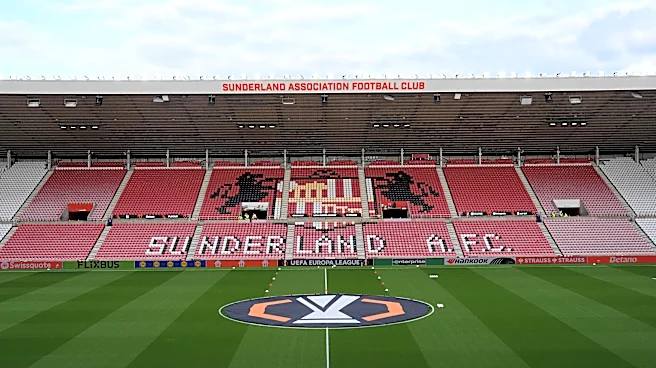
In 2025/2026, Le Bris and the Lads achieved something unprecedented since 1973, qualification for the Europa League via a seventh-placed finish. This was our highest finish in the Premier League since 1999/2000 and 2000/2001, and Le Bris also became the eighth Sunderland manager to do the league double over our rivals on the Tyne.
He said he “won’t play like Guardiola or De Zerbi because he is Régis Le Bris, and the ‘Le Bris way’ has brought a level of success to Wearside that’s not been seen since 2001, and you could even argue 1973.
Now, I’ve said all this and only have Le Bris ranked fourth, and this is because he’s achieved almost everything Bob Stokoe achieved: European qualification and promotion. However, the Frenchman hasn’t won a major honour with Sunderland — should he do so, he’ll be placed much higher on this list.

3. Bob Stokoe
Stokoe famously said:
I didn’t just bring the magic. It’s always been here. I just came back to find it.
And he did.
Stokoe would win Sunderland the 1973 FA Cup, winning us our first trophy in thirty six years and taking into European competition for the first time in our history. Additionally, he would also restore the club’s top flight status by winning the 1975/1976 Second Division title, giving supporters their first taste of First Division football since 1970.
Although he left due to a poor run of results at the beginning of 1976/1977, Sunderland supporters will always see Stokoe as an undisputed legend, immortalised in bronze outside the Stadium of Light.
2. Johnny Cochrane
Another man to have won Sunderland three league titles, Cochrane would deliver these trophies over two campaigns on Wearside.
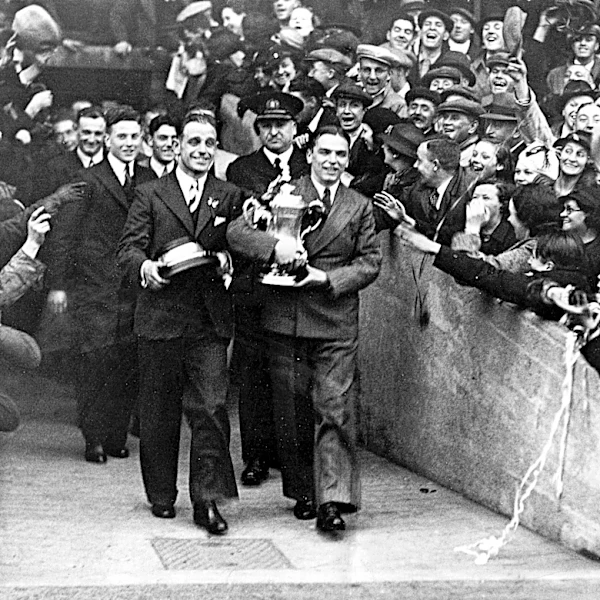
Cochrane won the 1935/1936 Division One title and would first beat Arsenal 2-1 at Roker Park to win the Charity Shield on 28 October 1936. Six months later, the men from the Wear would descend on the capital to defeat Preston North End 2-1 and bring home the 1936/1937 FA Cup.
Cochrane didn’t just bring back the glory days to Sunderland — he turned us into a dominant force once again.

1. Tom Watson
Watson managed Sunderland from 1889 to 1896 before departing for Liverpool.
He turned the Black Cats a dominant force during the early days of league football in the 1890s; the Lads being nicknamed ‘The Team of All Talents’. He would guide Sunderland to their first three league titles in 1891/1892, 1892/1893 and 1894/1895, as well as finishing second in 1893/1894 and placing fifth in his final campaign of 1895/1896.
For six years, he made Sunderland the best and most competitive team in England and later the world, as in 1895 the Lads would take on Hearts of Midlothian in an all-champions affair for the world championship.
Sunderland went on to beat Hearts 5-3, meaning Watson’s squad were crowned ‘Champions of the World’. He also managed the side under the ‘Team of All Talents’ moniker.