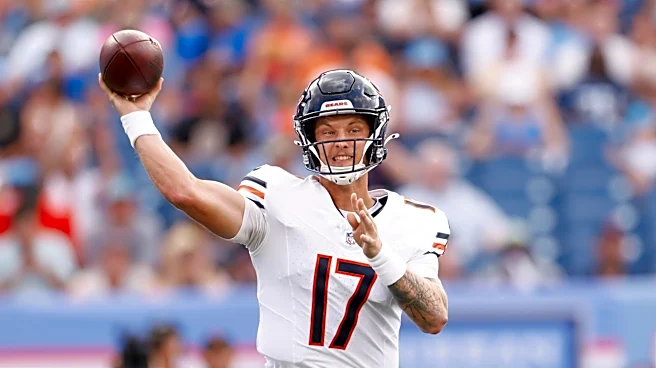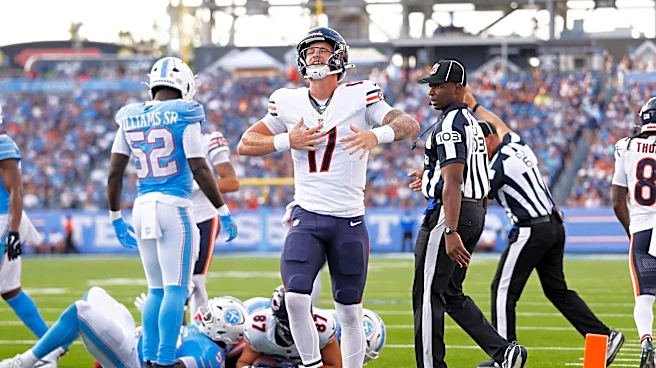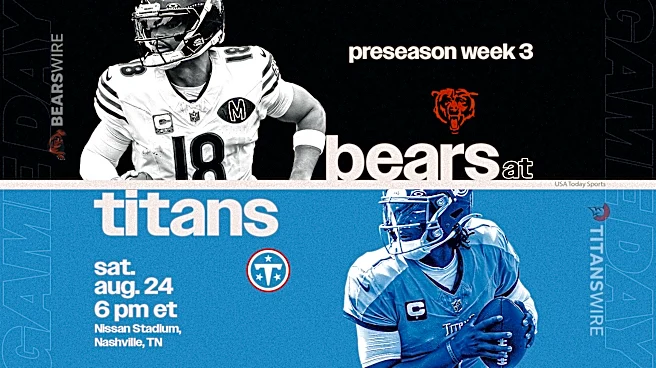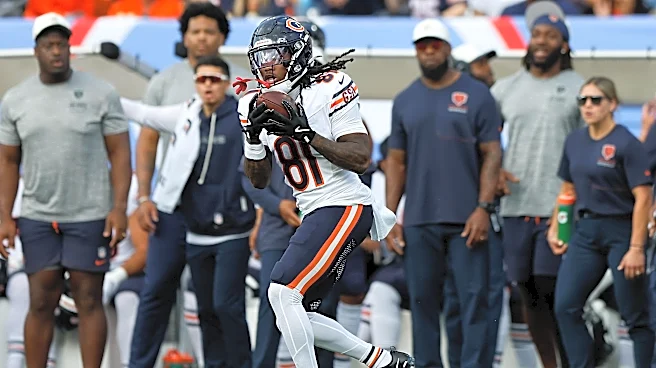


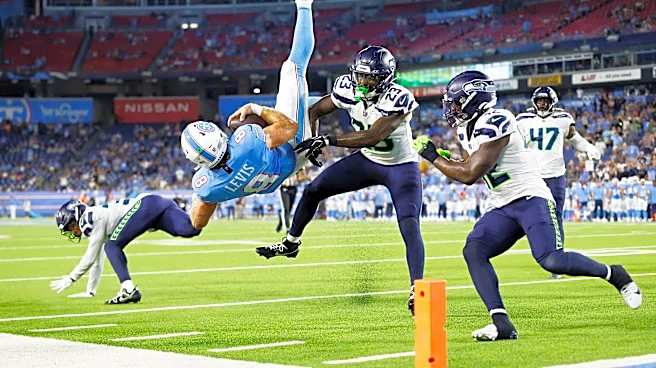
Chicago Bears third-round pick Zavion Thomas did something significant in my mind in Saturday’s preseason win over the Tennessee Titans.
I mean, aside from leaving a poor defensive back’s ankles at the 15-yard line and walking away from an angle down the sideline for a 97-yard touchdown in his preseason debut.
Or from putting up 201 total yards on the day, including a couple solid routes and catches down the field.
Thomas proved a lot of people wrong in the most basic of senses about one really silly
comparison made by some fans and pundits after he was drafted 89th overall in the 2026 NFL Draft:
He’s not another Velus Jones Jr.
Now, it’s somewhat understandable on paper why one would be concerned after having watched Jones, another third-round receiver with meager college production drafted by general manager Ryan Poles, flounder in Chicago. About the only thing Jones could do on a football field was run fast in a straight line with the ball in his hands. Getting open, catching the ball—whether you were talking passes or punts—or finding running lines? Not so much. Eventually, Chicago was forced to cut the first offensive draftee of the Poles era last year, only to redux that decision (in peoples’ minds) with the Thomas selection.
Except that comparison is terrible when you actually watch the two of them play football, which is the actually important part of evaluating a football player. (Weird, I know.)
Have you ever seen Jones run a route—even something as simple as a stop-and-go—with anything resembling the precision of what Thomas did on that touchdown?
Or seen Jones make a chain-moving grab away against tight coverage on an out route down the field like Thomas did on one of his four other catches from that game?
Or seen Jones cleanly catch a punt?! (Okay, too much.)
Now, to be fair, the bar for clearing Jones as a football player is on the level of that loose board sticking up from your floor that you always trip over.
The difference matters materially because of the baseline skills Thomas already has in addition to 4.28 speed as well as who’s weaponizing him.
One big game in the preseason doesn’t guarantee any kind of success for Thomas once the games start for real. He’s probably not going to be a significant contributor on offense just yet, though we should expect a handful of snaps here and there.
But what it does tell us is that Thomas has the raw materials to be useful immediately, even if just in a limited role. You can trust him to run decent routes and potentially make a catch or two. You can plan to get him the ball in space, whether on a screen or handoff, and actually envision a big play happening. You might even be able to put him back to return kicks and punts without fear that the ball will inevitably end up in the other team’s hands.
Jones failed as a receiver/playmaking prospect in Chicago not because he lacked athletic ability but because he couldn’t execute—something that was a concern for the entirety of his six-year college career. Thomas, meanwhile, might have just been a player who needed a bit of coaching and a more intentional role to take off.
Because from where I’m sitting, Thomas should never have been mentioned in the same breath as Jones as a prospect, whatever his numbers said. Hopefully, he and Ben Johnson make sure that comparison is dead by the time Thomas’ first year is over with.