


The Wisconsin Badgers women’s hockey program is a dynasty any way you slice it. Since Mark Johnson took the helm in 2002, the Badgers have won nine national championships and are among the top contenders year in and year out. Comparing dynasties across sports is typically a trivial exercise used solely to eat up page space—but with the women’s hockey season over and a two-week break before the men’s Frozen Four, that’s exactly where we are! Let’s dig in.
For the purposes of this blog, I’m going to
stick to what we’d consider the “primary” sports. We could get granular and talk about Notre Dame fencing or the men’s rowing program at the University of Washington, but this already-long article could otherwise become a dissertation.
Considering the relatively short existence of the NCAA women’s ice hockey championship (the first championship was played in 2001), few teams have been as historically dominant as Wisconsin. For instance, the Badgers have won 36 percent of all Division I NCAA championships in their sport and made the Frozen Four 68 percent of the time. Their nine titles and 17 Frozen Four appearances are both tops in women’s hockey. They’re second overall with 20 tournament appearances, with only Minnesota ahead of them with 23 appearances.
Since Wisconsin’s first championship win in 2006, Mark Johnson has a 627-101-48 record, good for an .808 winning percentage. The Badgers have won 50 more games than the second-winningest team during that span, the Minnesota Gophers.
The Badgers have won back-to-back titles three times in the Johnson era, most recently winning the 2025 and 2026 championships consecutively. They’ve won five of the last seven championships on their current run and are 9-4 all-time in championship games, good for a 0.692 winning percentage when the chips are down.
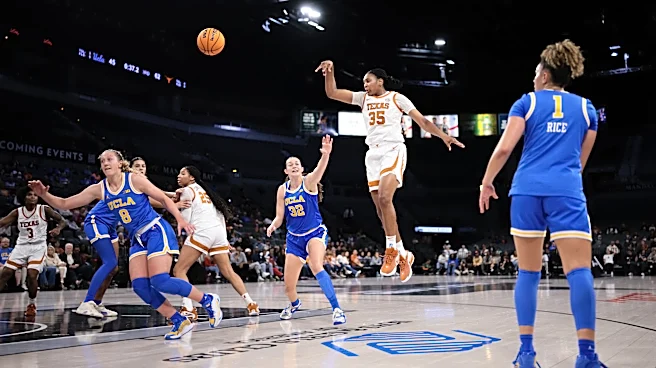
The obvious knock against the Wisconsin women’s hockey dynasty is the competition pool. The Division I level features just 45 programs, with only 11 teams making the NCAA tournament in a given year. Compare that to NCAA women’s basketball, which has featured a 64-team tournament since 1994 (expanded to 68 teams in 2022) and fields up to 365 Division I teams. This is an important consideration when comparing Wisconsin women’s hockey with maybe the best-known dynasty in college sports, the Connecticut Huskies women’s basketball team.
It’s an apt comparison. UConn’s stretch of dominance dates back to 2000 and is the only one in major sports that’s in the same ballpark as Wisconsin’s two-decade run. The Huskies have won 11 titles since 2000 and failed to make the Final Four on only four occasions during that stretch.
Similar to Badger hockey overtaking Minnesota in 2006 after the Gophers won back-to-back championships, UConn wrestled the top spot away from a dominant Tennessee program coached by Pat Summit. Both Minnesota and Tennessee would prove to be the top rivals in their respective sports, with each bouncing back to win multiple titles against the newly formed dynasties.
UConn is the measuring stick for what an all-time dynasty looks like and is more recognizable than Wisconsin women’s hockey; however, I would push back on the notion that a larger tournament and more Division I teams automatically make their run more impressive than what Wisconsin has accomplished. The volume of championship wins for UConn is undoubtedly impressive, but parity is not something that has existed throughout the history of women’s college basketball.
Top seeds in the NCAA Women’s Tournament have advanced to the Final Four in 101 out of 176 opportunities, meaning you’re better than a coin flip away from making the semifinals ahead of the 64+ other teams if you earn one of the four bids. As a three seed in 2023, the LSU Tigers are the only team since 2000 to win an NCAA title without being a one or two seed. No team seeded lower than fifth has ever appeared in a championship game.
Which is not to belittle UConn’s success, but rather provide some perspective that the larger tournament field is largely inundated with filler teams to serve as warm-up games for the top seeds. It’s not a stark contrast from the women’s hockey tournament, but it does serve to put them on the same playing field.
Nearly a quarter of the Division I programs make the field in the women’s hockey tournament, while it’s roughly a fifth of the teams making it in women’s basketball. In both cases, it’s rare to see a lower-seeded team make an inspired run.
Another differentiating factor between UConn and Wisconsin is the strength of their conference opponents. The Huskies’ main rival early on was the Tennessee Volunteers, typically meeting in a non-conference matchup during the regular season and possibly playing again in the tournament. Their main competition in modern women’s hoops would have to be South Carolina, the latest program to have sustained success in women’s basketball. In either case, their main competition hasn’t come from the Big East.
Wisconsin shares a conference with two dominant forces in its sport, Ohio State and Minnesota. In a sport with a smaller postseason pool, the Badgers are guaranteed to play eight games a year against two of the best teams in the sport while vying for conference titles and tournament seeding, usually meeting again come tournament time (like the last four NCAA title games between Wisconsin and Ohio State).
Still, Wisconsin has won 11 WCHA regular-season titles and 11 WCHA Tournament championships since 2006, head and shoulders above its top competition. The Badgers arguably play more “prove it” games throughout the course of their season than comparable women’s sports due to the depth of the WCHA, and they’ve been remarkably good in them.
I’d stop short of declaring the Wisconsin women’s hockey dynasty stronger than UConn women’s basketball, but there is an argument to be made that they are at least comparable, and definitely not as far apart as some make it seem. The fact of the matter is that both are the ultimate destination for young players. Not every top recruit will attend UConn or Wisconsin, but you can bet they’ve at least had a conversation with the respective schools.
Both dynasties fall short of the title factory that was the UCLA men’s basketball dynasty from 1964 through 1975, when John Wooden’s Bruins won ten national championships and completed four undefeated seasons. The march to a basketball title wasn’t as grueling back then, as the NCAA Tournament only fielded 16 teams during that stretch before expanding to 32 teams in 1975. UCLA’s star power was undeniable, though, as those Bruin teams featured eight top-15 NBA draft picks, including top picks Kareem Abdul-Jabbar and Bill Walton.
All three dynasties above pale in comparison to what I believe is the most dominant dynasty to exist in college athletics: North Carolina women’s soccer. If you want to talk about a standard for success, the Tar Heels have won 21 out of 42 possible NCAA titles, going 21-5 in championship games and winning nine straight from 1986-1994. They had a 103-game unbeaten streak from 1990 to 1994, which included a 92-game winning streak, all after their previous 101-game unbeaten streak ended in 1990.
North Carolina never went more than two years without winning a championship until 2015, when they took a backseat for a decade with three runner-up finishes. Their 30-year run is something we will likely never see again in organized athletics, short of Wisconsin women’s hockey winning about six more titles in a row and adding a few undefeated seasons.
The point about Wisconsin is that there is rarely a parallel comparison when discussing dynasties. It’s easy to nitpick and pull favorable stats, but at the end of the day, you become inevitable when your name is linked with success at the top of your sport for 20+ years. It would be foolish to write off the Wisconsin dynasty simply because women’s college hockey is new and still growing in popularity, especially since they are exclusively playing heavyweight competition year in and year out.
I’m not here to tell you that Wisconsin is the best dynasty we’ve seen in college sports. What I’m saying is it deserves the same national respect that we’ve seen given to other teams that consistently dominate their sport and produce legendary moments time and again.