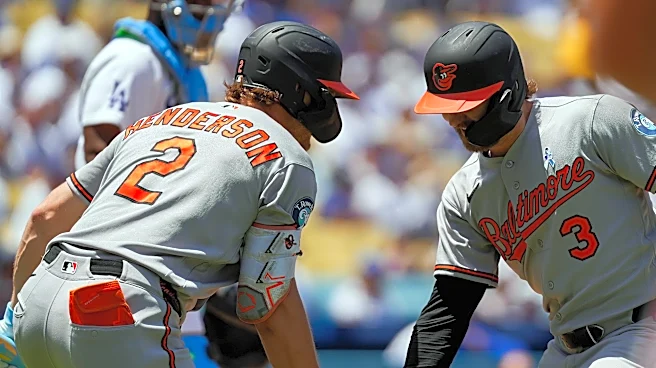



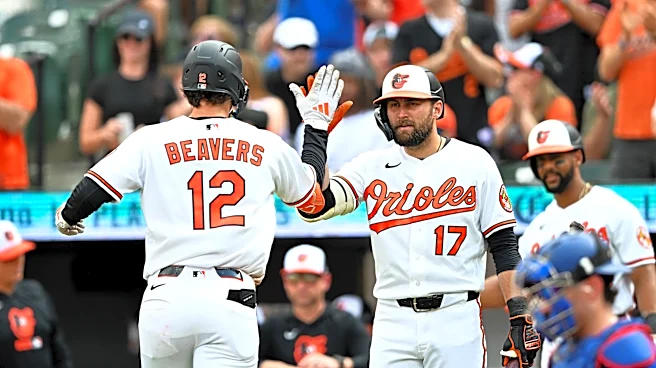


For now, the Orioles are posturing as “buyers” with the August 3rd trade deadline looming. A younger version of Mike Elias may have scoffed at the idea of a sub-.500 squad going all in on their season, but times have changed. The Orioles were aggressive this past offseason, and there is pressure to win. Add in a mediocre (or worse) American League, and you can squint to see a lane for these O’s to sneak into the playoffs. It’s also possible, of course, that things collapse completely.
In any event,
the Orioles will want to see several of their key players get hot over the next few weeks. That will either send the team soaring up the AL standings, or it will at least position those players as attractive trade chips in what looks like it will be a seller’s market.
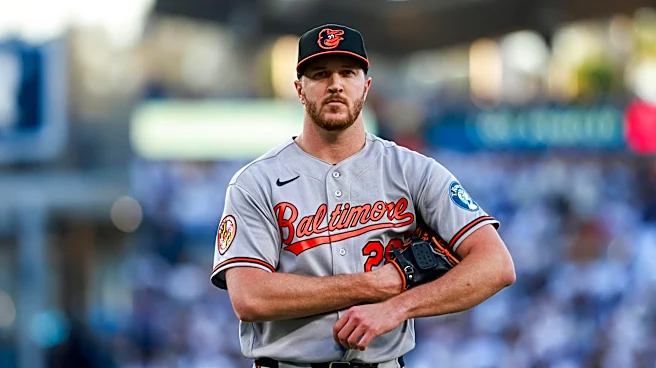
There is speculation that someone like Adley Rutschman, who is under team control through next season, could be on the trading block if the O’s decide to sell. That is possible, though it feels unlikely. What the front office will certainly do if they decide to turn their focus towards 2027 will be to unload as many expiring contracts as possible. That includes Taylor Ward, Andrew Kittredge (again), and Chris Bassitt (if he gets healthy). But by far the biggest trade chip they have to deal might also be one of the most-sought after in the sport: Trevor Rogers.
Every team needs pitching. Even if a club feels like they are strong 1-5 in their rotation, they could use another arm. But contenders want more than an innings-eater. They want someone that they feel confident handing the ball in the playoffs. Rogers, at least for most of the last two seasons, seems to be that guy.
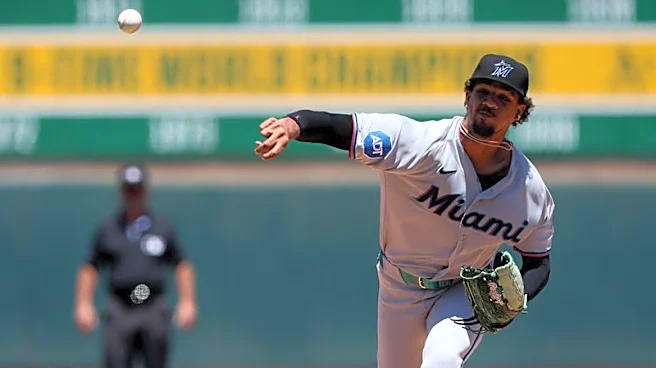
Rogers’ 2025 campaign is well-documented, but is worth a quick re-visit. He opened the year on the IL with a partial right kneecap dislocation. He returned to the big league squad at their nadir in late May, fresh off the firing of Brandon Hyde. It’s not a coincidence that as soon as the lefty stepped into the rotation, the Orioles turned their season around. From that day through the end of the year, Rogers was arguably the best pitcher in baseball. Over 109.2 innings he had a 1.81 ERA, 2.82 FIP, 0.903 WHIP. That earned him a ninth-place finish in AL Cy Young voting despite missing two months of the season.
The 2026 season has been rockier for Rogers. His 4.70 ERA over 84.1 innings this year doesn’t look like that of an ace. But context feels relevant. Across his first three starts of the season Rogers had a 1.89 ERA and 2.58 FIP. Then, between April 14 and May 24, Rogers failed to go deeper than five innings and had an ERA of 11.03. Right in the middle of that stretch was a more than two-week IL stint due to a flu that hit him particularly hard. He seemed to finally get back on track at the end of May. Since May 29, Rogers has a 2.38 ERA and has allowed just three home runs across seven starts. The numbers are even better (0.49 ERA/2.40 FIP) since June 20.
There are negatives with Rogers. For example, he has never shown himself to be a workhorse. The most innings he has thrown in one big league season is 133, which came back in 2021. So a team could be concerned about him breaking down in September or October. He’s also not gonna light up the radar gun or pile up strikeouts (6.94 K/9 this season) like you might want your ace-type arm to.
But there’s an awful lot to like too, outside of the on-field potential. For one, the commitment a team has to make on Rogers is minimal. He will be a free agent after this year, which lowers the cost to get him and lowers your worries about his long-term viability. That also limits the financial burden on your club. Some potential trade chips, like Sonny Gray ($30 million mutual option for ‘27 or $10 million buyout), are harder to swallow if you are strapped for cash. Rogers is on a one-year, $6.2 million deal. Any team that adds him would only be responsible for a pro-rated amount of that salary.
If the Orioles don’t sell, and they instead hold onto Rogers, they may still be able to get something for him in the form of a compensation pick at next year’s draft. It’s possible that process completely changes during the current CBA negotiations, which is a risk the O’s need to consider. For now, it would require the Orioles to make Rogers a qualifying offer, have him turn it down, and then see another team give him a contract.
If the Orioles do sell, they might expect to get something like what the Diamondbacks did when they dealt Merrill Kelly to the Rangers last summer. Kelly had a 3.22 ERA at the time of the deal and was on an expiring contract, though he was older and had a more consistent track record than Rogers. That deal landed the Rangers’ fifth, ninth, and 13th rated prospects in Arizona, according to MLB Pipeline. Something like the Dodgers-Red Sox Dustin May deal that sent Boston’s fifth and 27th best prospects to Los Angeles, again according to Pipeline, could also happen.
Whatever the outcome, Rogers’ performance this month are going to be crucial to the Orioles future. A continuation of his current form might drive his potential price up in the trade market. It could also allow the Orioles to climb up the standings and give Elias the encouragement he needs to supplement this squad with external talent. A downward turn would be disastrous for all involved. Regardless, it will be must-watch stuff for Orioles fans on all sides.