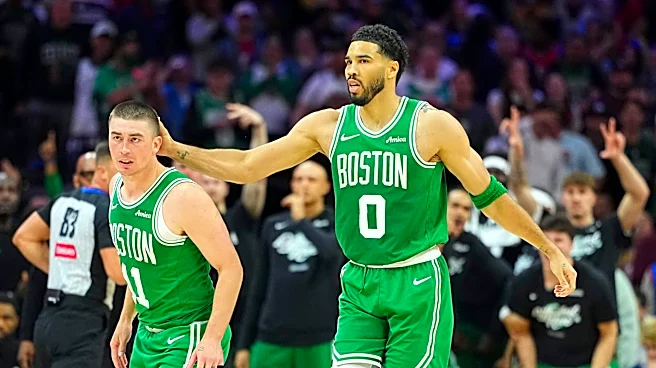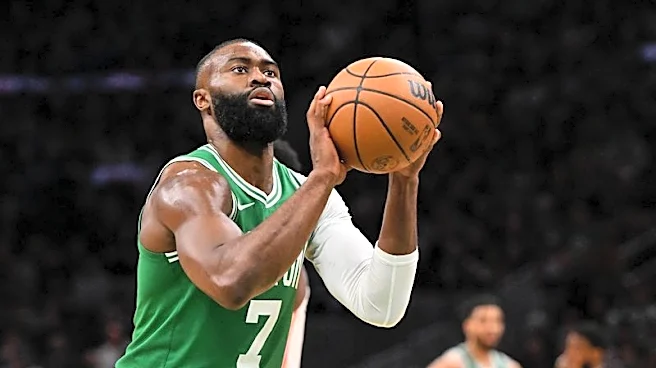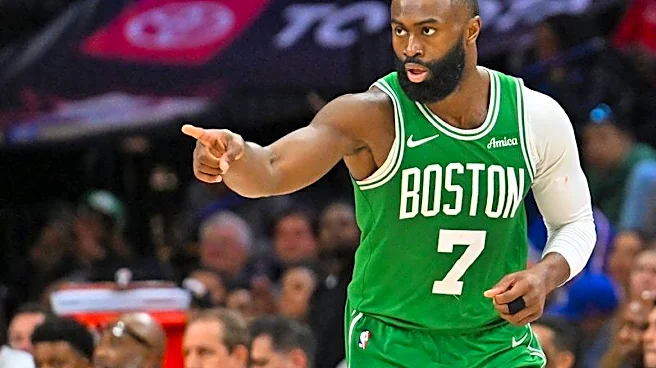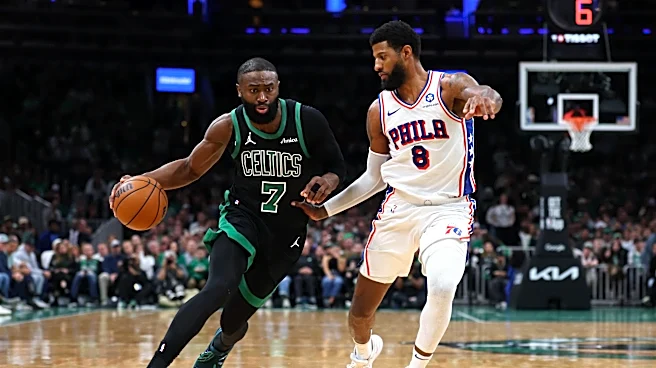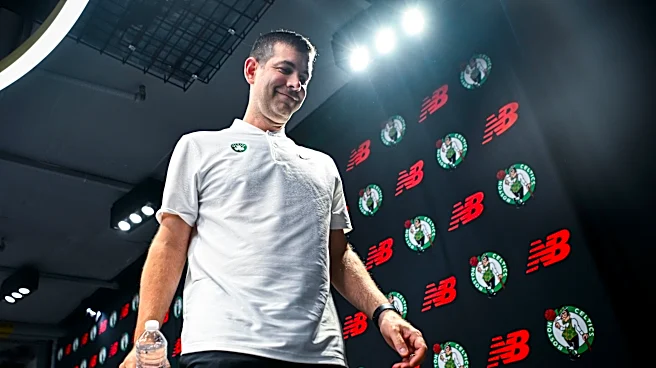


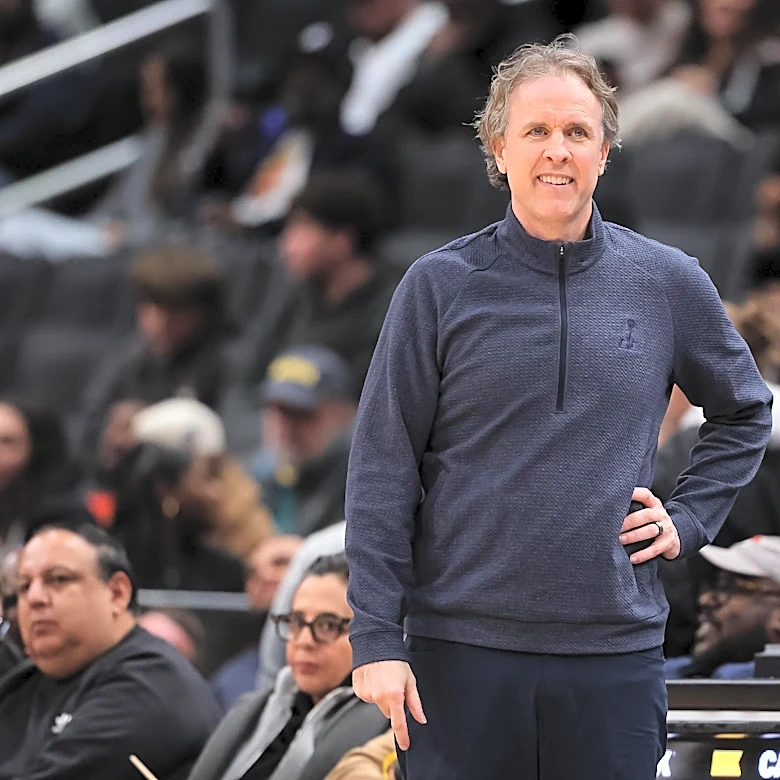
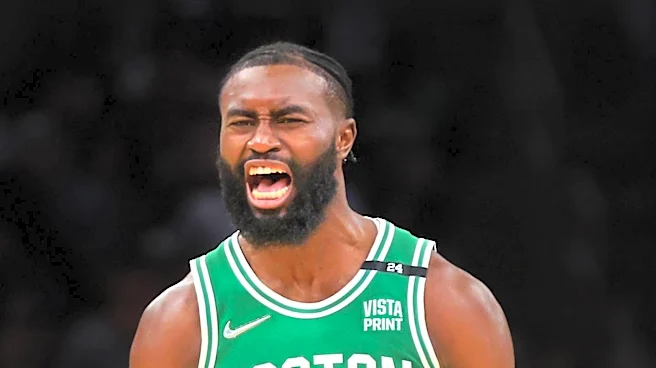
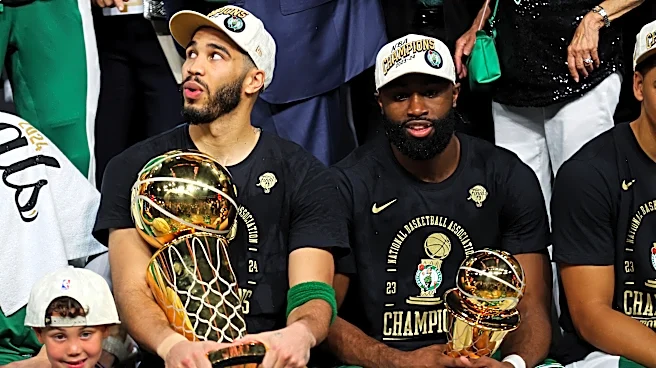


The Boston Celtics traded Jaylen Brown to the Philadelphia 76ers for Paul George, two first-round picks, and two second-round picks. While it’s a disappointing return, I still like the trade for the Celtics and understand why Brad Stevens pulled the trigger.
The Jays era had run its course in Boston. The current iteration of the team had flamed out in the first and second rounds of the last two playoff runs. It was time to make a significant change, and Brad Stevens decided that change would take
the form of sending the 2024 Finals MVP to one of the franchise’s historic rivals.
The purpose of the NBA’s new collective bargaining agreement is to tear down teams like the 2024 Boston Celtics. It started last offseason when the front office said goodbye to Jrue Holiday, Kristaps Porzingis, Al Horford and Luke Kornet. The basketball penalties for staying in the second apron are real. The league is treating that apron as a hard cap. Jaylen Brown is the next casualty of that reality.
Brad Stevens alluded to it in his press conference: building a championship roster when two guys are taking up 35% of the cap is untenable which leads to an obvious follow-up question:
Brad, why were you going after Giannis Antetokounmpo, who would have been due his own supermax extension?
Oh, and Paul George is taking up 32.8% of the cap for the next two seasons.
And here comes the part that some Celtics fans don’t want to hear: Jaylen Brown is making top-five player money, and isn’t producing top-five player impact. While Brown produced at a top-10 level in the 2026 regular season, he has consistently fallen short of that standard in the playoffs. The 2024 Finals MVP played his best basketball en route to that championship. But even that player is hard to justify giving supermax money to. When you zoom out and look at Jaylen’s play in the playoffs over the last four seasons, it hasn’t been good enough to justify his contract.
In the 2023, 2025 (knee injury noted), and 2026 playoffs, Brown’s play cratered when the Celtics needed him most. In his press conference, the part that Brad refused to say out loud because he didn’t want to disparage Jaylen, is that it’s not that he believes that two 35% of cap guys can’t win a title, it’s that if one of them is Jaylen Brown and not someone of Jayson Tatum’s or Giannis Antetokounmpo’s caliber, you can’t win a title. On the Paul George side of things, the shorter contract and the additional premium picks provides the Celtics flexibility to build out the roster down the line. We will dive into this side of the trade shortly.
Moving on to the basketball mind of Brad Stevens. If you had polled Celtics fans and the basketball intelligentsia a month ago about Stevens’ basketball acumen, the consensus would have been that he is a basketball savant. Did Brad have a lobotomy last week or does he still know what he’s doing? There is no one on planet Earth who knows Jaylen Brown’s game better than Brad Stevens, from coaching the star forward in his first five seasons, to overseeing his prime as the President of Basketball Operations. Stevens has watched every second of his career. Given that knowledge, not only was Brad willing to trade Brown, but he was willing to trade him to an arch nemesis in the Philadelphia 76ers, a team the Celtics will face six times next season, including the preseason.
As I wandered through the history of this era of Celtics basketball, something jumped out at me. At the end of the 2021 season, Brad Stevens stepped down as head coach and into his current role. The following season, the Celtics hired Ime Udoka, and the Celtics proceeded to go on a magical run to the 2022 NBA Finals, which ended in heartbreak after going up 2-1 on the Steph Curry Warriors. This version of the Celtics went further than Brad ever did as head coach. It was the most successful season of the Jays era. There was no reason to be anything but utterly optimistic about the future of the Celtics.
A month later, Brad Stevens attempted to trade Jaylen Brown for Kevin Durant. The deal ultimately did not go through and was quietly swept under the rug as the team prepared for their 2023 campaign. I can’t help but wonder whether Brad has wanted to move on from Jaylen Brown for a while now.
If you continue to follow me down this rabbit hole, it brings us to the decision to sign Brown to a supermax extension after the disastrous Eastern Conference Finals series against the Miami Heat. Sidebar: to those who say that the Celtics have treated Jaylen poorly. The Celtics signed Jaylen to, what was at the time, the richest contract in NBA history, coming off his worst playoff series as a Celtic.
I digress. Brad, I believe, thought two things: one, Jaylen would have more value on a longer contract, even if it was somewhat bloated, than on an expiring contract; and two, he wanted to make sure that everyone on the 2024 team had no contract questions hanging over them so they could focus on achieving their goal of winning the title. That’s why the Jrue Holiday extension got done as well. I went down this rabbit hole because I wanted to answer the question of why trade Jaylen now and not last season (or before that). It would have made sense to tank the 2025-2026 season knowing what we know now.
But if we cast our minds back to the end of the 2025 season, Tatum had just torn his Achilles, and Jaylen had his own meniscus surgery, a procedure that has derailed numerous NBA careers. I think Brad believed he could pull off a Jaylen pump-and-dump scheme which almost worked. Jaylen had a career season in both raw box-score production and accolades. The problem was that the league was not particularly interested in trading for that Jaylen Brown.
The number one source of frustration among Celtics fans, and the criticism from the national media, is that the return for Jaylen Brown fell drastically short of most people’s expectations. The market is the market. The Celtics front office could not force teams to give up more for Jaylen Brown. The league is telling us that the most toxic thing a team can do in the current CBA climate is to have a supermax contract on the books that considerably outpaces the production.
A common sentiment shared over the last week is “the Celtics should have waited because this deal or similar deals would have still been there in September.” It’s possible that this deal would have been there in a month or two. However, I don’t understand ignoring the possibility that the offers could have gotten worse.
When we get to July 26th, and the Celtics tell Jaylen Brown they are not offering him a supermax extension, that gives the Celtics even less leverage in trade negotiations. And if they do give him the extension, then there is no market for Brown. If they wait until next offseason, Jaylen can start leaking to teams whether he will or will not extend.
This was the time to make the trade. After Jaylen finished sixth in MVP voting, this was the peak of his value. Whether Celtics fans can accept that or not, that is the reality. Brad Stevens didn’t look at four different offers and decide to take the worst one. Stevens took the deal that he believes will give the Celtics the best chance to win the title.
Let’s look at the incoming assets for the Celtics. Starting with public enemy number three, Paul George — Brad Stevens and Bill Chisolm are currently occupying spots one and two. If you did this exercise in December of last season, George would have ranked very highly on the league’s worst-contracts list. Fast-forward to July, and Paul George is coming off a playoff run in which he comfortably outplayed Jaylen Brown.
Let’s be clear. The trade is not really about Paul George though. It’s about the future, and as Brad put it over and over again in his press conference, “optionality.” That’s what the two draft picks and shorter contract do for the Celtics.
However, when healthy, Paul George is still an elite basketball player. While Jaylen Brown is the better basketball player, George is a better fit on this Celtics team. Joe Mazzulla’s strategic philosophy is clear – shoot threes, defend, suppress offensive turnovers, and crash the offensive glass. We’ll start with the shooting. George is an elite shooter both off the catch and off the dribble, a career 38.4% three-point shooter on high volume and high difficulty. On just catch-and-shoot three-pointers over the past nine seasons, George is shooting a blistering 41.3%. For context, over the last five seasons, Jaylen Brown’s overall three-point percentage has been below league average at 34.4%. When isolating his three-point catch-and-shoot numbers, it sits at 34.9%. This leaves defenses with a very different decision when helping off Jaylen versus helping off PG.
Moving through the Mazzulla Ball tenets, next up is defense. Despite Jaylen claiming that he is the “best two-way player in the league,” that has never been close to true. The five-time All-Star can be an elite on-ball defender when he is locked in, but even that part of his game waxes and wanes, as seen in the first round of the playoffs, when Tyrese Maxey and Paul George fried his face off. But where Brown’s defense really falls apart is his off-ball defense. There is no perfect stat to encapsulate Jaylen’s disappointing off ball defense. However, it is a part of Jaylen’s game that I have been critical of for years. Here is a seven-minute film session on Jaylen’s off-ball defense from January 2025.
With all that being said, the analytics conversation around Brown has gone too far. We have the now infamous assertion from an anonymous analytics guy that Jaylen was the seventh best Celtic on the team last season. Nonsense. However, one analytic that has often matched the eye test is the swing on the defensive end of the court. Over the past three seasons, the Celtics have had a 113.4 defensive rating with Jaylen on the court, which would have ranked 8th in the league last season. With Jaylen off the court, the team had a 110.7 defensive rating, which would have ranked third in the league last season.
I believe this swing is largely to do with JB’s weakness when playing off the ball. Conversely, looking at Paul George’s defensive on/off swing, with George on the court for the 76ers over the past two seasons, the Sixers had a 114.1 defensive rating, and a 117.6 defensive rating with him off the court. When healthy, Paul George is still a high level two-way basketball player, and I think will be maximized in a streamlined role in Mazzulla’s system.
Admittedly, the “when healthy” part is doing a lot of heavy lifting here. I expect George to be on the Al Horford programwith 28 minutes per game and no back-to-backs. If you get 50 games out of PG with him healthy going into the playoffs, that’s a win to me. The Celtics are a regular season wins machine who can afford to load manage both George and Mitchell Robinson while racking up wins.
The last piece of the Mazzulla Ball puzzle is the contrast in how Paul George affects the team’s turnover rate in comparison to Jaylen’s. Mazzulla typically gets attention for his infatuation with the three-point shot, but the secret sauce is the Celtics’ league leading turnover rate. It’s simple. You have a 0% chance of scoring if you turn the ball over, and you exponentially increase the likelihood of the opposing team scoring when you turn it over yourself.
Jaylen’s biggest weakness on offense has always been his ability to hold onto the ball. The magnum opus was Game 7 of the 2023 NBA Eastern Conference Finals. When we compare the impact of each player on their team’s turnover rate, George has the edge here as well. In his time in Philly, the 76ers had a 13.1% turnover rate with George on the floor and a 13.2% turnover rate with him off and recorded a near identical number in his five seasons with the Clippers. If we look at Brown’s last three seasons, the Celtics’ turnover rate was 12.6% with Jaylen on the court and 11.6% with Jaylen off the court. If you isolate to the most recent season, that swing swelled to a swing of 1.4%. You might be thinking these margins are negligible. Joe Mazzulla and Brad Stevens would disagree.
Another angle that sceptics of the Jaylen trade have brought up is how this further limits the Celtics ability to generate rim attempts. While it’s true that Jaylen himself gets to the rim more than Paul George, George creates more overall rim attempts with his passing, while also turning the ball over significantly less.

Moving on to Brad Stevens’ word of the offseason: optionality. While I think the Paul George fit is perfect for Mazzulla Ball, the trade was made for the picks that were acquired and the fact that George has one less year on his contract. Under the new lottery reform, both picks acquired have the upside of being top five picks. Under the new lottery rules, the Clippers are the type of team that should slot into the three lottery balls zone. They’re a bad team, but not bad enough to be in the bottom three in the league, but bad enough to miss the NBA Playoffs and likely the Play-In.
Brad is also betting that a team that has 80%-85% of its cap tied up in 35-year-old Jaylen Brown, Tyrese Maxey, and VJ Edgecombe are likely to be a Play-In team as well. With those picks, the Celtics now have seven first round picks and swaps to be used to build the next title team. Whether that’s swinging for Nikola Jokic next offseason, or a younger star in someone like Franz Wagner, the specifics are irrelevant. This trades gives the Celtics optionality in a way they did not have before.
The last concern I will address is the concept that this trade went down because Bill Chisolm is a private equity guy, and private equity guys only do things to make money. Firstly, if I ever think Bill Chisolm is cheaping out on the roster, I will be at the front of the line accusing him of being a broke boy.
However, we do not have the answer to whether or not Chisolm is willing to spend into the luxury tax and into the second apron…yet. The basketball penalties for staying in the second apron are severe. Not a single team in the NBA has been willing to stay in the second apron for an extended period. Every team in the league would be attempting to reset the repeater tax like the Celtics did last season and will likely do this upcoming season, too. That was the purpose of the current CBA. As Chisolm told the media in his and Brad’s state of the union, “I will also prove it to you. When we have the opportunity, we’re gonna spend.” Time will tell.
I understand Celtics fan’s emotional and practical attachment to Jaylen Brown. Brown will deservedly have his jersey retired in TD Garden once it’s all said and done. The positive impact he has had on the Boston community cannot be overstated. However, the Boston Celtics’ title window with Jaylen Brown had closed.
The Celtics blew the franchise’s first ever 3-1 lead in the first round to a mediocre Philadelphia 76ers team. It was time for change. Up until this point, it has been easy to have faith in Brad Stevens. Don’t lose faith now.