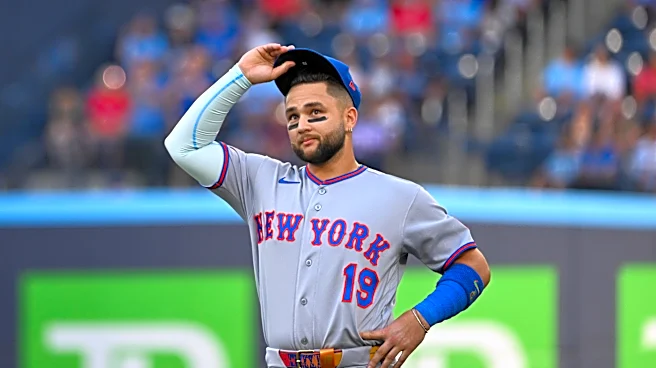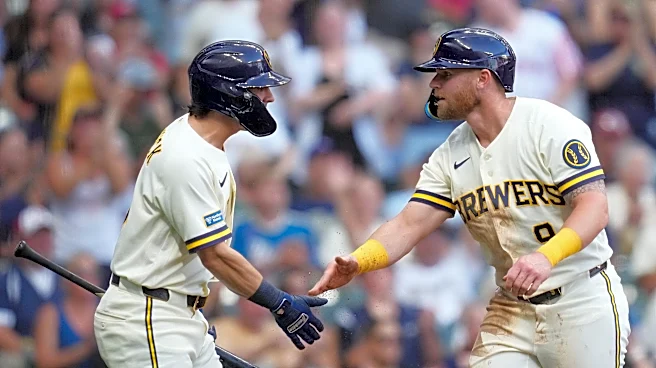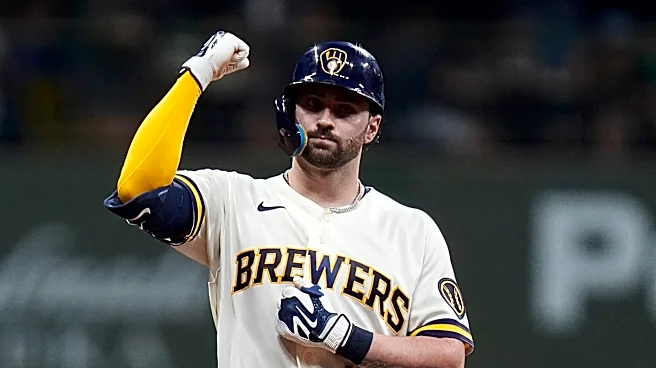





It’s July — the trade deadline is in sight!
Over the next few weeks, I’m going to publish a series of articles that survey the league’s trade landscape as it relates to the Brewers. We’re going to start by looking at the team’s needs and surveying the league to see who might be selling before the August 3 deadline. In the following weeks, we’ll look at specific targets that could be available at the Brewers’ positions of need.
So — what are those positions of need?
Need #1: a high-leverage reliever
The most obvious place, and in my
opinion, the most realistic place, that the Brewers could upgrade is the bullpen. Trevor Megill and Abner Uribe have both turned it around after shaky starts to the season, but beyond them, the Brewers can’t feel great about the state of this group.
Aaron Ashby leads the league in wins, but he’s being worked hard and hasn’t been as effective as he has been the previous two years. Ashby has 39 appearances, tied for the second-most in the National League, and his 50 innings pitched are sixth in the league among players who’ve primarily relieved this season. Given Ashby’s swingy history, he might be able to keep up this pace, but he’s been plagued by command issues this season; Ashby currently has his worst ERA, FIP, WHIP, H/9, HR/9, and BB/9 since he missed the 2023 season with shoulder issues (though it should be acknowledged that his strikeout numbers are the best of his career).
Chad Patrick’s recent issues are troublesome. After he looked so great in last year’s postseason, it looked like he was ready to be a high-leverage reliever, and he excelled in that role after moving back to the bullpen in early May. But the last three weeks have been bad; in six outings between June 10 and June 27, Patrick allowed 14 runs, all earned, in just 9 2/3 innings. His meltdowns contributed directly to two losses in those six games. Whether Patrick finds it again could be a sneaky harbinger of the Brewers’ success this season, and his last two outings have been scoreless, so we’ll see.
There are more questions. Grant Anderson doesn’t profile as a high-leverage guy. Shane Drohan has pitched well out of the bullpen, but he’s more of a long-relief guy than a high-leverage one. DL Hall looked good early but is again injured. Jared Koenig is back in the big leagues, but he’s working with diminished velocity and is a huge question mark. Craig Yoho may or may not be ready to contribute at the major league level, but it doesn’t look like he’s going to be given enough leash to prove anything. Joel Kuhnel is not the answer.
The Brewers have two high-leverage relievers, Megill and Uribe, even if their numbers this season aren’t as good as previous years. (I’m particularly unbothered by Megill’s “step back” — he struggled early but has a 1.33 ERA and 0.84 FIP (!) since April 14.) Depending on how you feel about Ashby, they might have three. At this point, there are too many questions around the other guys for me to consider them reliable.
This is certainly an area worth upgrading, but it’s tricky. Relievers are notoriously fickle, and the Stearns/Arnold Brewers’ track record on relievers acquired at the deadline — of which there are quite a few — is bleak. While the current front office has not shown a ton of aggression in the mid-season trade market, they have traded for at least one relief pitcher every trade deadline since 2017, barring the COVID-shortened 2020 season.
The stakes feel higher this season, and the proverbial cupboard is loaded. This feels to me like the most realistic place to make a meaningful upgrade to the roster.
Need #2: another starter?
It seems almost silly how much starting pitching major league teams need in 2026. Milwaukee started the season with 11 guys who could reasonably compete for a starting job with the Brewers, and that doesn’t include Ashby or Hall.
Well, here we are in early July, and nine of those 11 guys have started a game in the big leagues, the 10th is out for the season, and the 11th has pitched in long relief in the majors and is currently on the IL. The front office correctly identified that you need that many guys to get a pitching staff through a whole season, and their recent offseason moves have reflected that.
But do the Brewers need more? Quinn Priester is out for the season. Logan Henderson has missed time and will need to prove he can stay healthy. Carlos Rodriguez wouldn’t be much help even if he were healthy. Coleman Crow doesn’t quite look ready to contribute to winning yet, and he’s on the IL, too.
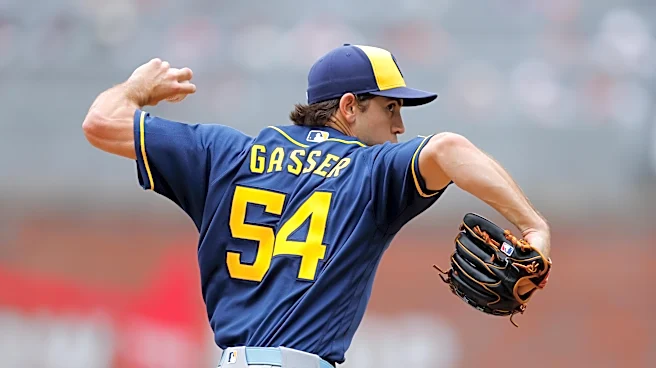
That leaves seven of those 11 guys healthy, but Chad Patrick is pitching out of the bullpen at the moment, Shane Drohan has been better from the bullpen (and probably belongs there, if not for all the injuries), and another, Robert Gasser, has yo-yoed between Nashville and Milwaukee this season. Brandon Sproat has looked great his last few times out, but he has a lot to prove. Brandon Woodruff looks healthy, but that will be a question all season.
Jacob Misiorowski and Kyle Harrison have both been excellent. But Harrison, at least, will need to prove that he can keep up his excellent level of play through a whole season, and particularly in the postseason when high-powered opponents will have scouted the crap out of him. Both of these pitchers —and this is also true of Henderson, Drohan, and Crow, too — will be running into innings pitched issues.
There are two ways the Brewers could go here if they choose to make a move. They could make a huge swing for one of the top arms available, or they could look for an innings eater to take some of the pressure and innings from the young guys. Both approaches have their merits and their risks.
Need #3: offensive help
It feels like a broken record to say that the Brewers need a power bat, so I’m not exactly going to say that they need a power bat. I’m instead going to suggest that they should at least explore the possibility of acquiring someone who will help offensively. The Brewers are not a bad offensive team, but they are a team that can look bad, and they are definitely a team that can have a three-hitter black hole in the lineup. That might be a big problem in the postseason.
The question here is how you go about upgrading the offense in a manner that is both a) realistic and b) logical, from a fit perspective.
One truth needs to be spoken: the Brewers are not going to bury Christian Yelich, at least not in the regular season. After a good first couple of weeks, Yelich has been alarmingly poor at the plate for most of the last two months. Since April 7, which was just the 11th game of the season, Yelich is batting just .225/.313/.350 with only four home runs in 40 games. Worse, his Statcast page is the worst it has ever been; he’s not only not driving the ball with authority, but he’s also swinging and missing a ton. Yelich continues to be generally disciplined about not swinging at balls, but he’s whiffing way more than he ever has.
Moving Yelich into a strict platoon could help, though he’s barely been better against right-handed pitching than he has been against left-handed pitching in 2026. (His career numbers indicate a platoon could be beneficial.) But we probably need to accept the fact that Yelich — who makes about $24 million dollars a year for two more years after this one — is going to be around and will be in the lineup more often than not. This is ironic, as one of the most interesting ways in which the Brewers have exceeded expectations relative to their peers over the last few years has been by not playing players who aren’t helping, an action which is directly related to the fact that they don’t have many older, highly paid players. But it’s hard for me to see a scenario where Yelich’s playing time is reduced to anything other than a strong-side platoon role, and who knows — a couple of adjustments could get him right again.
Figuring out where this new bat would fit in is a challenge. The obvious answer would be third base: the single easiest way to upgrade the offense would be to acquire a third baseman who can hit, regardless of the side of the plate, but more likely as a right-handed hitter. The pickings are quite slim, which we’ll look into in a later installment.
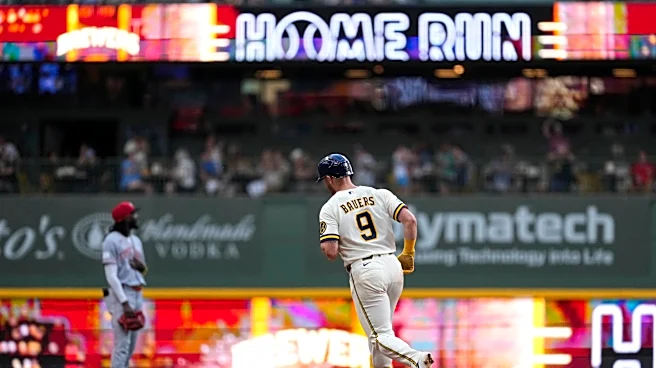
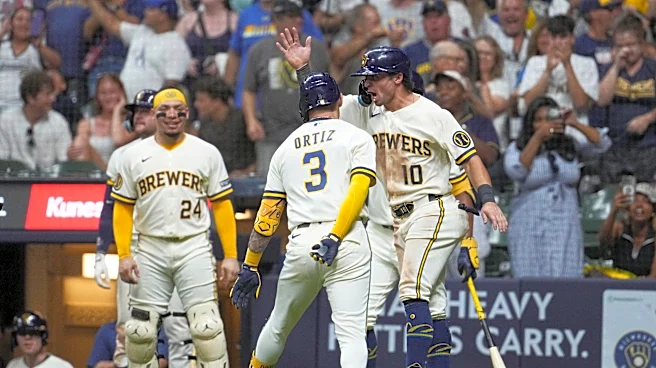
Another option could be an outfielder. Milwaukee has been playing Blake Perkins frequently against left-handed pitching, and while he’s borderline competent from the right side of the plate and good in the field, that could certainly be upgraded. (Brandon Lockridge’s return could change this a bit, but while Lockridge is likely an upgrade on Perkins and is an overall useful player, he’s not exactly “short-term offensive upgrade” material. The same could be said for Luis Lara.) Jake Bauers has been getting starts against left-handed pitching, but has been just slightly above average; a good platoon bat would be an upgrade. It would also prevent you from situations where the lineup against a left-handed starter would include both Joey Ortiz and Perkins, plus one of Bauers, Garrett Mitchell, or Sal Frelick in a platoon disadvantage.
Given the numbers on the roster, a right-handed bat makes the most sense for an upgrade. Positionally, it looks like that would need to be either an outfielder or a third baseman, unless you were okay with acquiring an Andrew Vaughn-type that would be used essentially strictly as a soft-side platoon option with Yelich.
Who’s selling?
Now to the part that makes everything complicated: the league has kind of sucked this year. The Brewers, at 53-31, are one of just seven teams league-wide with a win percentage above .550. Right now, the leaders of the AL Central, the White Sox, are just 45-40. The leaders of the AL West, the Rangers (did you know that the Rangers were leading the AL West?) and Mariners, are both just 44-43.
This means a lot of bad teams still have hope. The Royals are last in the American League with a 35-52 record, but even they are only nine games back of a Wild Card spot. Only four teams in the AL — the Tigers, Red Sox, Royals, and Angels — are more than 5.5 games back of a Wild Card spot:
- The Tigers are in their last year with Tarik Skubal. They’ll probably trade him, but they might also decide to keep him and make a run at it.
- The Red Sox have an interim manager (and fired most of the rest of their coaching staff, too).
- The Royals will probably sell, but they’re not going to do anything that meaningfully damages their immediate future, given that they have one of the brightest young stars in the league.
- The Angels are interesting because they’re now under the management of John Mozeliak. It’s unclear how much power he has to reshape the team, given his “interim” role, but the Angels seem to think they’re in it every year, so I don’t see them selling off any major pieces. Beyond those, there’s not much here.
There are a few other AL teams that could sell if they don’t see their place in the standings improve in the next month. The Orioles, like the Red Sox, are way back in their own division and are eight games under .500, but again, they sit just 4.5 games back in the Wild Card. Minnesota has also hardly inspired confidence, and they are five games under .500, but the AL Central is totally up for grabs, especially with José Ramírez missing from the Guardians’ lineup. The Astros and Athletics, likewise, could turn into sellers with a bad July.
The National League is a little bit different; each division has at least one team that’s clearly ahead of the rest. But there’s a bit of a gap between the second and third Wild Card in the NL, and there are currently six teams separated by just three games in the running for the third and final Wild Card.
The NL teams likely to be sellers if nothing improves dramatically in the next month are:
- The Reds, though they also have a lot of pieces worth building around.
- The Giants, who are a high-priced disaster.
- The Mets, who are an even-higher-priced, bigger disaster.
- The Rockies, a perpetual disaster that could finally be ready to make smart decisions.
The teams that could go either way include:
- The Cardinals, who currently sit tied for the last Wild Card spot but who have a -10 run differential.
- The Marlins, who are overperforming expectations (and are always eager to get rid of anyone who might cost them anything), but were the best team in baseball in June.
- The Padres, another team firmly in the mix but with a negative run differential.
- The Pirates, who will probably not sell because this is the closest they’ve been to competing in a long time.
- The Nationals, about whom you could say the same.
- The Diamondbacks, who are playing roughly .500 baseball despite a -24 run differential.
There’s one other consideration that could affect the market: the CBA situation. If low-payroll teams think there’s a chance that there’s a salary floor in 2027, they could figure it makes sense for them to keep higher-priced veterans rather than trading them for more minor league or league-minimum contracts, rather than face the prospect of filling out their rosters by giving a bunch of money on a one-year deal to a lower-tier free agent just to get to the floor.
We’ll have to watch and see how the next month plays out to know for sure who will be available, but in the coming weeks we’ll look at some possible targets.