

Unless you’ve been living under the proverbial rock, you are aware that baseball’s collective bargaining agreement expires on December 1, 2026. MLBPA’s new leader, Bruce Meyer, says that the lockout is “all but guaranteed”. The owners want a salary cap and seem prepared to hold out until they get one. The owners have talked tough before, and eventually they’ve caved in. The owners say this time it’s different. The owners have a $2 billion-dollar contingency fund available to help them wait out the union.
Stay tuned.
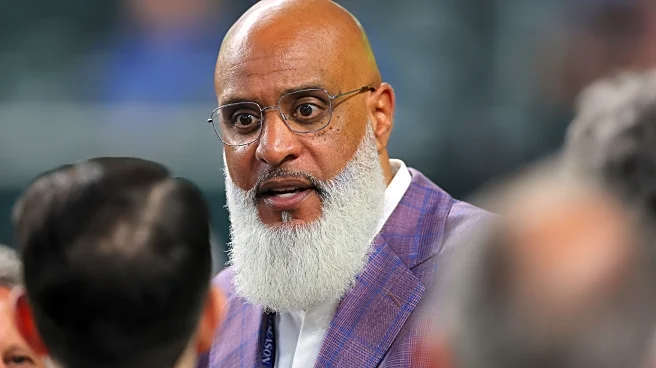
Meyer was elected to the Players Association’s top spot last week, replacing longtime head Tony Clark. Clark resigned on February 17, when news broke that an internal investigation revealed he had an inappropriate relationship with a union employee, who happened to be his sister-in-law and whom the MLBPA hired to work in its Scottsdale office. Future family get-togethers might be kind of rough.
The relationship with the sister-in-law, as short-sighted and stupid as it was, is not a criminal issue. The investigation that discovered the relationship was centered around charges of nepotism, self-dealing, and financial mismanagement of union funds. Some of those issues could result in criminal charges.
Wow. Anyone who has ever worked for a corporation knows the golden rule: never fish off the company dock. Don’t score in the store. Don’t dip your pen in the company ink. You get the idea. Clark’s annual salary and bonus ran upwards of $4 million a year. Seems like a high price to pay for the privilege of screwing up your life.
Clark has denied wrongdoing, as everyone who’s ever had charges brought against them does. But understand: the feds rarely open a case they cannot prove. As reported by Evan Drellich, in June 2025, Clark and the MLBPA hired separate lawyers in response to the federal investigation into whether Clark used licensing money or equity to improperly enrich himself. There have not been any charges filed at this point, and in the United States, you are presumed innocent until proven guilty.
All of this is a very bad look for the Players’ Union at an inopportune time. Graft, financial mismanagement, and embezzlement have long been bedfellows with many unions. My father was a member of the Teamsters Union for nearly 40 years. The Teamsters’ history is littered with scandal. I listened to and read with much interest about the Teamsters’ sordid history, especially in the 1960s and ’70s. Was former Teamsters head honcho Jimmy Hoffa buried in the end zone of Giants Stadium? I’m guessing he went into the ocean or a landfill. Union politics can get rough, especially when there’s a lot of money on hand.
I hope that these issues with Clark are just one-off instances of personal greed and incompetence. I have my doubts. Meyer, who has been described as a no-nonsense bulldog, has worked in the MLBPA offices for many years. Shouldn’t he have known about Clark’s mismanagement and personal peccadillos? If he knew, why did he stay silent? If he didn’t know, what does that say about the organization?
The players have fought too hard over the last six decades to crawl out from under the owners’ boots to lose progress to incompetence within their union.
I have no dog in this fight, but like any fan, I would hate to see a lockout. I well remember what the 1994 strike did to the game and to the fans. I have no confidence in Rob Manfred, whose job is to represent the owners’ interests. I’m not even convinced that Manfred loves the game of baseball. I’ve read that he doesn’t want a lockout as his legacy. We’ll see.
What little confidence I used to have in Clark is long gone. As I’ve written before, I’ve always felt something was off about Clark. He seemed too chummy with Manfred for my taste. When I saw the two of them together, I always got the vibe of, “Hey, we’re all making a lot of bank — let’s not do anything to screw this up.” As my friend Bunny would have said, “Stop hiding behind that beard.” Clark’s tenure will be remembered as… forgettable? Is that the right word? Clark got his tail whipped in previous collective bargaining agreements. I can’t think of any favorable concessions he won from the owners. If I hadn’t known he was the head of the MLBPA, I would have thought he was just another Manfred lackey. He certainly wasn’t in the same zip code as Marvin Miller.
The largest source of my dissatisfaction with the Players’ Union comes from its refusal to add what I call the “Gap” players to the pension plan. There are 483 former players who played before the 1980 service agreement was put into place. Those 483 players were required to have four years of service time. The new agreement, which went into effect in 1980, requires only 43 days of service time to be pension-eligible.
Max Effgen, who has written passionately and extensively about this topic, says that calculating service time is a very labor-intensive process and that the MLBPA has provided zero help with this research.
My friend Doug Gladstone is considered by many to be the national expert on this topic and has written and spoken about it many times. Several former Kansas City Royals — such as Joe Zdeb, Randy McGilberry, Monty Montgomery, Steve Jones, and Tom Bruno — have been affected by this oversight. There are still a handful of former Kansas City Athletics who were also left out in the cold, guys like Alex George, Ray Blemker, and Bill Kern. One of the most famous players in the group of 483 is David Clyde, the No. 1 pick in the 1973 draft. Clyde was horribly misused by the Texas Rangers early in his career. That misuse led to arm and shoulder injuries, which ultimately left Clyde unable to satisfy the four-year requirement.
In 1980, there were more than 1,200 former players who fell into this category. Today, the number is 483, and it often seems to me that Major League Baseball is content to let these guys die off so the issue will simply go away. It’s a disgrace.
You would think that the current players, many of whom are awash in more money than they can ever spend in their lifetimes, would feel some sense of brotherhood toward these forgotten players. Hell, Tony Clark was a former player, having spent 15 years in the big leagues. Yet Clark never seemed to have any urgency to rectify this disgrace for his stranded brothers. Maybe I’m too naïve, but I find that mind-blowing.
I work in finance, so I have a solid understanding of pensions and vesting schedules. Pension vesting varies widely from company to company. I’ve seen some plans with ten-year service requirements and others with just one. Major League Baseball, with just a 43-day requirement, is by far on the low end of the vesting scale. But understand, that’s just 43 days on a major league roster. Many of these players spent years grinding their way through the minor league system, with many never getting a taste of the big leagues.
In fiscal year 2024, the MLBPA reported total assets of $353 million, a record high, and total liabilities of about $5 million. Between 2020 and 2024, the MLBPA received over $160 million in licensing revenue from OneTeam Partners. The U.S. Attorney’s Office in Brooklyn alleges that Clark improperly received equity in OneTeamPartners.
Major League Baseball donates tens of millions of dollars to various charities each year, and that’s fine. That’s great. I’m glad they are trying to be a good corporate citizen. I do wish they would step up and take care of all their players. The entire episode, the allegations about Clark, the looming lockout, and the neglect of the gap players is a black eye for baseball. It is ugly and will get uglier before it’s over.