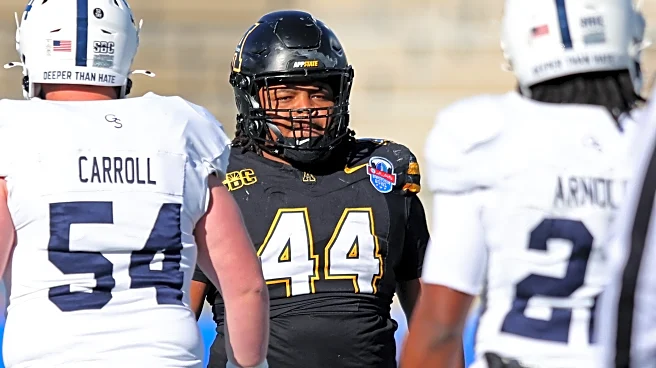

Simmons was a member of the 2022 cycle who prepped in Bamberg, South Carolina, a small town south of the capital. After playing for most of his career on the offensive line, Simmons switched to defensive line in his senior year, and was unrated by the scouting services.
He enrolled at Highland Community College in Kansas and was a defensive starter for the 2022 and 2023 seasons, accumulating 50 tackles, 11 TFLs, and 5.5 sacks over two years, and was named to the conference’s first team despite Highland’s
modest win-loss record. As part of the 2024 recruiting cycle, Simmons was rated a high 3-star (.8806) in the 24/7 Juco composite.
In December 2023, Simmons signed a letter of intent with the University of South Carolina. In May 2024, Gamecocks head coach Shane Beamer said he expected Simmons to be the latest arriving member of the 2024 class, in the middle of June. In late July when Fall camp was close to beginning, On3’s South Carolina site learned that Simmons wouldn’t be joining the Gamecocks for the 2024 season for academic reasons.
For the 2025 season, Simmons transferred to the University of Louisiana at Monroe. I’m uncertain when he enrolled at ULM or how he spent the Fall of 2024 – the football program didn’t announce him as part of their Juco-heavy signing class, the transfer isn’t noted in the records of the scouting services, and there’s no mention of him in ULM’s press releases or local media between January and July.
Simmons was enrolled at ULM before Fall camp, as he appears in the official media guide from August 2nd, and NCAA compliance rules are strict on that subject. After playing in the 2025 season, he entered the transfer portal in the January window and committed to Oregon a few days later. As his eligibility clock started in 2022 and he played in the 2022, 2023, and 2025 seasons, and as far as I’m aware didn’t in 2024 — so that counts as his redshirt — he should have one year to play one remaining. My understanding of the current state of legal rulings and the NCAA’s “Pavia waiver” last season is that there was only a one-time extension for Jucos who otherwise would have run out of eligibility last year; this doesn’t apply here and I don’t believe any court ruling exists (as of this publication) which would extend Simmons’ eligibility beyond 2026.
With two exceptions, Simmons didn’t see the field in the first seven weeks of the 2025 season, whether before or during garbage time. The first exception was a single play in week 4 on a specialty package, and it wound up not counting so it’s hardly an exception at all other than to note he was available (it’s a funny caveat to an intriguing statistic of his about penalties, which I’ll detail later).
The second exception was the final eight plays of garbage time in their week 6 loss to Northwestern. The dedicated true nose tackle I’d seen in the first two FBS games had stopped playing (I’m not sure if Simmons took his spot or if his season ended for an off-field injury or other reason, but I never saw him get hurt while reviewing every defensive snap of ULM’s season), and a backup DT’s helmet had come off during the play prior, so the staff put Simmons in to finish the second-to-last drive, then left him in for the six-play final drive.
Even though the game was over and everybody in for the offense including each of the o-linemen were developmental players, I thought all 22 guys in for these plays were taking the opportunity for playing time seriously and giving some good scrimmage tape … Simmons’ 4th rep, for instance, is just about perfect teach tape on how to two-gap against an inside run. Here are all eight plays, Simmons is pretty easy to spot: he’s the big guy in the middle with no gloves in jersey #55 (which he tugs down after every rep; Kenny Farr, if you’re reading this, please get my man a properly fitted uniform):
(Reminder – you can use the button in the right corner to control playback speed)
Setting aside the probative value of those garbage time reps, they do make clear that Simmons was healthy and in good football shape. ULM had a deep bench at the defensive line – I’d argue it was their single strongest and certainly deepest unit on the entire team with six playable defensive tackles besides Simmons, not to mention the other nose tackle for the first few games and the couple of heavier edges who’d play fist-down inside the offensive tackles on some formations.
So it was understandable in the first few weeks, when Simmons had apparently missed organized ball the year prior and they weren’t hurting for depth, to have him sit out the FCS opener and an absolute shellacking by Alabama (73-0), then take the bye in week 3 and just be on standbye against a very weak UTEP team that was the closest thing they had to a guaranteed FBS win in week 4. Perhaps he was getting more in shape at that time; it’s hard to say since we didn’t see him on the field at any point.
But I find it hard to reconcile Simmons not playing in week 5 against Arkansas State, a conference opponent they were on a long losing streak to, or week 7 against Coastal Carolina, a beatable opponent when they were starting to encounter some injuries. Even if Simmons had some conditioning work to do when he arrived in Monroe, he was clearly ready to go by that point in the season. What followed starting in week 8 against Troy and for the rest of the year showed that he was a valuable rotational lineman, and the only one who could play true nose and two-gap, rather than just line up there but then stem over and play as a gap-shooting 1-tech as the starter and other ~300 lbs backups did.
In those last six games, Simmons was in on about 31% of meaningful snaps. The two clear starters at defensive tackle were never displaced, but Simmons worked his way up from seventh place out of seven available DTs — not playing at all in the first half of the season — to the third or fourth spot, with a very clear niche. He’d be part of the first sub group in by no later than the third opponent possession of each game, and often in as early as the first drive if it was going long.
Because there’s a substantial skew for the opponents Simmons’ teammates faced exclusively in the first half of the year — those included two blowout losses to Power conference teams, Alabama and Northwestern, as well as the Warhawks’ cleanest victory but, oddly enough, the one in which they gave up by far the most explosive passing, to UTEP — a fair cohort analysis must only consider the second half, when we can look at how the same teams did against the Warhawks’ defense with vs without Simmons on the field. Fortunately, the defensive line rotated enough that we have a large and varied sample for a decent analysis and down & distance situational comparisons using moderate data controls, as ULM faced plenty of offensive styles and qualities – Texas State ranked 23rd in F+ offensive advanced statistics and Old Dominion ranked 54th, while the other four ranged from the 70s to the 90s.
The outcome of the analysis was that Simmons’ presence on the field contributed to a modest but appreciable boost in defensive performance, which was consistent across every metric I track from charting. Simmons’ effect was most significant in reducing offenses’ YPP and explosive rush frequency, and situationally, he improved 1st down success rates by 9.5 percentage points (+8 points against the run, +11.5 against the pass), with about 15 percentage point gains in short-yardage situations. Long yardage was about the same, and the data was inconclusive and too noisy on medium yardage.

There’s also a tick up by 8.7 percentage points in defensive havoc rate with Simmons on the field on called passing plays, which is remarkable for a nose tackle. Simmons showed good recognition of pass play dynamics and switched to penetration or containing the QB as appropriate, and I don’t have any reps on scramble drills in which he lost lane discipline overpursuing. Here’s a representative sample of broken passing plays:
- :00 – The RG is sliding over as part of this half-roll, but Simmons can tell that his weight isn’t well balanced and his back leg is straight not flexed. Good move to rip under the guard when the C takes a step, one of several who get penetration, and then no illegal contact with the vulnerable QB.
- :19 – The d-line is slanting to the other side of the blitzing cornerback to open it up and the QB doesn’t see him coming till it’s too late. Simmons is hammering the LG and winning outside leverage – that’s where the QB would escape to and his responsibility since the other DT has the front door escape lane.
- :30 – Just a three-man rush here, but the extra heft Simmons brings is enough to push back the line and panic the QB standing in the endzone about taking a safety. There’s no throw to be had since the defense got to drop eight into coverage and the LB is free to threaten him while Simmons fights off an attempted hold, and the QB ditches the ball into the stands.
- :42 – This starts out with good RPO defense on the playside, between the backers and nickel accounting for each option so the OLB can ignore the bluffer and head for the QB. But Simmons driving the LT back around on the stunt so badly that it gets the LG’s attention kills the QB’s escape attempt – he can’t get around Simmons and now he doesn’t have anyone to help him through the front door.
In addition to blowing up the pocket, Simmons also got higher per-pass attempt grades in swats at the line (or forcing the QB to redirect to a bad arm angle around him). But most of the improved pass defense metrics when Simmons was in came from indirectly affecting the play, usually by absorbing more of the offensive blocking resources than a replacement defensive lineman would and therefore liberating another teammate to make the play, or by cleaning up better than other linemen did. Here are some examples:
- :00 – This might take a rewind to watch a second time, but Simmons makes the play even though he never lays a finger on the QB or even gets into the backfield. This OL’s protection rules should have the RG helping the RT, but Simmons’ pressure on the C is driving him back so much that the RG breaks his assignment and leaves the RT one-on-one and missing leverage against the DT starter, who naturally beats the RT inside to hurry the QB into a throwaway.
- :08 – Given ULM’s zone coverage, USA’s best throw on this rollout flood is for the QB to stop up and float it back to the leakout TE (they got two 10+ yard passes this way at other points in the game). But Simmons splits the C and RG and is coming right at the QB, so he doesn’t want to risk getting eaten alive and tries a throw on the hoof he doesn’t have the arm for.
- :15 – This simulated pressure overloads the offense’s left; Simmons starts out at 2i (the RG’s inside shoulder) but works himself all the way over to the RT as they go to work; he’s following the QB’s eyes to get the swat.
- :31 – Now Simmons is at 3-tech (RG’s outside shoulder) after a stem. It’s a play-action rollout and the tight ends begin the play blocking inside, but Simmons figures it out quickly, spins away and pursues them to get the quick tackle while the coverage is still overleveraged on the run fake. This turned out to be Simmons’ last play with ULM but it was pretty remarkable – beating DBs in reading and running to a tackle.
The other thing that stood out while I was watching Simmons’ pass defense reps is that he’s much quicker on his feet than I was expecting. I’m not referring to his initial burst or explosion out of his stance — which I’d say is pretty decent though not as mind-bending for a big man as previous Oregon transfer Ja’Maree Caldwell — rather what I’m talking about is that once he’s up on his feet and running, his footspeed is much quicker than the other defensive tackles I’d watched. Some examples:
- :00 – If the DT who gets the swat is the 4th domino in the sequence then Simmons is the 1st, because his quick threat on the T-E stunt to his side gets the RG too, so the C has to take his partner, now T-E stunt on the other side is two-on-two, and when they can’t figure out the exchange without the C’s help, boom. Anyway, look how fast Simmons is.
- :12 – Simmons doesn’t have much to do with the QB being flushed or escaping – it’s just a blitz ODU doesn’t pick up well, and then the backer went outside-in instead of inside-out on his tackle. But that’s a pretty impressive run down to get the shove out of bounds (and jersey tug along the way). The refs ruled the QB’s toe hit the sideline, though it didn’t matter because there were multiple holding and illegal block flags downfield.
- :42 – Good lane discipline on the pressure, others have penetrated after the T-T stunt so Simmons’ job is to keep the QB from taking an easy escape for positive yards by choosing one lane and abandoning another. He successfully deters the front door exit and the QB goes laterally, Simmons gives chase with surprising hustle, and the QB makes a poor decision with the big man after him.
- :59 – I spent a while on this one trying to figure out the keys, and ultimately concluded that the defense just had the play cracked (I think the goofy wrong way fake is the tipoff, Louisiana probably only ran this one bootleg out of it). Simmons knows what to do and beelines the QB, going right through the RT for him at the proper intersect angle, and forces a bad throw.
Most of Simmons’ run defense reps had him lined up as the nose in a three-down structure, controlling both of the A-gaps to each side of the center. A proper two-gapping nose is one of the most difficult body types to find in football (or more precisely, the body type who’s massive enough as well as athleticly conditioned and well balanced so he can sustain useful performance over long stretches of the game), but it’s also technique that can be difficult for viewers to appreciate and the camera doesn’t exactly love it for the lack of drama. The value is that the defense gets two players for the price of one – by grappling with the center but staying agnostic and not committing to either gap overmuch, the nose simultaneously deters the running back from both at the same time.
Sometimes the RB will chance it anyway, and the nose needs to fall into the lane the RB picks, which makes for a mushy-looking tackle that tends to give up a couple of yards in a pile of bodies. But ideally the RB will be smart and bounce away entirely to challenge some other player like a defensive back to come down and tackle him — the entire premise of such defenses’ “spill & kill” philosophy — though in this case the camera operator and commentary crew hardly ever credit the nose for setting off that chain of events in the first place.
So the nose tackle is practically the definition of the unsung hero to three-down defenses – absolutely necessary for the math to work, but if he’s doing his job well it often looks like he’s not doing anything at all. It’s the film reviewer’s job to look past this disinterest to find reprentative examples of Simmons’ performance when two-gapping against the run; here they are, though we didn’t get high quality close-in replay angles on any throughout the year:
- :00 – Proper technique here, note the distance Simmons is keeping so he can disengage and fall into the lane, while keeping on his toes and moving to prevent the C getting inside of him. When the RB commits, he’s free to get in on the tackle.
- :09 – This play is meant to go to the left A-gap, that’s what the RB’s offset and the H-back lead blocking aim for, but Simmons’ effective 2-gapping deter the RB from it – that’s what the little hesitation is about. The RB tries the right side instead but Simmons has done his job and stayed agnostic so he can fall on that, and the defense is better set to stop a right side run with the nickel crashing (though if they wanted a 3rd down stuff they shouldn’t have played this SDE, he’s their pass rushing option).
- :17 – Variation, here Simmons is using the same technique but against the RG since this is a run blitz. Simmons successfully deters the run into the big designed B-gap, saving what probably would have been a chunk-yardage gain, switches over into the A-gap and falls onto the RB, though the LBs are getting bullied and the back muscles through for a couple yards.
- :25 – Here Simmons controls the A-gaps by destroying them, throwing the C directly onto the ground. The LB is free to come in wherever he wants and the RB has nowhere to escape the DT who’s whipped the RT.
There was a subset of ULM’s run defense plays with Simmons in that switched the playcall to backfield penetration or otherwise immediately defeating a block, mostly in short-yardage or when the offense was backed up against their own goalline. (Incidentally, while it might not look like it from the scoreboard due to the injury-hampered offense playing the 3rd-string QB constantly putting them in bad positions, I thought the gameplans from Broyles award finalist DC Hill in their four biggest conference games showed good strategy, in ending the streak against Arkansas State, the top Sun Belt offenses they faced in ODU and TSU, and forcing archrival Louisiana to overtime.)
Simmons’ per-rep grades on my tally sheet were no better in this aspect than the starters’ who one-gapped virtually all the time on run plays — not really a surprise since that’s not what you get a 340 lbs nose tackle to do — but neither was there much of a falloff either. The defense found that they could gain an ambiguity advantage by lining Simmons up at nose and then play him either way, keep the offense guessing about which way they’d defend the run, and hardly pay a price for it. Some examples:
- :00 – This is a good job by the perimeter defenders against the strong side blockers blowing up the outside run and forcing it back inside. The OL is trying to wash everybody the other way, so the RG attacks Simmons with leverage, but Simmons successfully wrestles him around and gets to the other side to crush the back.
- :08 – Because it’s relatively short yardage and very favorable field position, the playcall is to read the lead block and shoot right away. The H-back picks up the crashing LB but Simmons has attacked and gotten through the C’s left shoulder, so the back can’t get through. He spills the other way and the DB kills the play.
- :25 – It’s a stuff or a touchdown here, so the defense needs a penetration plan. Great rep for Simmons getting under the C’s pads and working him up then firing under his left shoulder, that was the aiming point for the run, and the C’s reaction to getting beat opens the other side for the LB to get through and finish the job.
- :41 – Simmons starts as the 2i here, to the right of the C, but attacks him immediately and drives him back, then gets to the opposite side while the C is off-balance to wrap up the RB in the backfield.
Short-yardage rush defense is related to the one and only time Simmons got a flag. That was his sole rep in week 4 against UTEP, when the Miners on 4th & 3 suddenly switched out of their punt formation into a super jumbo package with eight offensive linemen. ULM rushed nearly every defensive lineman they had onto the field, Simmons included, and they stopped the run, but then they were flagged for having 12 men on the field – one of the DBs who was on the punt unit failed to the signal to clear out. So technically Simmons was part of that penalty, though I don’t think it should really count since obviously he was intended to be on the field and wasn’t at fault. Otherwise, of the 33 flags thrown against ULM’s defense all year (including garbage time), not a single one was due to Simmons. My predictive algorithm for this suggests that a player in his situation “should” have gotten 2.12 flags for -20.6 yards, so Simmons showed more discipline than baseline expectation.
Similarly to the pass defense metrics, a large part of the boost that Simmons was correlated with in the run defense cohort analysis was indirect – occupying more of the offensive resources than a replacement lineman and allowing other defenders to make the play. The most common case was absorbing offensive line double teams better than other defensive linemen and keeping linebackers clean so they could knife in and get tackles, though other times it had to do with threatening the backfield himself and redirecting plays or allowing edge defenders easier penetration. Here’s a representative sample:
- :00 – There’s some kind of offensive assignment error or confusion here with the TE block or the QB keep because the LB shouldn’t be a free hitter, but once the QB figures that out he’s got no chance of cutting away from the LB to the left because Simmons and the DE next to him have beaten their blocks and gotten into the backfield to slam the door shut.
- :18 – The immdiate LB crash short-circuits the playside blocking assignments so he slides right through and the lead blocker is long gone. The back wants to cut back the other way but he can’t because Simmons has quickly gotten through on the backside of the center. Since this was a wide outside run the center was fine with this at first and just wanted to delay Simmons a bit, but when the play gets blown up he realizes he needs to actually stop Simmons if he can, but it’s too late.
- :29 – Here ULM brings the inside backer down on-ball, and Simmons’ job is to take on multiple blocks so that the lone off-ball backer is clean. He does so well enough that the center falls over and the backer is free to hop over to the other side of the play and help tackle the QB keeper.
- :38 – Simmons is the 2i to the offense’s left here, and he takes on the C and LG at once. Even though he starts at a leverage disadvantage against the C, Simmons keeps the C from releasing up to the backer by keeping his shoulders square while running laterally with the blocks (the backer, however, doesn’t take advantage of being clean and get to the lane properly).
The most significant drawback to Simmons’ tape is simply how limited it is – while the mix with other linemen was frequent enough for a good comparison within the sample, the sample itself just wasn’t that big at only six games, nor was it particularly dynamic as they’re all from the same conference at the same time of year (they’re even in the same kind of miserable-looking weather, for the most part). Without anything more to go by, I can’t rule out possibilities that there would be problems in transition to Power conference competition or that there’s some weakness in Simmons’ play which hadn’t been exposed on film (perhaps due to DC Hill’s familiarity with these opponents minimizing what would be problematic scenarios, or just dumb luck that it hadn’t come up yet).
Most of the ineffective / negatively graded plays for Simmons were unremarkable – there was either no pattern or I thought it was about the playcall, not the player. I certainly think Simmons has room for physical and technical progress but there wasn’t much that stood out as consistently problematic, at least on the tape that exists to date:
- :00 – There’s no real mystery to this one, it’s just not a good rep – the C gets lower pad level on the initial engagement and despite all the struggling Simmons can’t establish superiority. When the back makes his choice Simmons isn’t there to close the lane. This was the only time I saw Simmons lose this kind of rep physically.
- :08 – Here Simmons is successfully driving the center backwards, and it looks like he should have his right arm free to make a play on the QB as he runs past. I can’t really tell from the angle why he doesn’t, if he got his arm caught or he’s just choosing not to do it for some reason, but either way keeping an arm free for this is his job to do. Again I didn’t really see this repeated.
- :17 – In the last three games, starting with this one, ULM added these loop stunts for the 0- and 1-tech linemen, where instead of going in first as with the T-E stunts they’d been effectively doing before, they’d go out and around off the snap. I have no idea why because they never, not once, accomplished anything … not just for Simmons, all the interior DLs, but they were especially wasteful for Simmons from an opportunity cost perspective because the great value of a nose is in the middle eating double teams, two-gapping, etc. Here because the OLB gets too deep and isn’t setting the edge, when the QB scrambles Simmons becomes the EMOL (sort of) and it’s just not his thing to catch the nimble QB scooting past.
- :36 – The way this pressure is supposed to work is that it opens the middle up for the LB to crash, but something is wrong here because the LB and both DBs just stand still staring at the seven-man protection then blasts off for the fieldside corner all alone against the comeback. Simmons seems to know something is wrong because he pretty much stops on the pressure instead of pushing the guards all the way around to open things up as assigned.
If I had to make a guess based on the available tape to review, I would say the issue for Simmons to work on most is always keeping his base under him and not crossing his feet. This wasn’t something that had a major impact on plays — in fact, much of the time I noticed it, Simmons’ engagement was nearly irrelevant for how the play was developing — but I know that it has the potential to become a bigger problem and it was definitely the technical issue that I saw more than any other. Some examples:
- :00 – Easy win for the defense since the QB makes the wrong read on the option; ignore that and watch Simmons’ feet through a couple of replays, he’s the 3-tech on the RG’s outside shoulder but shooting inside of him. He doesn’t have a solid base and shuffle step, it’s more like he’s floating in the air and his feet are dragging. Easy to knock him over that way.
- :20 – The C pulls away here so Simmons gets the LG instead and starts out with a leverage advantage to push into the backfield, he shouldn’t be having trouble with this but the problem is that he starts his penetration with his inside footstep. So now he’s turning his hip away from his shoulders and he can’t fend off the blocker with his upper body as he drives with his lower body, and it takes him too long to re-orient and get through.
- :45 – Alright, the defensive failure here is totally on the MIKE for running to the wrong gap; Simmons is where he’s supposed to be and affecting the offense as he’s meant to by engaging the RG and attracting the C to open the offense up. I just don’t like how he’s doing it – he’s way over his feet and supporting his weight on the guard, then massively overcorrects swinging his right leg forward and weight back as he gets hit to hop on one foot. It’s actually impressive that he stays upright and resumes engagement after all that but he’s essentially out of control for the first 2.5 seconds of the play.
- :57 – This one really was a problem, Simmons hasn’t unlocked his hips and has engaged while bent over, only one foot planted. He’s already getting turned to the side and can’t get his other foot down to establish a base to resist. The back runs right through his lane and gets a 1st down.