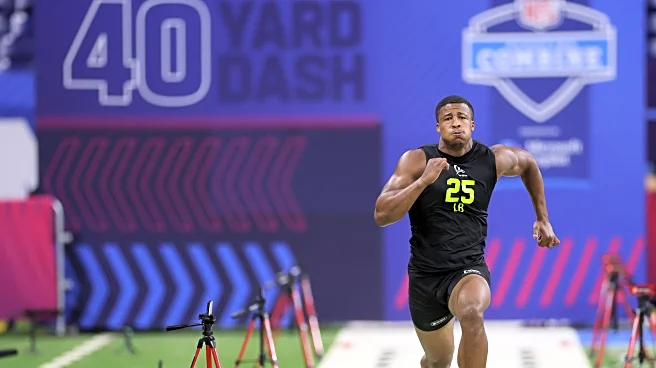

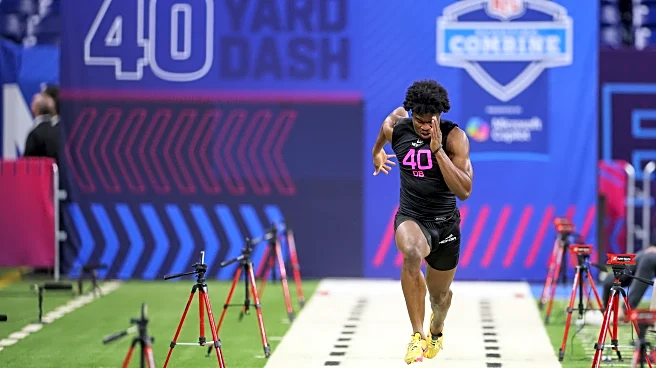
From 2005 to 2020, between two-thirds and three-fourths of players participated in any given drill at the combine regularly. Then the pandemic happened.
Not only did some top-10 selections in the 2021 class opt out of the 2020 college season entirely, but they also didn’t have a combine to participate in that offseason, either. Yet, teams still took them high in the draft, feedback that prospects and agents took as: “Well, the combine can’t be that important to teams then.”
Since then, we’ve seen significantly
fewer players participate in combined drills. As of now, through the tight ends and defenders, the participation rate for the 2026 combine is hovering around 41 percent, slightly higher than the 37 percent that we were at after Day 1 of the combine. Still, it’s close to a one-third chance that a given player actually participates in a given drill.

There was an immediate dropoff when on-field combine drills returned in 2022, as participation dropped below 50 percent for the first time, but there was a solid bounceback in 2023. In the last three successive combines, though, the participation rate has dropped year-over-year, and the 2026 combine looks to be the worst, in terms of participation, ever.
Participation Rate — Drill, 2026
- Vertical: 60 percent
- 40-yard dash: 56 percent
- Broad: 54 percent
- Short Shuttle: 19 percent
- 3 Cone: 15 percent
I’d argue the agility drills — the shuttle and three cone — are the most important data points, in terms of predicting a player’s success. Those are the drills that are seeing the most losses in terms of participation. Unlike the jumps and the 40-yard dash, these drills aren’t televised. Another factor in these drills losing participants is that they’re run later, sometimes after non-timed on-field work like the wave drill or the gauntlet, which is why many just call it a day early instead of going back into testing mode after already shifting gears.
The jumps and 40-yard dash have taken a hit, too, as the drills used to regularly push in the 80 percent participation range. It’s not that the agilities that are solely taking a hit, just that the agilities are taking the biggest hit.
At the current rate, only one in seven prospects at the combine actually ran the three cone. For perspective, in 2006, 33 of 38 linebackers (87 percent) did the drill. On Friday, only 5 of 54 defensive backs (9 percent) participated in it. Previously, the three cone drill used to be a big event for the defensive backs, as it was a proxy to measure how well corners and safeties were able to flip their hips.
When you’re losing guys year over year, it’s hard to do worse than nine percent. There’s not much more room to lose. It’ll be interesting to see what the NFL does, or doesn’t do, to solve this problem moving forward. If I had to choose, based on the prediction value of these drills, I’d get rid of the jumps if it meant having players run the agility drills. The NFL has never really spent much of its broadcast covering the agilities, though, so it could just be a data point lost to the past soon.
We’re probably at the point now where combine winners and losers will matter less than weekly pro day winners and losers, as the majority of the data we’ll be getting for this class will be in the month following the combine, instead of it all coming at once in Indianapolis. Generally, “official” (really, it’s BLESTO or National’s times at these events) times for pro day drills don’t drop until they start getting leaked via draft preview guides, like The Athletic’s The Beast — which didn’t come out until April 9th last year.
You’re gonna have to wait a little longer for those RAS cards moving forward.