
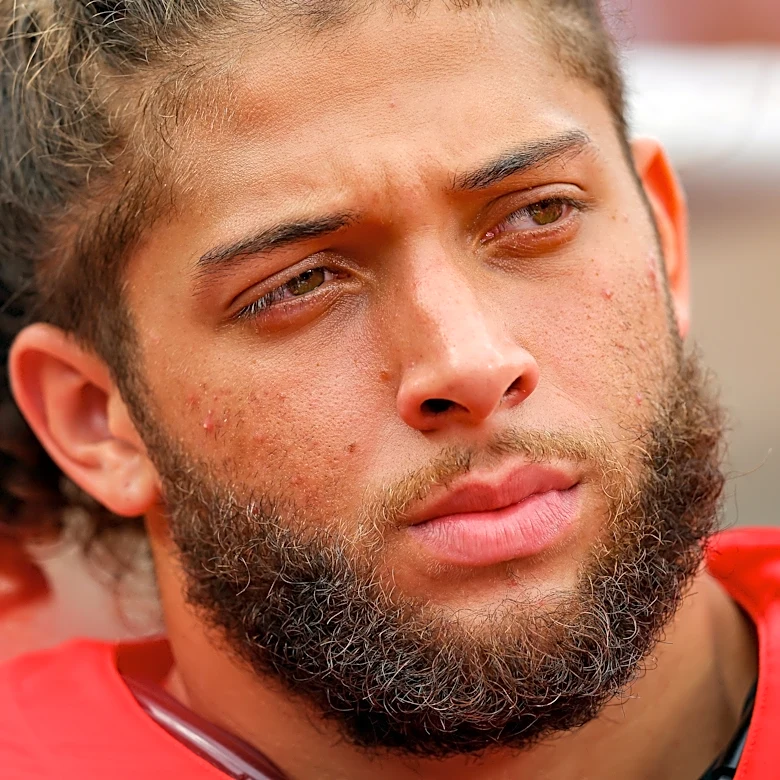

When the Seattle Seahawks selected Rylie Mills in the fifth round of the 2026 NFL Draft
, they weren’t betting on production—they were betting on traits.Mills entered the draft with a higher grade than where he was ultimately selected, but a knee injury suffered during Notre Dame’s College Football Playoff run dramatically altered his stock. Knowing he would miss a significant portion of his rookie season, Seattle was able to capitalize on a player who likely would have come off the board much earlier
had he been healthy.
Even before the injury, however, there were questions about how his physical profile would translate to the NFL. His lack of ideal arm length and only average play strength projected to limit his ceiling, particularly against the run.
Because of that combination of injury and developmental concerns, the expectation entering his rookie year was straightforward: treat it as a redshirt season.
That script largely played out.
After spending much of the year recovering, Mills finally began seeing the field late in the season—making his NFL debut against the Indianapolis Colts—and although the snap count remained modest, those reps carried more value than the box score could ever capture.
Development doesn’t happen on the sideline; it happens between the whistles.
Every defensive snap, even in rotational duty or late-game situations, provides experience that simply can’t be replicated in practice. Whether it’s recognizing blocking schemes, adjusting to NFL speed, or learning how opponents attack protections, those live repetitions accelerate a young player’s growth far more than another afternoon spent watching from the bench.
His rookie film isn’t extensive, but there is enough to evaluate what Seattle has today—and perhaps more importantly, what it can reasonably expect moving forward.
What stood out on Rylie Mills’ tape
Quickness off the ball translated immediately
One of the reasons Seattle was so intrigued by Mills throughout the draft process was his first-step explosiveness.
The Seahawks placed significant emphasis on get-off metrics during their evaluation process, and Mills consistently graded among the top performers in that area. That burst shows up on NFL film just as it did at Notre Dame.
Even in limited opportunities, he routinely threatened blockers before they could fully establish their pass sets, allowing him to create immediate stress despite lacking elite length or overwhelming power.
Rather than winning with overwhelming physical tools, Mills wins by forcing offensive linemen to react early.
That first step gives him a chance to stay competitive against NFL-caliber athletes and should remain the foundation of his pass-rush game.
Finishing the season with a statement
Football often leaves lasting impressions.
For Mills, the final one couldn’t have been much better.
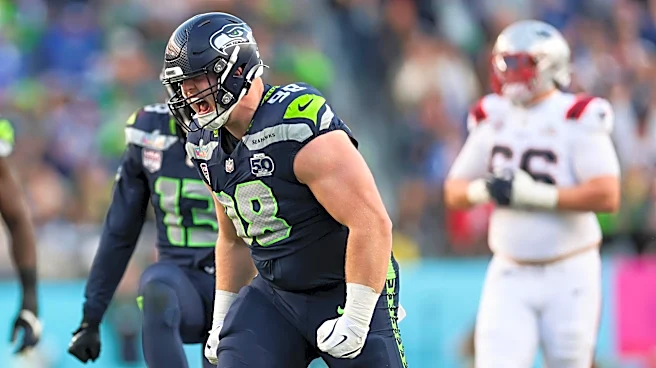
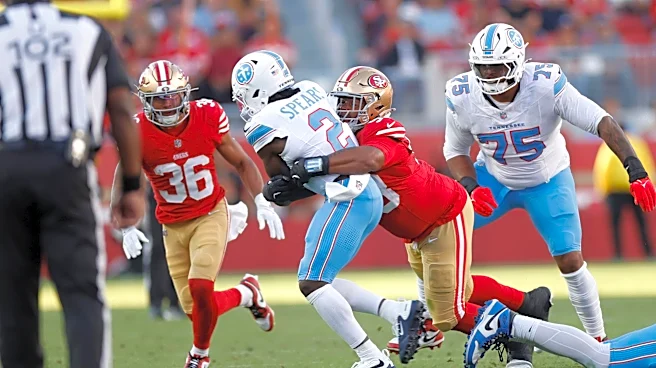
This is one of Mills’s first snaps in the NFL…
His sack in the Super Bowl—driving through Jared Wilson before bringing down Drake Maye—provided perhaps his most encouraging individual rep of the season.
One play shouldn’t outweigh months of evaluation.
At the same time, it demonstrated exactly why Seattle remained excited about his long-term fit. The burst, leverage and relentless effort all came together on a stage where mistakes are rarely forgiven.
It wasn’t proof that Mills had arrived.
It was proof that his best traits can translate against NFL competition.
Areas for improvement
Play strength remains the biggest concern
The same physical limitations that appeared during the pre-draft process were still visible on rookie tape.
Mills doesn’t consistently generate enough power to control blocks against the run, particularly when offensive linemen are able to engage him squarely. Without ideal arm length, he also has less margin for error when trying to create separation at the point of attack.
Those issues occasionally prevented him from setting firm edges or disengaging quickly enough to finish running plays.
They’re not unexpected weaknesses; they’re largely the same concerns evaluators had entering the draft.
Improvement is certainly possible through NFL strength training and continued technique refinement, but there are natural physical limitations that likely cap how much those areas can develop.
This can also be seen on pass-rush snaps. He has a good plan, using a bull rush that transitions into a sort of double-swipe; however, the offensive lineman is able to push him back with relative ease, even after losing the initial exchange. This is one area where I hope Mills improves in Year 2.
Rylie Mills’ future outlook
Perhaps the biggest reason for optimism has little to do with what happened on the field last season.
Mills is healthy entering his second season.
A full offseason allows him to participate in every phase of the defensive installation rather than splitting attention between rehabilitation and football. That continuity matters, particularly for a player who essentially experienced a delayed rookie season.
Training camp already offered encouraging signs, including reps as a gunner on special teams—a role that further highlights the explosiveness Seattle valued throughout the draft process.
Expecting a dramatic breakout may be unrealistic.
Instead, the more reasonable projection is a player who is already close to his long-term profile, but now has the health, familiarity with the scheme and valuable NFL experience to play that role more consistently.
Final Thoughts
Riley Mills may never become the most physically gifted defensive lineman on Seattle’s roster.
The tape suggests that’s not who he needs to be.
His quick first step, relentless motor and growing comfort within Mike Macdonald’s defense provide a foundation for meaningful rotational contributions. While his physical limitations remain real, they also appear well understood by both the player and the organization.
After spending much of his rookie year recovering, Mills no longer looks like a developmental stash waiting for an opportunity.
He looks like a healthy young defensive lineman ready to prove exactly how much value Seattle found in the fifth round.