


Some players make an instant impact when traded to the Yankees. Some players take time to get their feet under them playing for the most heavily scrutinized team in the league. And then you get those players who struggle out of the gate upon joining the Yankees and never get close to the player they were before switching teams — essentially a bust from day one. Jake Bird certainly falls into this final category.
Grade: F
2026 Stats (Yankees): 36 games, 30.1 IP, 5.93 ERA (71 ERA+), 4.35 FIP, 4.23 xFIP,
22.3 K%, 7.9 BB%, 0.1 fWAR, -0.4 rWAR
2027 Contract Status: Entering second year of arbitration eligibility, projected to earn $1.3 million.
As the 2025 MLB Trade Deadline approached, teams lined up to make a run on relief pitching, contenders hoping to shore up their bullpens in advance of the postseason. The Yankees were by far the most proactive team when it came to reinforcing their relief corps, trading for a pair of closers in David Bednar and Camilo Doval as well as someone who should have been a potent middle inning threat in Bird. They were far from the only team interested in his services — he was a spin rate darling with multiple breaking balls and three-plus years of team control. As such, acquiring Bird required the Yankees to part with the highest-ranked prospect they would deal at the deadline despite the superior track records of Bednar and Doval, New York sending second baseman Roc Riggio — their fourth round selection in the 2023 MLB Draft and a consensus top-25 organizational prospect — alongside Ben Shields to Colorado to complete the deal.
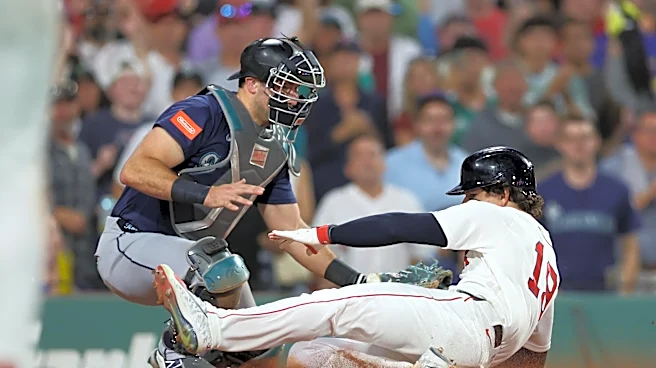
Bird’s Yankees career could not have gotten off to a worse start as he gave up a grand slam against the Marlins in his team debut and a walk-off homer to the Rangers three days later. He was swiftly demoted to Triple-A and would not sniff the majors for the rest of the 2025 season. However, after working with the pitching coaches over the winter, Bird was named to the 2026 Opening Day roster with a shot at some serious redemption.
That redemption never came. Though he opened his season with four straight scoreless appearances, Bird surrendered three runs to the Marlins without recording an out on April 5th and then coughed up another three runs in one inning against the Angels a week later. This resulted in a 12-day demotion to Triple-A with Bird sporting an ugly 7.71 ERA in eight appearances totaling seven innings.
After working on his mechanics in the minors, Bird was called back up for a sustained stretch in the bigs. He acquitted himself well, pitching to a 2.91 ERA in 25 appearances totaling 21.2 innings, though a 4.48 FIP hinted that regression could be on the horizon. Indeed, Bird began to stumble again in mid-July, allowing two runs in 0.2 innings on July ninth before suffering what would ultimately prove the death knell of his Yankees career — five runs on four hits and two walks while recording just one out in an ugly 8-2 loss to the Dodgers on July 19th.
He was promptly sent back down to Triple-A and would not return, getting traded in the middle of a relief appearance with the RailRiders on August 2nd. The Yankees sent Bird alongside Yovanny Cruz, Ben Grable, and Jack Cebert to the relief-starved Nationals for Luis García Jr., who at the time was leading the NL in slugging at .564. In this sense, Bird’s greatest contribution in his year with the Yankees was to net the Bombers the immediately-impactful García, whose seven home runs and 104 wRC+ helped stabilize their ailing offense, halting the summer swoon to clinch a postseason berth.
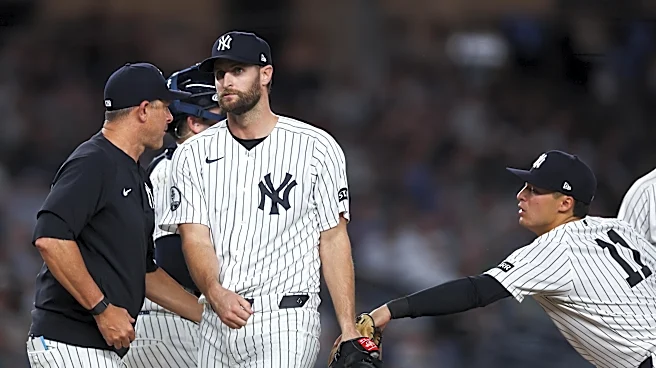
I’m not sure why it all went so wrong for Bird in New York, given he profiled as exactly the type of pitcher that Matt Blake and the rest of the pitching coaches would love to work with. Bird is a spin rate and pitch movement specialist who frequently placed among the league leaders in sinker vertical break and curveball horizontal break. You might be tempted to say he was the victim of bad luck as evidenced by more than two-run drop-off from his ERA (7.24) to his FIP (5.02) during his Yankees tenure, but this doesn’t tell the whole story. There was a common pattern to his blow up outings, Bird getting pulled after putting multiple base runners on, only for the inheriting pitcher to immediately allow most if not all to score. The Yankees simply did not trust him to get out of his self-made jams, the misfortune entering when the guy that replaced him failed to do any better.
At the end of the day, despite all that movement, Bird was never precise enough with his sinker and curveball command. Too often his misses would be over the heart of the plate rather than a waste pitch out of the zone. This led hitters to bat .305 with a pair of homers against the sinker and .526 with another pair of homers against the curveball. This tells me part of the issue was with pitch selection and sequencing as well — his sweeper and four-seamer both held opponents below the Mendoza line and I wonder how things might have turned out had he stuck with those two pitches. Regardless, Bird never looked likely to break into Aaron Boone’s circle of trust, and the Yankees made the right move flipping him for a difference maker rather than try to force something that just wasn’t there.