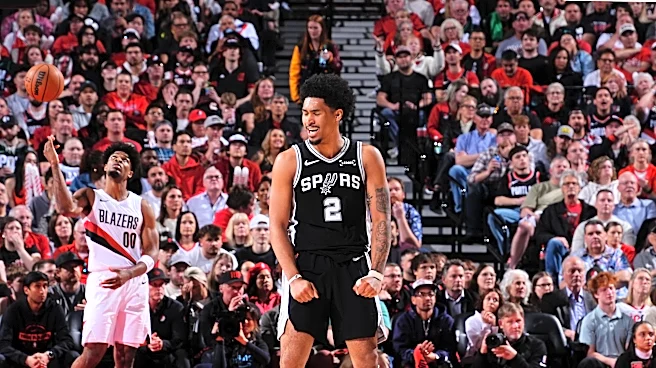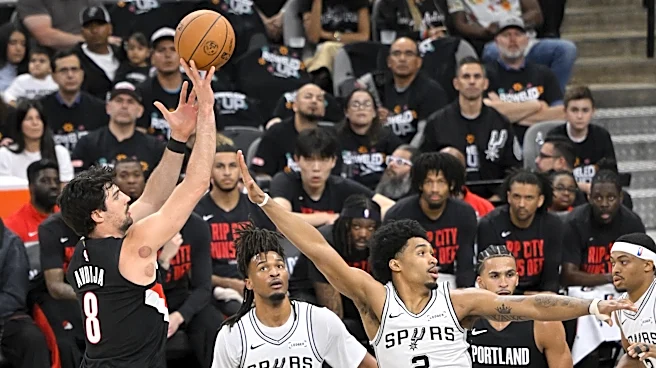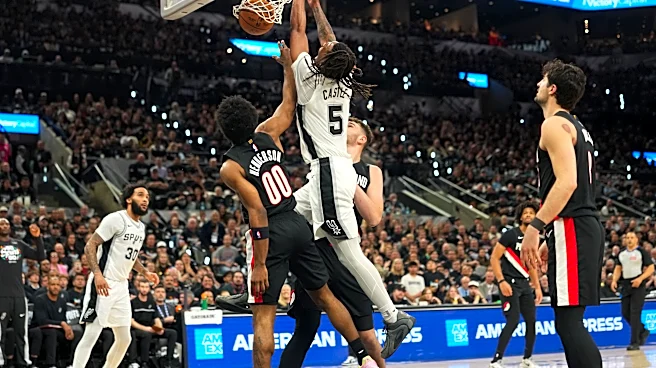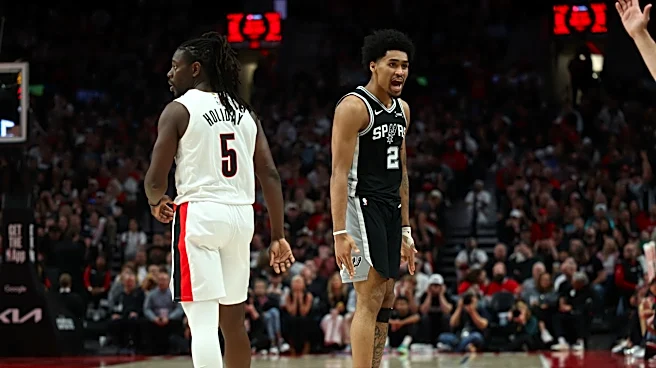






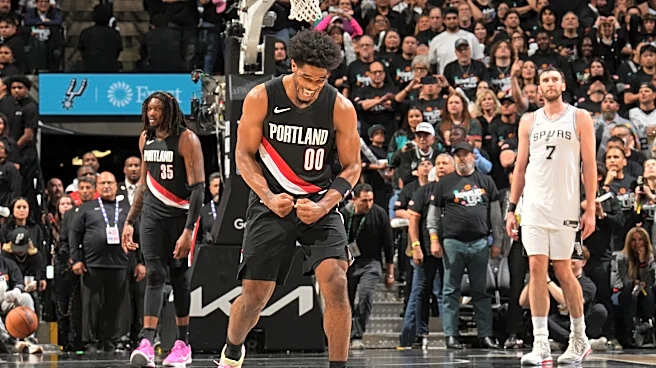

All week, I heard the refrain that Wemby’s concussion in Game 2 was exactly what this young Spurs team needed. The logic is simple: Team’s with no playoff experience must endure the pain and toil of playoff hardship before savoring the fruits of victory. As such, the loss of Victor for a few games in the first round might be a blessing in disguise by providing this young team the trial by fire it needs without actually generating an early playoff exit.
Generally speaking, I disagree with this assertion.
First and foremost, Portland (who I genuinely like as a team) is probably not good enough at present to provide the kind of challenge that San Antonio can truly grow from. Second, the Spurs need to mature as a complete unit. Put another way, finding a path to victory without Wemby today is – while temporarily vindicating – not an viable path to generating wins in late-stage playoff games against much better competition.
Having said all this, perhaps I’m being too negative. After all, in contrast to Game 2 (where the Silver and Black’s inexperience manifested itself as an epic fourth quarter collapse), this game was defined by the Spurs’ gritty second half comeback. Might this accomplishment give San Antonio the confidence it needs as this playoff run continues? I suppose we’ll find out; in the meantime, there are some key box score highlights to review:
Note: Now that we’ve moved into the postseason, the reference period used for grading changes from the set of regular season games since 2012-2013 to the set of postseason games since 2012-2013. Unless otherwise noted below, this set DOES include play-in games. As of the end of April 21, 2026, this group include 1,135 games.

Factors that decided the game
- The Spurs had some key things going against them in this game, including a turnover margin of +4, two fewer offensive boards, and even a mild disadvantage in free throw attempts (-1) due to more fouls.
- However, San Antonio did put together a much more efficient offensive attack from everywhere, including FG%, 3P%, and FT% margins of +6.02, +11.64, and +9.61 percentage points.
- As a result, the Spurs made four more total shots, two more threes, and two more free throws, accounting for a total margin of victory of +12.
Rare Box Score Stats
- This is the 28th postseason game since the start of 2012-2013 (1,143 cases) in which the winning team had FGA, 3PA, and FTA margins that were as bad or worse than -3, -5, and -1, respectively. Furthermore, it is the ONLY contest in this set where the winner made more total field goals, threes, and free throws.
- Dylan Harper put up 27 points on 75% shooting in 30 minutes of play, a feat that only 18 other players have accomplished or bested in a true playoff game (i.e., no play-in games) since the start of the 1996-1997 postseason. In this set of 19 performances (no player has accomplished the feat more than once), only three have included 10+ rebounds.
- As Wemby has said, offense isn’t just points, and defense is half the game. Carter Bryant’s performance last night vividly supported this view, as he put together just the 3rd playoff bench performance in the last 30 seasons that included 6+ rebounds, 4+ assists, 3+ blocks, and no more than three points. Of those three, Bryant’s plus/minus of +17 ranks second.
What are Team Graded Box Scores?
Very briefly, these box scores grade winner-loser differentials for basic box score statistics, with the grade being based on the winning team’s differential relative to other NBA winners during a defined reference period. Think of it like a report card for understanding how a given winner performed relative to other winners. The reference period used runs from the start of the 2012-2013 season to the latest date of play, including only games in the same season category (i.e., regular season and playoff games are not compared to each other).
Data Source: The underlying data used to create these box scores was collected from Basketball Reference. In all cases, the data are collected the morning after the game is played. Although rare, postgame statistical revisions after data collection do occur and may affect the results after the fact.