

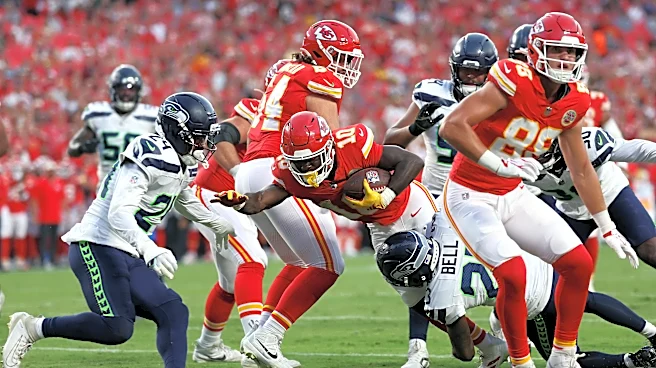

In the 20-3 loss to the Seattle Seahawks, the Kansas City Chiefs’ defense played the bend-don’t-break style that coordinator Steve Spagnuolo has sharpened throughout his time in Kansas City. Through Week 7, the Chiefs still allow the second-fewest points per game in the NFL (17.2).
The defense kept the team in this game — a better kick from 45 yards by Harrison Butker would have brought the game to within a score in the fourth quarter — but regardless of the point total, the Seahawks’ offense stayed
on the field.
Seattle converted 11 of 16 third downs and sustained five possessions for nine or more plays. The Seahawks ran 19 more plays than Kansas City and held possession for nearly 12 more minutes.
The three longest drives were key turning points, and each featured third-and-longs the Seahawks converted:
- 1st half: 15 plays and 96 yards for a field goal
- 3rd & 9 and 3rd & 7 converted
- Second quarter: 10 plays and 66 yards for a touchdown
- 3rd & 6 and 3rd & 9 converted
- Third quarter: 13 plays and 62 yards for a field goal
- 3rd & 9 and 3rd & 10 converted
Let’s take a closer look at why the Chiefs couldn’t get off the field when it needed to in Seattle:
Man coverage lapses
Early on, Spags deployed man coverage on third downs, and quarterback Sam Darnold targeted slot cornerback L’Jarius Sneed regardless of the matchup. On the opening drive, he allowed a chains-moving third-down catch out of the slot, but the Chiefs eventually forced a punt.

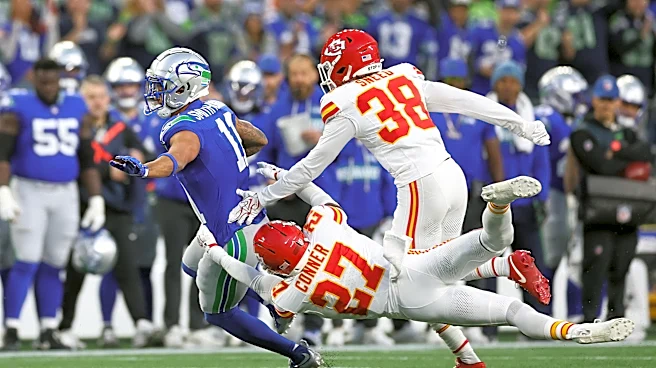
Third-and-9 on the second drive: With wide receiver Jaxon Smith-Njigba, the reigning NFL Offensive Player of the Year, as the primary threat on a pass down, the Chiefs have near-safety help over the top. Here, safety Chamarri Conner brackets Smith-Njigba with cornerback Mansoor Delane in trail-man coverage, taking away a throw at the sticks.
However, slot receiver Cooper Kupp — who goes in pre-snap motion to identify Sneed as his man-coverage defender — will receive the pass with a quick pass over the middle. Kupp sets Sneed up outside and beats him back across; there’s no help over the middle because linebacker Nick Bolton is in the pass rush.
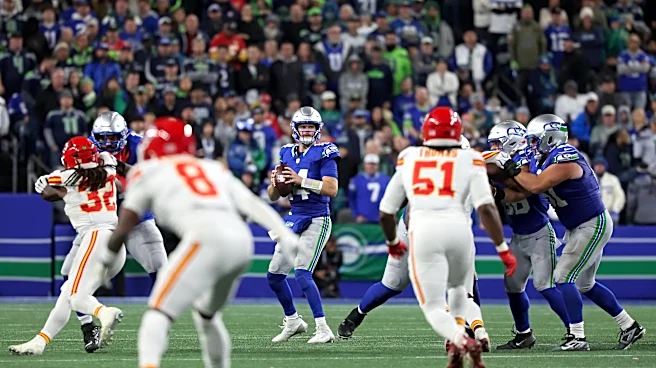
Darnold’s quick release was a theme of the game, especially in the first half. He averaged 2.45 seconds to throw, the third-fastest time of his career according to NFL Next Gen Stats. He completed 13 of 14 passes when throwing in 2.5 seconds or less.

Third-and-7 on the same drive: In a similar man-coverage setup, it’s now Sneed who is manned up on Smith-Njigba, with safety Alohi Gilman anticipating an out-breaking throw at the sticks in help coverage. However, Sneed loses the inside leverage by overdoing his jam at the line of scrimmage. Gilman cheating outside opened the floodgates for the 33-yard catch-and-run over the middle, and Conner’s poor angle on the missed tackle didn’t help either.
The Seahawks relentlessly attacked the Chiefs’ man coverage over the middle until Spags adjusted.
Not finishing the play
When the Chiefs turned to zone coverage, typically when closer to or in the red zone, it wasn’t as easy for Darnold to find an option to move the chains. Kansas City held Seattle to a field goal on the previously discussed possession by playing tight zone coverage on the ultimate third down.

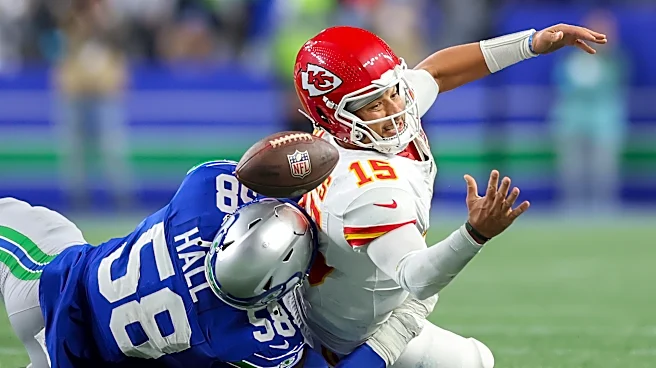
Third-and-6 from late in the first half: The Chiefs dropped seven into zone coverage with a four-man rush, and Darnold rolls to his right after not his initial reads are taken away. That sets up defensive end George Karlaftis to wrap him up for a game-changing sack, leaving Seattle on fourth down and deciding to kick a roughly 60-yard field goal.
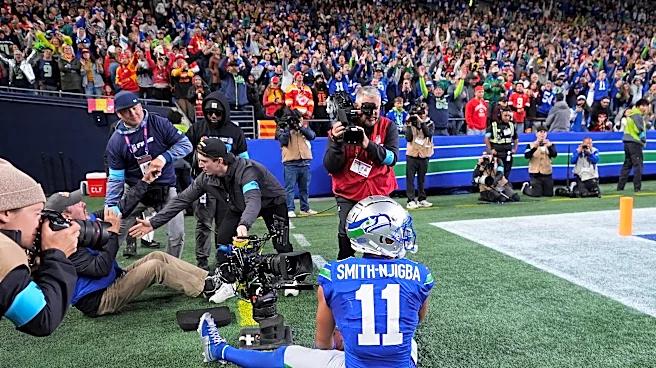
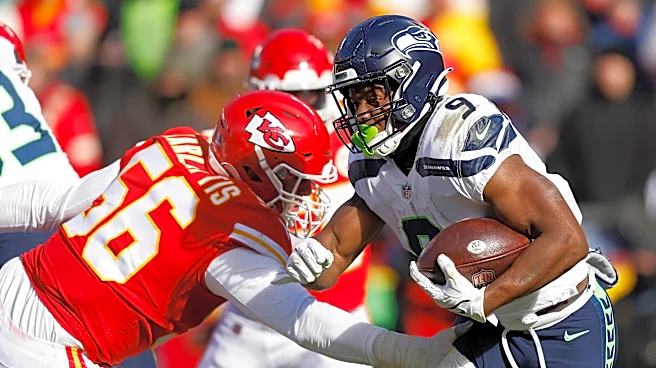
Instead, Darnold jukes Karlaftis and outruns defensive tackle Chris Jones to the sticks. It was one of the first times the Chiefs’ defensive lineman had a chance at a sack, and No. 56 in particular couldn’t come through. A few plays later, Darnold delivered a perfect pass in rhythm to Smith-Njigba, who caught the touchdown down the sideline through tight coverage by Delane on third-and-9.

Third-and-9 in the third quarter: Another four-man rush with zone coverage forces Darnold out of the pocket, and without a throwing option, cornerback Nohl Williams and linebacker Nick Bolton can’t react in time to stop him from crossing the marker. A late fake by Darnold fools Bolton.

Third-and-10 from the same drive: Zone and a four-man rush work once again, with a stunt by Karlaftis dissuading Darnold from a downfield throw and forcing a checkdown. Yet Bolton and Williams are again too passive in rallying to the ball, allowing the running back to gain the first down.
Edge rusher R Mason Thomas’s visible frustration after the play, in which he pressured Darnold, reflects how many in Chiefs Kingdom felt. Nothing seemed to go Kansas City’s way on third-and-long in Seattle.
The bottom line
Despite a frustrating night, the Chiefs’ defense was close to having a winning formula. The problem is, we say the unit is “close” way too often when analyzing negative plays, whether it’s the pass rush or coverage. On the flip side, it suggests that the players on the field simply need to perform better.
However, there need to be personnel wrinkles, including at slot cornerback. Sneed (14 snaps) seemed to see his playing time decrease as the night went on, and that should continue as Chris Roland-Wallace rises in that same position.
Another wrinkle that the Chiefs teased on Sunday night was second-year linebacker Jeffrey Bassa playing a Quarterback-spy role. He was in on two third-down red-zone stops as part of a unique defensive formation that deployed just two pass rushers, flooding coverage with as many defenders as possible.
Look out for Bassa on the field as a spy moving forward, especially against mobile quarterbacks like the Buffalo Bills’ Josh Allen.