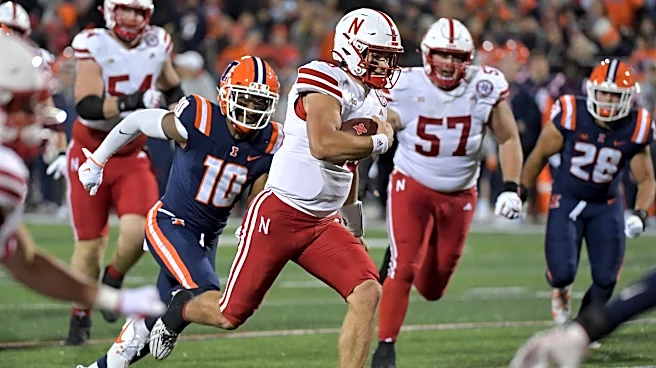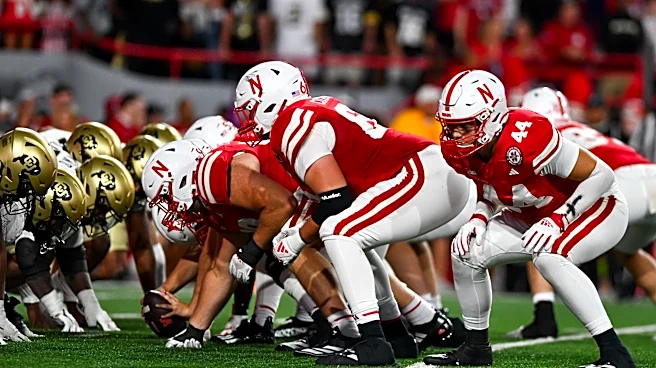

Geep Wade is assembling the pieces of Nebraska’s offensive line of the future, and the atmosphere inside Memorial Stadium is helping make Lincoln an increasingly attractive destination for elite recruits.
There is no shortage of excitement surrounding Nebraska’s future on offense. With highly touted quarterback Trae Taylor leading the 2027 recruiting class and a growing collection of talented playmakers heading to Lincoln, Matt Rhule is putting together the ingredients for something special.
But anyone
who has watched Nebraska battle the Big Ten’s heavyweights over the past few seasons knows that having talented players at the skill positions is only part of the equation.
If the Huskers genuinely want to challenge the likes of Ohio State, Oregon and Michigan, they need to build an offensive line capable of standing toe-to-toe with the best defensive fronts in college football.
Not just for a quarter or a half, but for four quarters.
That means recruiting bigger, stronger and more athletic linemen, developing them properly and ensuring that injuries don’t leave the offense scrambling for answers.
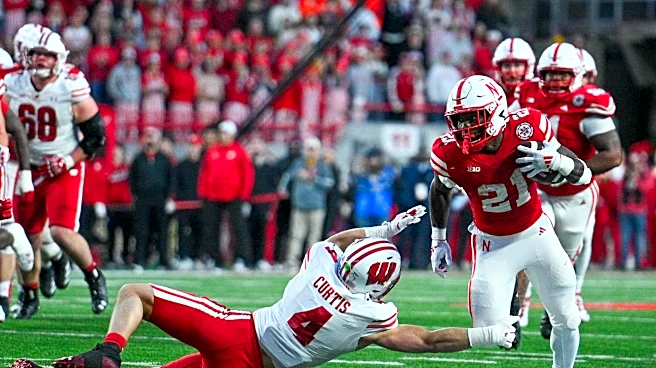
Fortunately, offensive line coach Geep Wade appears to be making significant progress on the recruiting trail. And he has a rather useful recruiting tool at his disposal: 90,000-plus passionate Nebraska fans who continue to make Memorial Stadium one of the most intimidating and memorable environments in college football.
Geep Wade Is Building Something in Lincoln
Nebraska’s 2027 recruiting class is already providing plenty of reasons for optimism, particularly along the offensive line.
The Huskers have assembled a five-man group featuring Jordan Agbanoma, Timi Aliu, KD Jones, Barrett Kitrell and Matt Erickson.
What makes this collection particularly encouraging is the variety of players Nebraska has been able to attract.
Agbanoma and Aliu represent the kind of recruiting victories Nebraska needs to produce more frequently. Convincing talented prospects from Georgia to head north to Lincoln is no small achievement, particularly when the Southeast is overflowing with programs that can offer sunshine, proximity to home and established championship credentials.
Closer to home, Kitrell and Erickson reinforce the importance of keeping the region’s best prospects in the fold.
Erickson’s imposing 6-foot-7½ frame gives Nebraska a developmental tackle with tremendous physical upside, while Kitrell brings the kind of toughness and interior presence that has historically been associated with successful Big Ten offensive lines.
The common thread is that Nebraska appears to be recruiting with a clear purpose.
Rather than looking for immediate fixes every offseason, Wade is putting together a group of young linemen who can grow together and potentially form the backbone of Nebraska’s offense for several seasons.
That is how sustainable success is built.
The Big Ten Doesn’t Give You Time to Catch Up
The reality of playing in the Big Ten is that there are very few opportunities to hide weaknesses along the offensive line.
Ohio State and Oregon recruit defensive linemen who look like they belong on NFL rosters before they have even completed their sophomore seasons. Michigan has spent years demonstrating how controlling the trenches can turn a good football team into a championship contender.
Nebraska has made considerable progress in becoming more competitive against these programs, but there is still a difference between making life difficult for an elite opponent and consistently getting the better of them.
That difference often becomes obvious in the fourth quarter.
When the game is on the line, can Nebraska’s offensive line create enough space to pick up three yards when everyone in the stadium knows the ball is being handed off?
Can it give its quarterback an extra second against a pass rush loaded with future professionals?
And perhaps most importantly, can the Huskers rotate players without experiencing a significant drop in performance?
Those are the questions Nebraska needs to answer if it wants to graduate from being a dangerous opponent to becoming a genuine contender.
The answer begins with stacking talented offensive line recruiting classes year after year.
Memorial Stadium Is Doing Its Part
One thing Nebraska certainly doesn’t need to manufacture is enthusiasm.
The Halloween showdown against Washington provided another reminder of just how powerful the Nebraska football experience can be for visiting recruits.
The Huskers might not have delivered the result everyone wanted, but the spectacle surrounding the game was another matter entirely.
A packed Memorial Stadium, a sea of black in the stands, the anticipation of a nationally significant matchup and a fanbase that treats every home game like an event worth planning the entire weekend around.
For young players accustomed to watching major college football games on television, experiencing that environment firsthand is an entirely different proposition.
And judging by the positive reactions emerging from the recruiting weekend, it is making an impression.
Prospects have spoken enthusiastically about the atmosphere, the energy inside the stadium and the way Nebraska supporters embrace their football team. The enthusiasm surrounding the visit experience has been particularly encouraging considering the Huskers couldn’t reward the crowd with a victory.
That is an important distinction.
Nebraska is asking elite prospects to buy into what the program is becoming, rather than simply pointing to a trophy cabinet full of recent championships.
The fans are helping sell that vision.
There is something compelling about a program that can continue attracting enormous crowds and creating extraordinary matchday experiences despite years of frustration.
Recruits can see what Nebraska football means to the state. They can imagine what Memorial Stadium might look and sound like if the Huskers begin competing for Big Ten championships.
For offensive linemen in particular, there is an appealing opportunity to become part of the group that helps restore Nebraska’s reputation as a physical powerhouse.
The atmosphere might get a player through the door, but Wade and his staff still need to convince him that Lincoln is the right place to develop.
So far, the combination appears to be working.
The 2028 Offensive Line Targets Are Seriously Impressive
Nebraska’s Halloween recruiting weekend offered a glimpse of just how ambitious Wade and his staff are becoming.
Among the offensive line prospects visiting Lincoln were Antijuan Wilkes Jr., Bryce Smalls, Josiah Eney, Amaree Joshua and Vincent Shields.
This wasn’t a collection of developmental prospects hoping to attract their first major scholarship offers.
These are highly regarded young players who are attracting attention from some of the biggest programs in college football.
Wilkes, a five-star offensive tackle from Detroit’s Cass Tech, is exactly the type of prospect Nebraska needs to start landing if it wants to close the talent gap with the conference’s elite.
At approximately 6-foot-5 and 265 pounds, he already possesses an impressive foundation, with considerable room to add strength as he progresses through high school.
Joshua, listed at approximately 6-foot-7½ and 288 pounds, brings the kind of size that immediately catches the eye. Shields, at 6-foot-6 and 275 pounds, offers another intriguing tackle profile.
On the interior, Smalls and Eney are both listed around the 300-pound mark, giving Nebraska the opportunity to pursue players who already have the physical dimensions associated with high-level Big Ten football.
Perhaps the most encouraging development is the sustained interest from some of these prospects.
Smalls has already made four visits to Lincoln. That is a significant commitment of time for a young player with numerous college options.
Players don’t repeatedly make those journeys without having genuine interest in what a program is offering.
The challenge now is to turn that familiarity into a recruiting advantage.
Nebraska has made itself a serious consideration for several talented young offensive linemen. The next step is persuading them that they can achieve their ambitions in Lincoln.
Recruiting Talent Is One Thing. Developing It Is Another
Nebraska fans have heard plenty about promising offensive line recruits over the years.
Some have developed into excellent players. Others have struggled to make the transition from high school football to the weekly physical demands of the Big Ten.
That is why Wade’s ability to develop players is arguably as important as his recruiting success.
His previous work at Georgia Tech offers encouragement. The Yellow Jackets developed an effective rushing attack while also protecting their quarterbacks at an impressive rate during his tenure.
But the real test will come when Nebraska’s younger recruits begin working their way into the lineup.
An 18-year-old who weighs 300 pounds might look physically ready for college football, but there is a considerable difference between dominating high school opponents and handling an experienced Big Ten defensive tackle.
Technique, footwork, strength, communication and understanding defensive schemes all take time to develop.
Nebraska needs to reach a point where young linemen aren’t being thrown into difficult situations simply because there is nobody else available.
Instead, the ideal scenario is for them to spend a year or two learning the system, developing physically and competing against quality teammates before being asked to carry major responsibilities.
That is where recruiting depth becomes so important.
A strong five-man offensive line is valuable. A roster with ten or twelve genuinely capable offensive linemen is what allows a program to survive the physical punishment of a Big Ten season.
Protecting Nebraska’s Most Important Investment
There is another reason why these next two offensive line recruiting classes carry so much significance.
Trae Taylor.
Nebraska has secured a commitment from one of the country’s most exciting quarterback prospects, and expectations surrounding his arrival are understandably enormous.
Taylor has the potential to become the face of Nebraska’s offense, but even the most gifted quarterback can only do so much when he is constantly under pressure.
The Huskers have an opportunity to build an offensive line that develops alongside him.
The 2027 class will arrive at roughly the same time as Taylor, while the 2028 group could provide another wave of talented young players as Nebraska’s offensive identity begins to take shape.
Imagine the benefits of having a quarterback and his offensive line spend multiple seasons learning the same system, building relationships and developing the kind of understanding that cannot be manufactured overnight.
That is a far more attractive long-term proposition than continually searching the transfer portal for experienced players to fill gaps.
The portal will always have a role, particularly when Nebraska needs immediate experience or an upgrade at a particular position.
But the foundation of a successful offensive line should be built through high school recruiting and development.
And with Taylor already helping attract attention from other elite offensive prospects, Nebraska has an opportunity to create something that extends well beyond one recruiting cycle.
Nebraska Has the Ingredients. Now It Needs to Put Them Together
There is a growing sense that Nebraska is becoming a more attractive destination for elite high school prospects.
The facilities are impressive, the coaching staff is developing relationships across the country, and the 2027 recruiting class demonstrates that talented players are buying into Rhule’s vision.
Then there are the fans.
For all the frustration surrounding Nebraska’s inability to consistently get over the hump against quality opponents, the supporters continue to provide the kind of game-day experience that most programs can only dream about.
That matters.
When a recruit walks into Memorial Stadium and sees the stands packed with passionate supporters, he gets a glimpse of what playing meaningful football in Lincoln could look like.
When those same fans continue supporting the team despite disappointing results, it sends another message about the importance of Nebraska football.
But the atmosphere alone won’t close the gap with Ohio State, Oregon or Michigan.
Nebraska needs to capitalize on that advantage by continuing to recruit and develop the kind of offensive linemen who can change the outcome of those heavyweight matchups.
The 2027 class is a promising start. The 2028 targets demonstrate that Wade isn’t interested in lowering the bar.
Nebraska has the quarterback of the future, a fanbase desperate to celebrate something special and an offensive line coach who is attracting serious talent.
Now comes the difficult part: turning those ingredients into an offensive line capable of taking Nebraska from competing with the Big Ten’s best to beating them.
And if the Huskers can get that right, the roar inside Memorial Stadium might become even louder.
GBR