

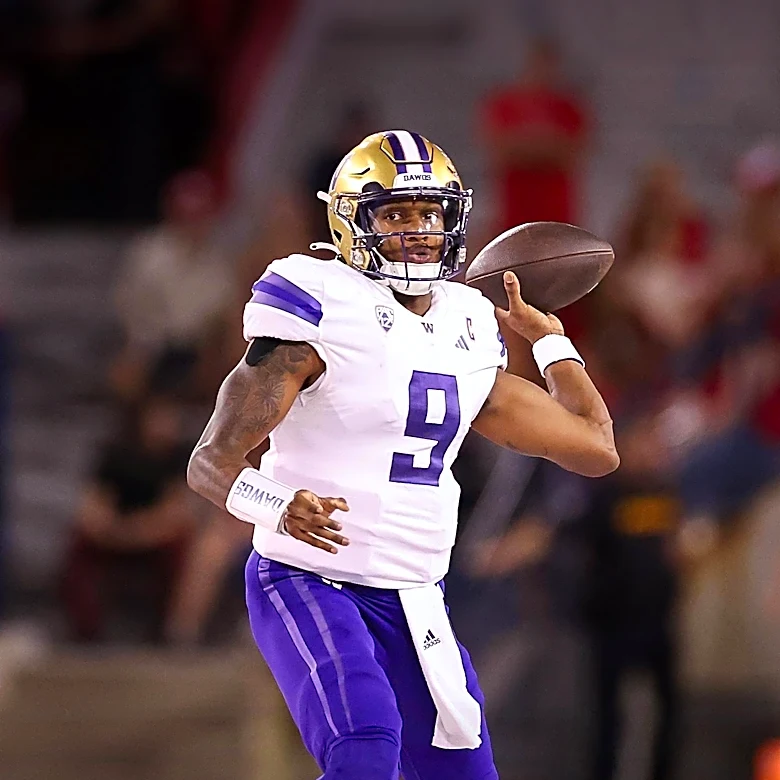
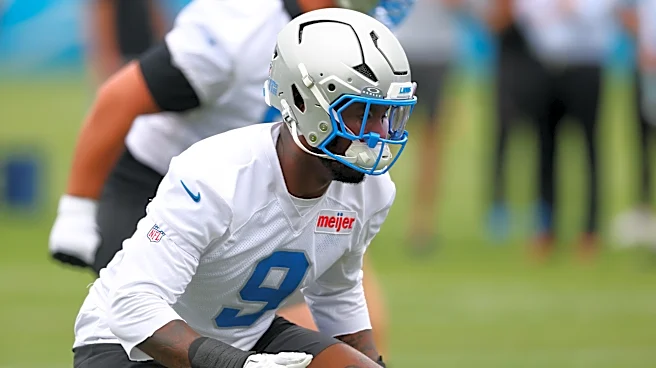
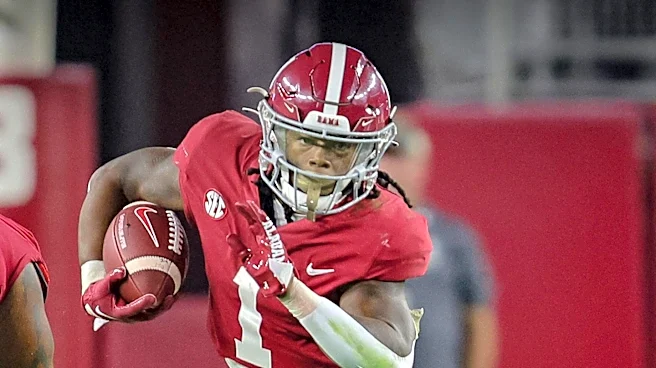



With the Detroit Lions’ 2026 training camp on the horizon, we are bringing back our roster preview series to help you prepare for the fun ahead. If you’re not familiar with this series, we guide you, position-by-position, through the roster, examining the starting, reserve, and specialty roles, which players are competing for which jobs, and projecting how the Lions will approach each situation.
So far in this series, we have already covered the quarterback position. In this installment, we will examine
the Lions’ running backs room, speculating on current and future roles, and discussing how many players from this group could make the 53-man roster.
Roster construction
Under the Brad Holmes and Dan Campbell regime, the Lions have typically kept between three and four running backs on the active roster and at least one on the practice squad, with the number of players being dictated by injuries. However, a special teams rule change altered the Lions’ approach in 2024, and they’ve opted to keep a firm four running backs on the active and game-day rosters over the past two seasons.
Let’s take a look at what they’ve done in the previous five seasons:
- 2021: The Lions opened the season with four RBs and closed with five (mainly due to injuries), though only three were active most game days.
- 2022: The Lions opened the season with four RBs, and once again only kept three active on gameday.
- 2023: The Lions opened with three RBs (Jahmyr Gibbs, David Montgomery, and Craig Reynolds), increased to four with injuries at the position, then reverted back to three as they got healthy again.
- 2024: The Lions kept four RBs (Gibbs, Montgomery, Reynolds, and rookie Sione Vaki) on the active and game-day roster for the entire season, mainly for special teams purposes.
- 2025: Opened the season with five RBs (Gibbs, Montgomery, Reynolds, Vaki, and Jacob Saylors) as Vaki dealt with injuries over the first two months of the season. Once Vaki was healthy, Reynolds was released in Week 12, and the Lions finished the season with four RBs.
A clear RB1 and a new RB2
As the team increasingly leaned toward Gibbs as their top option at running back, Montgomery reluctantly asked for a trade this offseason in hopes of maximizing his career potential. The Lions granted his request and dealt him to the Texans, where he would step back into an RB1 role.
The message was now crystal clear: Gibbs was indeed headed for a workhorse role as the Lions’ undisputed RB1.
“He’s going to be our bell cow now. He really became more of that last year, but we’re going to hang our hat on him quite a bit,” coach Dan Campbell said in OTAs. “We’re going to do a lot of things we feel like he does well. Now, I’ve mentioned this before. He can run everything that we’ve got. He can run every scheme that anybody’s ever run. He’s not just an outside runner. He is not just a space runner. He can create his own space in the middle. And some of his biggest runs have been gap scheme right down the pipe, where he’s had patience, and found it, and guys blocked it up well. So, we’re going to ask a lot of him.”
While the RB2 role looks like it will be scaled back in 2026, the Lions weren’t content to rely solely on their returning depth (Vaki and Saylors). On the first day of the free-agent tampering period, the Lions agreed to terms with former Chiefs starting running back Isiah Pacheco to add further depth.
Pacheco has struggled since breaking his leg in 2024, but the Lions love his fit as their RB2 and believe the role can feature his strengths as a short-yardage runner and pass blocker.
The battleground
What does the current depth chart look like?
As we discussed in the previous section, Gibbs has assumed the Lions’ RB1 role, and Pacheco is the frontrunner for RB2. Most expect that the next back on the depth chart will be Vaki, who both general manager Brad Holmes and Campbell have hyped up this offseason as a player they are expecting to level up his game. Saylors should check into training camp as RB4, leaving Jabari Small and Kye Robichaux (who is coming off an injury that cost him his rookie season) to fight for the roster’s bubble spots.
Can Vaki disrupt the presumed order?
Vaki’s potential contributions on offense this season could be a bit of a wild card for the depth chart. If Pacheco struggles to produce outside short-yardage situations, Vaki’s athleticism and raw talent could give him an opportunity to see the field more than most expect.
“Pound for pound, he is one of our best athletes; he is explosive, he’s strong, he’s quick; there are things about him. But the running back position is a little raw,” Campbell said of Vaki this spring. “He is another guy where our eyes are open, […] Listen, we want to move the football, and we want to win, so if he helps us do that, we are going to find a way to put him on the field.”
In 2024 training camp, Vaki told Pride of Detroit that his goal was to get 1,000 reps at running back before he could make a meaningful impact on offense. He’s spent the last two seasons working toward that goal, and while an injury-riddled 2025 slowed his progress, he’s surely nearing his target. Will he get there this season? Training camp will provide a lot of answers.
Could the Lions revert to just three running backs?
This is the most interesting running-back question I hope to get answered in training camp.
With the new special teams rules in place and special teams coordinator Dave Fipp’s preference for bigger bodies on kick returns, rostering four running backs—two primarily for special teams—has made sense. However, with roster spots at a premium and Pacheco getting some looks on kick returns in the spring, there’s room to speculate if the Lions could elect to stick with only Pacheco and Vaki as reserves. Additionally, if Fipp decides to expand his returner pool to include smaller, speedier players, it may further reduce the need for multiple reserve running backs, also putting the RB4 spot in question.
Tracking special teams reps during training camp and the preseason should be a strong indicator of the Lions’ plans.