




Eleven days after Sunderland were relegated via the play offs on away goals, the recriminations were in full swing.
Caretaker manager Bob Stokoe was helping chairman Bob Murray identify full-time targets – recently sacked Ipswich manager Bobby Ferguson was said to be the frontrunner, while other candidates named in The Journal included Scunthorpe boss Mick Buxton, Sheffield Wednesday assistant and former Sunderland coach Peter Eustace, Middlesbrough’s Bruce Rioch and Colin Todd, and Bobby Saxton,
who was coaching at Preston.
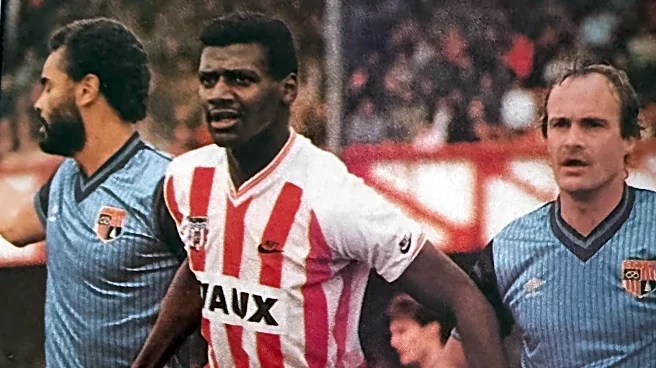
The attention of the club captain, Gary Bennett, however, was still firmly on the previous full-time incumbent of the Roker dugout, and in an interview with Match magazine, Benno let rip.
Bad management is largely to blame for our downfall. Lawrie couldn’t cope with a club of this stature.
The stories about the huge amounts of money he and some of the older players he brought in were earning caused so much unrest in the dressing room.
Initially I didn’t see eye-to-eye with him. That changed somewhat when he made me captain. But there were a number of other players he couldn’t get on with at all.
Benno believed that McMenemy had tried to repeat what he’d done at Southampton, but it didn’t suit a second division club. Without naming names, he alluded to McMenemy’s signings being unable – or maybe unwilling – to meet the demands of second tier football.
At Southampton he surrounded himself with good, older professionals and it worked for him. Here it didn’t. The players he brought in had spent their careers in the First Division and weren’t suited to the type of football a division lower.
Their ball skills, positional sense and passing ability didn’t count for as much as their ability to run for 90 minutes and tackle hard.
They couldn’t cope with players closing them down and in the Third Division we will need more basic players who are prepared to run all day to get us back up.

The skipper felt McMenemy’s treatment of some of the better players he’d inherited led to what followed – and stated he’d likely leave Roker in the summer.
He upset a lot of players by playing them out of position. No one really wanted to leave the club, but the likes of Barry Venison, Nick Pickering and Shaun Elliott took it as a hint he didn’t want to keep them.
Being relegated was the worst moment in my life and as captain. I feel it’s something of a black mark on my record.
Personally I’ve had three good years up here, but if any good offers came up I would have to consider moving.
Of course, Benno ended up staying at Roker Park for a number of years to come, leading the team back up to Division Two at the first attempt, under the management of Denis Smith, who Murray tempted from York City.
On the managerial merry-go-round was Bobby Saxton, who replaced Smith at York, and thankfully sold Marco Gabbiadini to the club, despite Smith having a ‘gentleman’s agreement’ not to sign any York players for the first 12 months.
“That deal was sorted out between me and Bobby,” said Smith later.
Bobby Ferguson meanwhile had just left Ipswich after losing in the play offs at the other end of the table – he’d overseen relegation the previous year but had been given the opportunity to get the club back up, which he almost accomplished. He moved to Al-Arabi in Kuwait, working as a coach under Dave Mackay before returning to England – and he would turn up as part of Malcolm Crosby’s coaching team in 1992, instigating Terry Butcher’s arrival as a player, and then as manager too.
Mick Buxton, another name on the list, would also be part of Butcher’s coaching team, although it was always felt he was a ‘Murray man’, given his West Yorkshire connections. Buxton, of course, would ultimately take over from Butcher, and Bobby Saxton also ended up coaching at Sunderland too – indicating the list The Journal reported back in 1987 likely had some substance behind it.