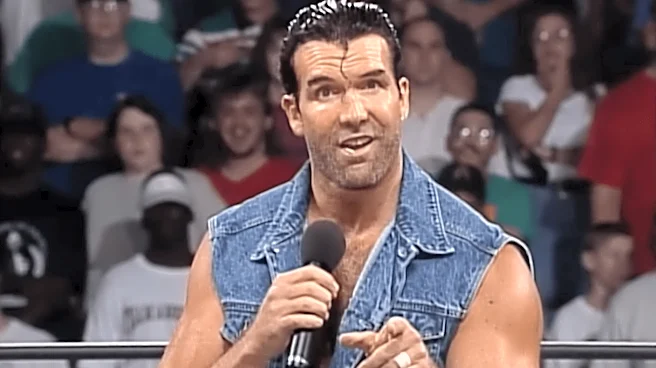

Wrestling fans are likely to be bombarded with tributes to WCW as today marks the 30th anniversary of Scott Hall’s declaration of war on the company, which led to the birth of the nWo and ignited a new boom period in pro wrestling.
In short, it was an invasion angle unlike anything wrestling fans in America had ever seen, the culmination of a years-long beef between WWE and WCW.
For years, the two sides never acknowledged each other outright, though they took subtle shots from afar. But by 1996, WWE
was running skits openly mocking its former stars, Hulk Hogan, Randy Savage, and Gene Okerlund, who were now working for the other side.
WCW, meanwhile, was giving away the results of WWE’s taped episodes of Raw as a way to encourage viewers to stay tuned to its show, Nitro, which aired live.
Man, it was ugly.
And then Scott Hall showed up.
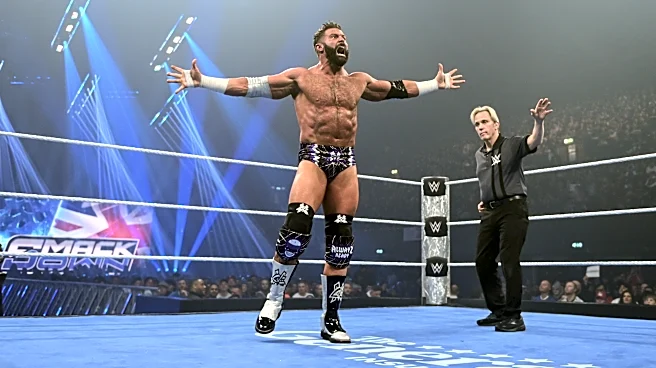
Previously, Hall had an unremarkable run in WCW, to put it kindly, before jumping to WWE and making it big as Razor Ramon. On this date, he returned to WCW after securing a big-money deal. Weeks later, Kevin Nash, who had some putrid gimmicks years prior in WCW but had hit the lottery in WWE as Diesel, would join him.
Together, they declared war on WCW, making it seem as if they were sent by WWE. They were later joined by Hulk Hogan, who, despite wrestling for WCW since 1994, was still seen as the ultimate WWE guy.
What ensued led to not just one of the hottest storylines in WCW and pro wrestling history, but it also escalated the rivalry between WCW and WWE, known as the Monday Night War.
Since then, promotions have tried to replicate that feeling, but, if we’re honest, they can’t. The nWo was a product of its time.
And that time, great as it was, was 30 years ago.
THIRTY YEARS AGO.
Do you know what getting old is? Getting old is realizing that the nWo is to young fans in 2026 what Bruno and the territory era once were to me in 1996. Back then, I couldn’t give two flips about all that.
Why?
Because that was OLD wrestling. And to me, 19 then, old wrestling was, well, OLD.
The action wasn’t as fast as I had become accustomed to. The wrestlers weren’t as physically impressive as the stars of my generation. Most of all, my wrestling was in color, except for the nWo, whose colors and early vignettes, ironically, were in black and white.
But that was different. That was cool.
It wasn’t until I started getting older that I took more interest in wrestling that took place before 1985, the year I became a fan. It would always be something brief that would pull me in: a promo from “Superstar” Graham, an angle, such as Ole turning on Dusty in the Omni, or a move, like seeing someone in 1950-something hitting a powerbomb.
These things fascinated me. Learning that a French Canadian played a German villain, Hans Schmidt, so well that he nearly got deported, tickled my fancy. Can you imagine a guy of one ethnicity pretending to be of another nationality and getting over huge as a result? Surely, that would never work in 2026.
It never ceases to amaze me how wrestling recycles angles and tropes that go back before there was even television, much less the internet. Sadly, not a lot of wrestling fans take that same interest, which is surprising because to be considered a “smart fan,” shouldn’t you have some basic appreciation, much less knowledge, of the past?
History paints a very vivid tale of this genre we all love so much. If you look closely, you’ll see that history, for better or worse, also repeats itself.
Too bad few fans stop to appreciate it. That’s a shame, but it’s also their loss because when it comes to wrestling’s past, I’ve got two words for ya: too sweet.