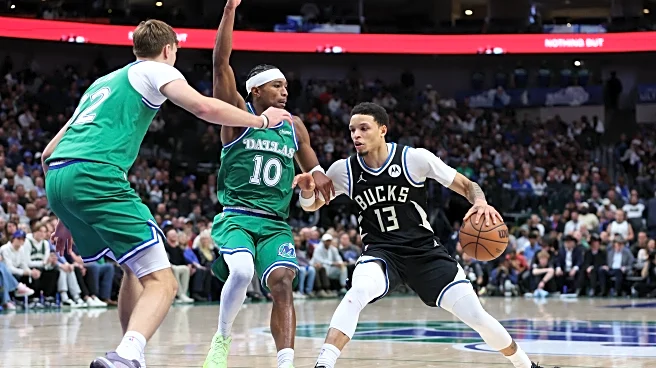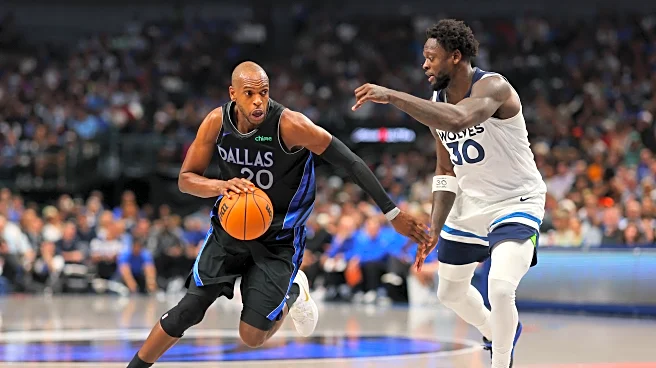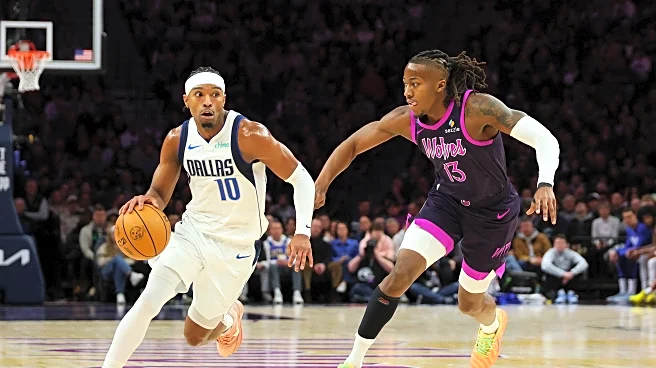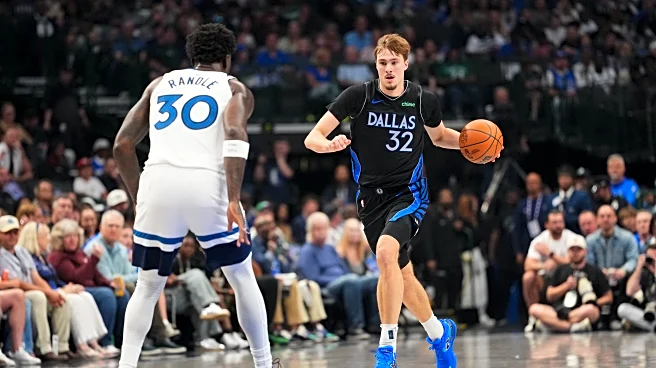

The Dallas Mavericks continued their slide Monday night, getting blown out at home in a 124-94 loss to the Minnesota Timberwolves in a game that got out of hand early and never recovered. Dallas showed brief flashes on offense, but Minnesota’s size, ball movement, and physicality quickly took over, controlling the flow throughout. Daniel Gafford stood out with 21 points on 9-of-11 shooting, providing efficient scoring inside, while Cooper Flagg finished with 12 points, showing moments as a creator
and defender despite an uneven night overall. Minnesota, meanwhile, attacked from all angles, with multiple players scoring efficiently and racking up 33 assists, consistently creating high-quality looks. By the fourth quarter, the game had already been decided, turning into extended garbage time with both teams going deep into their benches.
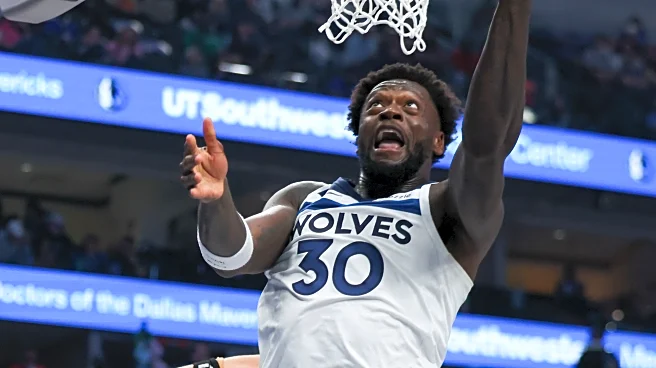
Dallas actually had a few early stretches where the offense looked functional, with Gafford finishing lobs and putbacks and Cooper Flagg getting out in transition for dunks, including one off a Brandon Williams assist that briefly cut into the deficit. There were also moments where Khris Middleton hit turnaround jumpers, and Klay Thompson knocked down a three off a Flagg assist, giving the appearance of some rhythm. But even in those moments, Minnesota’s response was immediate. Julius Randle hit a step-back three, Rudy Gobert finished inside, and Naz Reid spaced the floor with a three, keeping Dallas from ever building real momentum. The biggest issue was consistency: possessions would stall into missed pull-ups, turnovers, or blocked shots, while Minnesota kept generating high-quality looks through ball movement and interior pressure. By halftime, Dallas was already chasing the game, with the Timberwolves controlling both efficiency and physicality, and the gap reflected it as things started to tilt heavily in Minnesota’s favor.
The second half never really had any juice. Dallas got a couple of quick buckets early, mostly through Daniel Gafford’s finishes at the rim, but it never felt like the start of a real run as Minnesota answered every time down the floor. Julius Randle continued to score efficiently, Anthony Edwards got downhill when he wanted, and Donte DiVincenzo hit timely threes, keeping the lead comfortably in double digits. The Mavericks’ offense stayed inconsistent, with missed jumpers and empty possessions preventing any momentum from building. By the fourth quarter, it had fully shifted into garbage time, with both teams going deep into the bench and the outcome long decided.
-29: Max Christie plus/minus
Max Christie was almost invisible in this one, and it’s becoming a larger trend rather than a one-game issue. He finished with just three points on 1-of-5 shooting in 28 minutes, offering very little scoring punch or playmaking, and ended up a minus-29, which matched how the game felt when he was on the floor. It wasn’t just missed shots, either; possessions stalled, drives went nowhere, and there was no real pressure applied to the defense.
Looking at the bigger picture, this has been a rough stretch. Over his last 15 games, Christie has consistently hovered in that low-impact range inefficient shooting nights, minimal scoring output, and very little playmaking to offset it. There have been a few decent performances mixed in, but far too many games where he’s struggled to even reach double digits or influence the game in a meaningful way. For a guard playing real minutes, that’s a problem.
At some point, it becomes more than just a slump, it’s a real question. Dallas needs reliable guard production, especially next to a developing player like Cooper Flagg, and right now Christie just isn’t providing that. If this play continues into next season, it’s fair to start questioning how he fits into the long-term plan.
14: Missed Cooper Flagg shots
Cooper Flagg’s night was productive in flashes, but the efficiency continues to be the swing skill in his development. He finished with 12 points on 5-of-19 shooting, and when you look closer, a lot of those misses came from the in-between areas, such as pull-ups, floaters, and contested midrange attempts, where he hasn’t quite found consistency yet. That’s the key right now. He has already proven he can impact the game at a high level when he’s getting downhill or creating for others, but when defenses take away the rim and force him into that middle ground, the offense starts to stall.
This isn’t a negative long-term. It is actually the exact kind of growth step you want to see. He’s getting to those spots, he’s comfortable taking those shots, and he’s clearly being asked to operate as a primary option. The next step is to turn those possessions into efficient ones. Whether it’s tightening the handle to create cleaner separation, adding touch on floaters, or becoming more decisive with his pull-up game, that in-between scoring will unlock everything else. Because once he can consistently punish defenses there, it becomes much harder to scheme against him, and nights like this, where the volume is there, but the efficiency isn’t, start to turn into real offensive production.
45: Timberwolves’ three-point percentage
The defensive numbers from this game were not just bad. They were revealing. Dallas allowed Minnesota to shoot 55% from the field and 45% from three, and those shots rarely felt contested. Too many possessions began with a breakdown at the point of attack, forcing help rotations and leading to open kick-outs or second-chance opportunities. It was not just one player getting hot. It was the entire defensive structure failing to hold up.
That is what makes it a bigger concern moving forward. This is not about one matchup or one night. It is about personnel and identity. Right now, Dallas lacks consistent perimeter defense, especially against teams that move the ball well and have multiple creators. When guards are getting downhill too easily or forcing help early in possessions, it puts the entire defense in scramble mode, and that is when shooters start getting clean looks. Minnesota took full advantage of that by moving the ball, finding the extra pass, and generating efficient offense all night.
This is where the offseason becomes critical. Whether it is through the draft or roster changes, Dallas has to prioritize perimeter defense. They need players who can stay in front, fight over screens, and disrupt rhythm. Until that improves, it will not matter how much size or versatility they have behind the play. Nights like this will keep happening, where the opponent gets comfortable early, finds a rhythm, and never really gets pushed out of it.