


The Jazz are set to have quite a good day this coming June 23rd – having tanked their way into the 2nd overall pick, the night of the first round of the NBA draft will be one of celebration and championship fantasizing. But should Jazz fans leave their schedule open on the 24th as well? Starting in 2024, the NBA draft began to take place over 2 nights with the second round coming the day after the first, and I know I would love to have something to care about for both of them. Currently, the Jazz don’t
have any picks in the second round, but that could easily be changed – with NIL deals increasing in value, more prospects ended up returning to school for another year, leaving the pool of second round prospects a bit shallow and thereby decreasing the value of the picks. However, this is not to say there’s nobody worth a shot in picks 31-60. These second round prospects are almost entirely seniors, and there are a few that I think can step in and play real minutes early on with their years of high-level collegiate experience, even if they lack high level upside. The best NBA teams win at the margins – they find unheralded players, disregarded by other teams and transform them into valuable pieces (Julian Champagnie, Jaylin Williams, and Terrence Shannon Jr. all played key Western Conference playoff minutes this season). Finding value where others don’t is what winners do, and these are 5 opportunities for the Jazz to do just that in the second round. Everyone has different ideas of what the Jazz need, so I’ll organize this list by giving 1 second round sleeper for each position. Additionally, while I’ll try my best to choose players that best fit the needs of the team, you don’t always have that luxury in the second round – there are maybe 5-10 players selected in the second round each draft who last in the league for any significant amount of time, and a good front office finds those players, regardless of position or fit. For the most part, these are the easily-acquirable guys that I believe will be able to hang around the NBA for a solid amount of time.
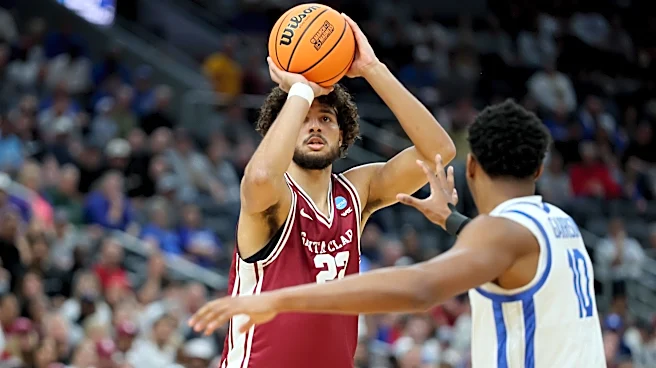
Point Guard: Tamin Lipsey

Team: Iowa State Cyclones
Height: 6’2 (in shoes)
Weight: 206
Wingspan: 6’2.5
Age on draft day: 22 (turns 23 the day after the second round)
Counting Stats: 13.5 PPG, 3.9 RPG (1.4 ORPG), 5.1 APG, 2.3 SPG, 0.0 BPG, 46/32/66 shooting splits
I can read your mind through this screen – currently, you’re scoffing at the very idea of trading into the draft to select a small guard in the year of our Lord 2026. And I understand where you’re coming from. The threshold small guards need to hit to play substantial playoff minutes is so high, and even higher when the small guard isn’t necessarily the most knockdown shooter. However, there does tend to be a place for guards feisty enough to snag one, with Jose Alvarado and Jamal Shead being relevant examples from this current playoffs. That archetype could be especially valuable for the Utah Jazz – two areas that our roster projects to really struggle in are playmaking and perimeter defense, and Lipsey was near the best in college basketball at both of those skills during his senior year at Iowa State. There’s value to be had in having an exceptionally scrappy guard defender. Lipsey won’t ever lock down a star creator, but due to his activity and sheer obnoxiousness, life is harder for whoever he happens to be guarding. Additionally, while he may not be able to contribute to the highest level of offense if his shot doesn’t return to the efficiency of his sophomore season, you can comfortably count on Lipsey to run a passable offense with his pick-and-roll savvy because he did just that for 4 years in the Big 12 where he started every single game he played. Lipsey has two skills that are clearly above-average at the NBA level, with the basketball IQ to match – that may be enough for him to carve out a career in the league, and at around the 50th pick where he is currently projected, that is a great value play.
Other Good Options
- Jaden Bradley
- Bruce Thornton
- Ja’Kobi Gillespie
Shooting Guard: Richie Saunders

Team: Brigham Young University Cougars
Height: 6’5 (barefoot)
Weight: 204.8
Wingspan: 6’8.75
Age on draft day: 24
Counting Stats: 18.0 PPG, 5.8 RPG (1.9 ORPG), 2.1 APG, 1.7 SPG, 0.3 BPG, 49/38/82 shooting splits
This selection is not merely to appease the legion of BYU fans who likely won’t get to bring home the Provo savior AJ Dybantsa. No, Richie Saunders deserves a long, hard look entirely due to his own merits. It all starts with the shooting – if not for his age, this skill would likely be enough to propel Richie to the first round on its own. He’s efficient both running off of screens or shooting off the catch, and he gets so much elevation on his jump shots that it’s unlikely that the additional size he’ll face in the NBA will have much of a negative impact on his percentages. It also helps that Richie is larger than the average player in this archetype – he measured an inch or so taller than I thought he would, with solid length and strength to boot. Poor height and weight are easy indicators that a successful college player won’t be able to replicate that success at the next level, and neither are problems for Saunders. It also means that he’ll likely be able to continue to provide value with his positionally-exceptional rebounding. Richie’s a bundle of energy, and he just knows where to be, and that is best demonstrated with the tangible, game-to-game impact his rebounding brings. I’m excited to see what Richie can look like in a more subdued NBA role – he was asked to shoulder a higher-than-ideal usage at BYU, which didn’t suit his strengths. On the defensive end, Richie isn’t a stopper, but, due to that solid positional strength, he won’t be bullied either. He just needs to be a good enough defender that he isn’t giving up everything he gets from his shooting on the offensive end. As for an NBA comparison, I think he projects pretty similarly to current Jazzman Svi Mykhailiuk, with a ceiling featuring better defense and rebounding. Assuming a full recovery from his ACL injury, Richie is a guy that I’d take at the backend of the first round, and he’s currently being projected late in the second – that’s value that can’t be ignored.
Other Good Options
- Emanuel Sharp
- Otega Oweh
- Kashie Natt
Small Forward: Nick Martinelli

Team: Northwestern Wildcats
Height: 6’6.5 (barefoot)
Weight: 223.6
Wingspan: 6’10
Age on draft day: 22
Counting Stats: 23.0 PPG, 6.2 RPG (2.2 ORPG), 2.0 APG, 0.8 SPG, 0.4 BPG, 51/42/81 shooting splits
Martinelli is often described using the word “unorthodox”, and it suits him nicely. At the NBA draft combine, he said of himself “I’ve truly been blessed with gifts from God, [with] the touch and the way I move”. That is where his unorthodoxy stems – there are very few players who move in the manner and tempo of Nick Martinelli. He’s 6’8 in shoes and looks every bit of 223 pounds. This is a big, strong player who knows how to use his strength, getting to his spots essentially whenever he wants. His method of getting to his spots isn’t one you see in the NBA very often for a small forward, with his game being very post-up centric. At the college level, you can’t blame him for this; the other team very rarely had the size at the small forward position to meaningfully challenge Martinelli. Once he gets to his spots, he is able to showcase his near best-in-class touch on hooks and floaters and flip shots. I haven’t given a comparison yet, and that is because I don’t really have one – there aren’t guys in the league who play like Martinelli did in college. Maybe a mix of Anthony Mason, a splash of Boris Diaw, a sprinkle of Kyshawn George, with a pinch of Kyle Anderson? The hope isn’t necessarily that Martinelli plays like he did in college – a It’s unlikely that his future NBA coach gives him the leeway to post up to his hearts content – so the optimistic analysis of Martinelli bets on his elite touch to retain value in transition situations, off of cuts, catch-and-go’s, and (maybe this is audacious) weak side pick-and-rolls. When considering that his passing is really solid for a guy his size, I think Martinelli has some of the highest creation upside of anyone projected to be taken in the second round. His success hinges on whether his improved shooting numbers from this season are legitimate – if not, he may not provide enough value without the ball to be a feasible rotation player for winning teams. The defense wasn’t catastrophic in college, but don’t expect anything more than a neutral at the high end. You’re betting on the offense, and it’s a bet that I wouldn’t hate the Jazz to take, considering our need for passing and ball handling at any position.
Other Good Options
- Tyler Nickel
- Dillon Mitchell
- Quadir Copeland
Power Forward: Trevon Brazile

Team: Arkansas Razorbacks
Height: 6’9.5 (barefoot)
Weight: 225
Wingspan: 7’3.75
Age on draft day: 23
Counting Stats: 13.0 PPG, 7.3 RPG (1.5 ORPG), 1.6 APG, 1.5 SPG, 1.6 BPG, 53/34/72 shooting splits
Brazile is just about everything you could want from a modern-day power forward. He’s an explosive athlete, both in terms of speed and verticality, and it shows – on defense, he is constantly flying around the court and making things happen, and on offense he is a constant lob threat. Some of the upcoming prospects in this list have stayed in college for as long as they have due to genuine questions about how their physical profile translates to the next level, but Brazile, with his solid frame and overwhelming athleticism, will not look out of place next to NBA players. It is unlikely that Brazile will ever be able to handle any creation load, but as an off-ball weapon who thrives in transition, the dunkers spot, and (hopefully) shooting the corner three pointer, he can definitely be additive on the offensive end. If you’re trading into the draft for Brazile, however, it is likely you’ve fallen in love with his defensive upside. He isn’t a stopper on the perimeter, but he is a big, mobile body that you can throw on to athletic wings to make life difficult. It is his help defense where he really makes his presence felt. There are few secondary rim protectors in this draft more impactful than Brazile, who is excellent at timing his rotations to deter attackers at the rim. Picture a Trevor Booker type player – a better shooter and an inch or so taller, but not quite as strong and with a bit less on-ball creation. Brazile will have to become a more consistent shooter, and he does have some injury concerns, but this prospect profile screams legitimate NBA player after a couple years of development.
Other Good Options
- Baba Miller
- Alex Karaban
- Mark Mitchell
Center: Tarris Reed Jr.

Team: Uconn Huskies
Height: 6’9.75 (barefoot)
Weight: 263.6
Wingspan: 7’4.25
Age on draft day: 22
Counting Stats: 14.7 PPG, 9.0 RPG (3.2 ORPG), 2.3 APG, 0.9 SPG, 2.0 BPG, 61/00/62 shooting splits
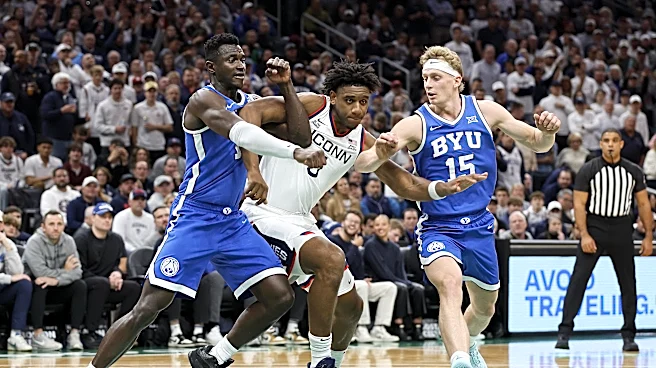
I really attempted not to include Tarris Reed Jr. in this exercise. Not because he’s bad, but because he might be too good – I think there’s a real chance that he gets selected in the last few picks of the first round (this is why I didn’t write about Zubi Ejiofor for power forward). However, with how lucrative the NIL situation is for big men at the moment, many found themselves withdrawing from the draft and returning to college. This boosts Tarris’s stock while weakening the positional strength in the class. Simply put, there aren’t many big men who may go in the second round that I think are genuine value plays. However, if Tarris slips into the second round, he would easily be my favorite prospect in that range. This year, he was the best player on a team that was the runner up in the National Tournament, and a lot of what he brought to Uconn is pretty easily translatable to an NBA context. To start, his interior defense was legitimately dominant. He’s stout enough to hold his own with anyone, and his arms seem to go for ages. His value on that end may go down a bit just because his height is a bit below average, but I do expect Reed to be impactful early on defensively. Offensively his role will be simplified in the NBA, cutting down on a lot of his post ups, but his efficiency, offensive rebounding, and general feel will translate nicely. He doesn’t sky above the rim for alley-oops, which is worrying considering he also is a complete non-shooter, but his timing and strength will likely allow for him to eventually provide positive value on this end as well. Day’Ron Sharpe is a popular comparison for Tarris, but, seeing as I’m writing for a Jazz blog, I think an older Derrick Favors is accurate as well – with his combination of acceptable inside scoring, ball movement, and stalwart interior defense, he’s perfect for eating backup center minutes as the starter rests.
Other Good Options
- Ugonna Onyenso
- Rafael Castro
- Nate Bittle
Which of these guys is most intriguing to you? Do you have any other sleepers that you want to Jazz to trade into the second round for? Share your thoughts below!